Medicare Coverage for Physical Therapy, Occupational Therapy, and Rehab

-
November 22, 2025

Reviewed by Morgan Honea
Medicare Agent Licensed in NM, AL, AR & 42 other states
Staying active and independent is a top priority for many seniors, especially after surgery, illness, or injury. Physical therapy, occupational therapy, and rehabilitation services play a key role in helping older adults regain strength, maintain mobility, and improve daily functioning. But understanding how Medicare covers these services can be confusing. Knowing your coverage can help you plan your care, avoid surprise bills, and make the most of the benefits available to you.
What Are Physical Therapy, Occupational Therapy, and Rehab?
Physical therapy (PT) focuses on improving your strength, flexibility, balance, and mobility. It’s commonly prescribed after injuries, surgeries, falls, or to manage chronic conditions like arthritis or COPD. PT helps you regain the ability to move safely and maintain independence.
Occupational therapy (OT) helps you perform everyday activities such as dressing, cooking, bathing, and other daily tasks. It’s especially useful for seniors recovering from surgery or living with conditions that affect dexterity or cognitive function.
Speech-language pathology (SLP), often called speech therapy, helps with swallowing disorders and communication problems that follow a stroke, brain injury, or other neurological conditions. Medicare treats SLP as a rehab therapy alongside PT and OT.
Rehabilitation services often combine PT, OT, and speech therapy, and may include specialized programs. Rehab is typically used after hospitalization, strokes, major surgery, or severe injuries, providing structured care to help you regain your health and independence.
How Medicare Covers These Services
Medicare coverage depends on the type of therapy and the setting in which it is provided. For the official rules and current amounts, see Medicare.gov's pages on physical therapy, occupational therapy, and speech-language pathology services.
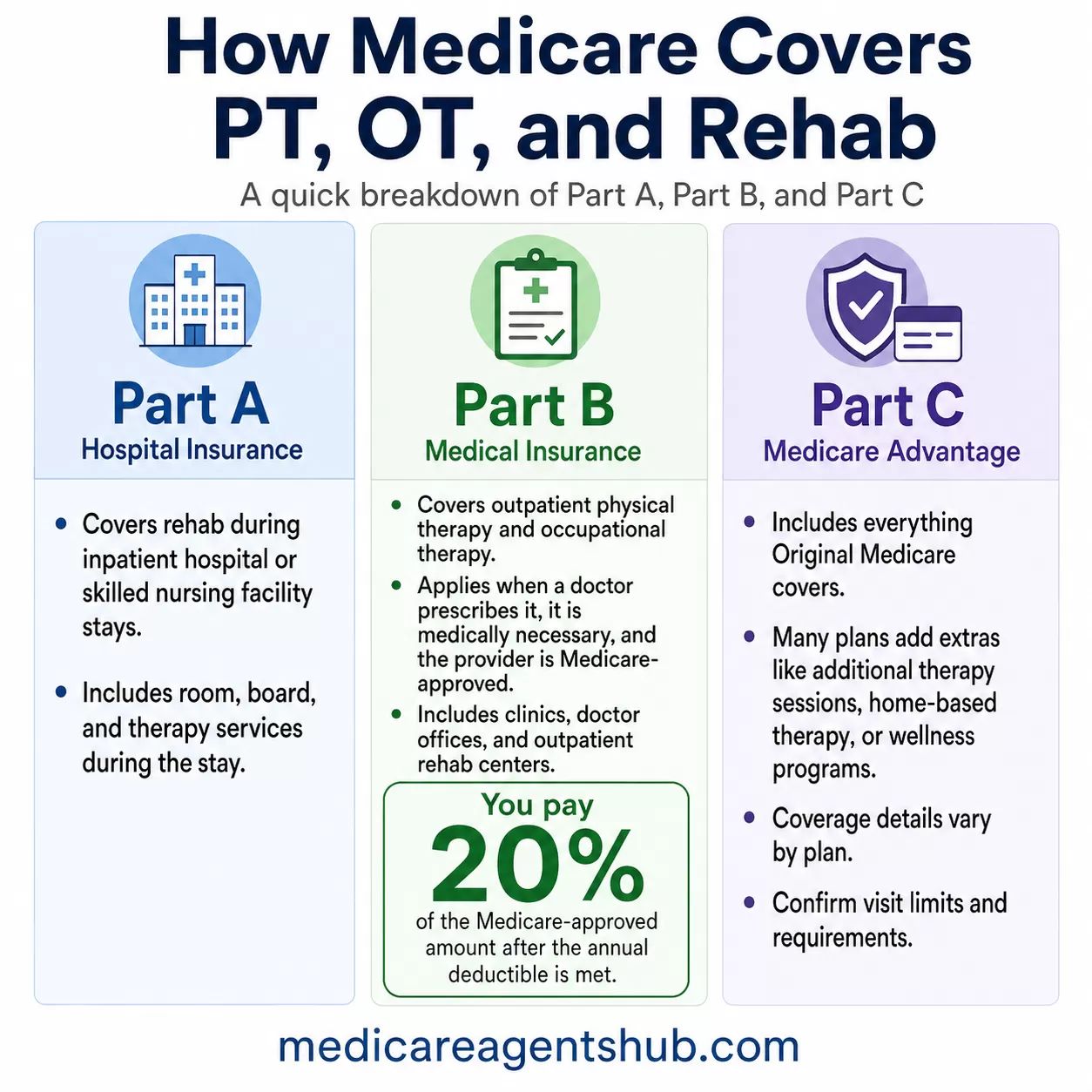
Original Medicare (Part A & B)
-
Part A (Hospital Insurance) may cover rehab services if you are admitted to a hospital or skilled nursing facility. This usually applies if you need intensive care following hospitalization. Part A coverage includes room, board, and therapy services during your stay.
-
Part B (Medical Insurance) covers outpatient PT, OT, and speech therapy if your doctor prescribes it, it is medically necessary, and the services are provided by a Medicare-approved provider. This includes therapy at clinics, doctor offices, or outpatient rehab centers.
-
Part B typically requires you to pay 20% of the Medicare-approved amount for therapy services after your annual deductible is met.

My doctor prescribed physical therapy, but I'm not sure how many visits Medicare will cover. How do I find out?
With Original Medicare, there is no yearly limit on medically necessary outpatient physical therapy visits. Your doctor or other qualified provider must certify that you need the therapy. After you meet your Part B deductible.If you have a Medicare Advantage plan, the rules and costs can be different, so you should check your specific plan.
The easiest way to find out what you’ll pay is to ask your physical therapist or doctor:
Medicare Advantage (Part C)
-
Medicare Advantage plans have to cover at least what Original Medicare covers, and many Medicare Advantage plans add extras like more therapy visits, home-based therapy, expanded chiropractic visit allowances, or wellness benefits such as SilverSneakers.
-
The trade-off is that MA plans set their own rules. Many require prior authorization before therapy starts, use provider networks (so an out-of-network therapist may not be covered), and charge their own copays or visit limits instead of the standard 20% coinsurance.
It’s important to check with your specific plan to confirm the number of covered visits, whether prior authorization is needed, and which therapists are in network.

My doctor prescribed physical therapy, but I'm not sure how many visits Medicare will cover. How do I find out?
There is no longer a hard limit on the number of physical therapy visits Medicare will cover, as long as your doctor and therapist can prove the treatment is "medically necessary."If You Have a Medicare Advantage Plan the rules above apply to Original Medicare (Part B). If you have a Medicare Advantage Plan (Part C), your plan must cover what Original Medicare covers, but they may have different rules, such as:
Requiring prior authorization before you start.
Requiring you to use "in-network" therapists.
Charging a flat co-pay (e.g., $20 or $40) per visit instead of 20% coinsurance.
What About the Therapy "Cap"?
The old hard dollar cap on outpatient therapy was repealed years ago. In its place, Medicare uses a yearly threshold for PT and speech therapy combined, and a separate threshold for OT. Once your therapy costs pass that threshold, your provider has to add a code to the claim confirming the services are still medically necessary, and Medicare may run a targeted medical review on higher-cost cases. The threshold amounts change each year, so check the current figures on Medicare.gov before you assume you’re close to the limit.
In most cases, care continues to be covered above the threshold as long as your doctor and therapist document that it’s medically necessary. A targeted review isn’t the same as a denial — it just means Medicare may ask for extra documentation before paying the claim.

My doctor prescribed physical therapy, but I'm not sure how many visits Medicare will cover. How do I find out?
The number of physical therapy visits you get depends on what your doctor says. If the therapy is deemed medically necessary, Original Medicare will pay.However, if you have a Medicare Advantage plan and they deny the therapy, appeal the decision. MA coverage is required to be at least as good as Original Medicare so make sure your plan pays for what your doctor says you need.
Steps to Ensure Your Therapy Is Covered
-
Get a physician referral: Medicare requires that a doctor or healthcare provider orders therapy to confirm it’s medically necessary.
-
Verify the provider is Medicare-approved: Always confirm that the clinic or therapist accepts Medicare to avoid unexpected charges.
-
Request a plan of care: This document outlines your therapy goals, frequency, and duration, helping Medicare determine coverage.
-
Keep records: Maintain copies of progress notes, receipts, and any correspondence with your provider to support coverage or appeals if needed.
Tips for Maximizing Benefits and Reducing Out-of-Pocket Costs
-
Compare plans: If you have a Medicare Advantage plan, review your coverage annually. Some plans offer additional therapy benefits beyond Original Medicare.
-
Consider supplemental insurance: Medigap plans can help cover coinsurance and deductibles, reducing out-of-pocket costs.
-
Explore home health therapy: If you are homebound and your doctor certifies that you need intermittent skilled therapy, a Medicare-certified home health agency can deliver PT, OT, or speech therapy in your home. When care is provided as part of a home health episode, therapy is typically fully covered with no coinsurance. Outpatient therapy delivered at home outside of a home health episode falls under Part B, where the usual 20% coinsurance applies.
-
Ask about wellness programs: Some plans include exercise or rehabilitation programs that support ongoing mobility and independence.
What Medicare Doesn't Cover
A few therapy-related services fall outside Medicare’s rules and often catch families off guard:
-
Long-term custodial care in a nursing home or assisted living facility, when the need is help with daily living rather than skilled therapy.
-
Non-skilled home aides who provide companionship or personal care but not therapy.
-
Therapy that doesn’t meet Medicare’s definition of medically necessary or skilled. Maintenance therapy can be covered when a skilled therapist is needed to prevent decline (this was clarified by the Jimmo settlement), but general exercise or wellness activity you can do on your own is not.
When to Ask for Help or File an Appeal
Even when therapy is covered, there may be instances where claims are denied. If that happens, you have the right to appeal. A few steps to take right away:
-
Contact your provider and confirm the therapy was documented as medically necessary.
-
Read your Medicare Summary Notice or plan Explanation of Benefits to see the reason for the denial and the appeal deadline.
-
Gather your records — visit notes, plan of care, receipts, and any communication with your provider.
-
Follow the appeal instructions on your notice. If your care is ongoing and stopping would put your health at risk, ask for a fast (expedited) appeal.
If you’re unsure how to navigate the appeals process or need clarification on your coverage, consulting a licensed Medicare agent or advisor can help you understand your options and protect the benefits you’ve earned.
Conclusion
Physical therapy, occupational therapy, and rehab services are essential tools for seniors aiming to maintain independence and improve quality of life. Medicare covers these services under certain conditions, and understanding your plan helps you maximize benefits and reduce costs. Whether you’re recovering from an injury, managing a chronic condition, or planning preventive care, knowing how Medicare supports rehab services empowers you to make informed decisions. Always review your plan annually and consult your healthcare provider or a licensed Medicare advisor if you’re unsure about coverage.