Summer Wellness Checklist: How to Maximize Your Medicare Benefits This Season

-
Last Updated October 13, 2026

Reviewed by Matt Temmen
Medicare Broker Licensed in MO, AL, AR & 42 other states
Medicare covers more summer-related health services than most beneficiaries realize. From free preventive screenings and vaccines to fitness programs and mental health support, your plan likely includes benefits you haven't touched yet. This checklist walks through each one so you can stay ahead of seasonal health risks and get full value from what you're already paying for.
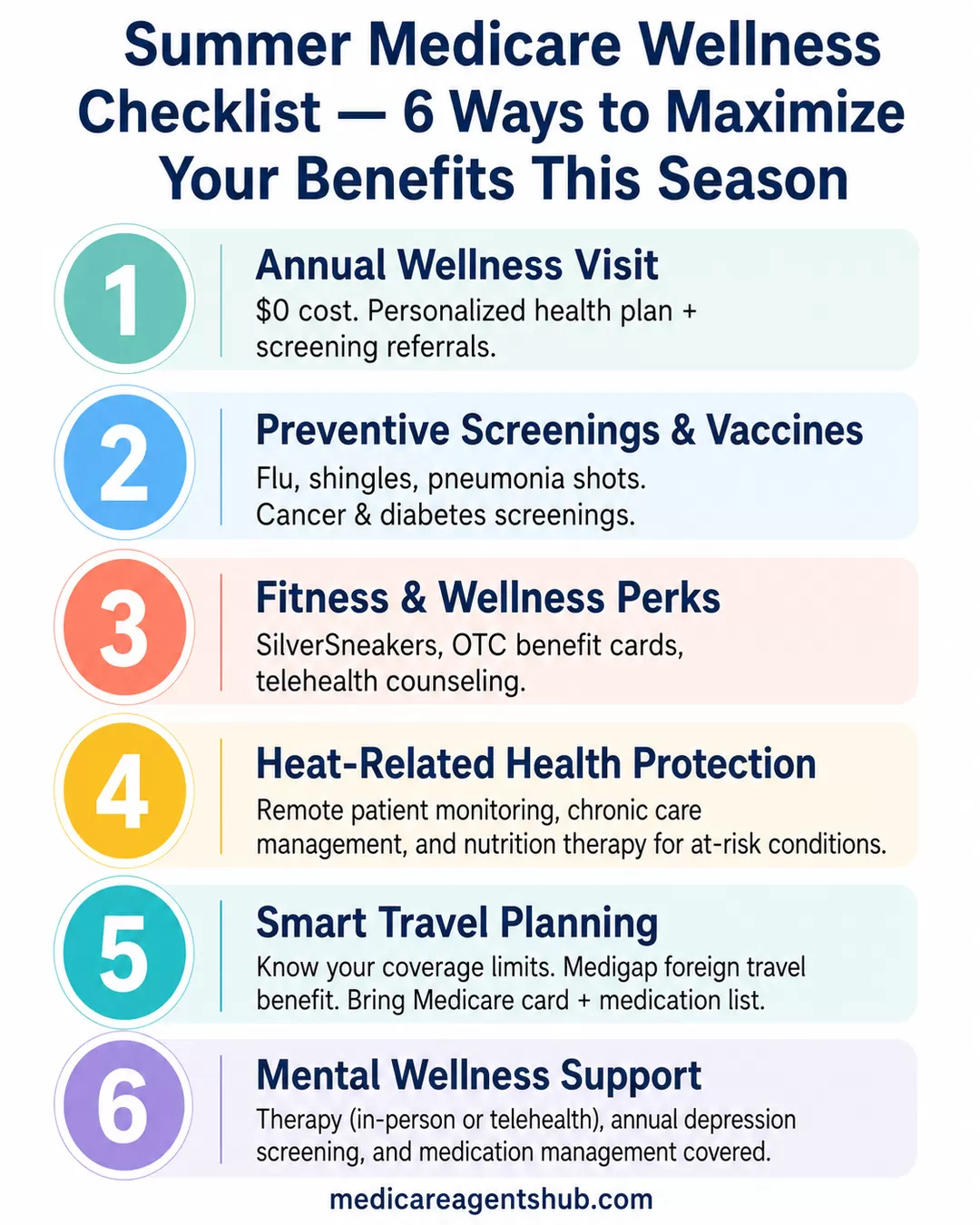
1. Schedule Your Annual Wellness Visit
Medicare Part B covers an Annual Wellness Visit (AWV) at no cost to you (as long as your provider accepts assignment). This visit is not the same as a traditional physical exam, but rather a preventive appointment that helps you and your doctor create a personalized health plan.
Welcome to Medicare Visit vs. Annual Wellness Visit vs. Annual Physical
Three different appointments get called the same thing, and only two of them are Medicare benefits.
| Visit | When you can get it | What you pay |
|---|---|---|
| Welcome to Medicare preventive visit | Once, during your first 12 months with Part B | $0 if your provider accepts assignment |
| Annual Wellness Visit | Every 12 months, after you have had Part B longer than a year | $0 if your provider accepts assignment |
| Routine annual physical | Any time, but Part B does not cover it | Out of pocket, unless your Advantage plan includes one |
The Welcome to Medicare visit is a one-shot deal. If you are new to Medicare and still inside that first year of Part B, book it before the window closes. Miss it and you wait until month 13 for your first Annual Wellness Visit.
Summer is an ideal time to schedule this visit if you haven't yet this year. Your provider can:
- Review medications and chronic conditions
- Update health risk assessments to catch issues early
- Recommend screenings and vaccinations based on your age and history
- Discuss lifestyle improvements like nutrition, activity, and mental health
What to bring with you:
- Every medication, vitamin, and supplement you take (bring the actual bottles)
- Names and phone numbers for your other doctors and specialists
- Your family medical history, parents and siblings included
- Dates of past screenings, surgeries, and immunizations from other providers
- Any numbers you track at home, like blood pressure or blood sugar readings
Completing this visit now ensures that any follow-ups (like diagnostic tests or vaccinations) can be handled before fall or winter viruses begin to spike again.

What does Medicare Part B cover? Is it enough?
Medicare Part B covers things like doctor visits, outpatient care, lab work, and preventive services. It’s a big help—but it’s not enough on its own.It doesn’t cover prescriptions, dental, vision, hearing, or long-term care. Plus, you’ll still have to pay monthly premiums, a deductible, and 20% of most bills.
That’s why it’s smart to talk to a local Medicare expert like me. As a top-rated Medicare Agent with HUB, I can help you understand your options and fill the gaps with the right plan for your needs. Let’s make sure you’re fully covered!
2. Get Up-to-Date on Preventive Screenings and Vaccines
Medicare covers a wide list of preventive services with no out-of-pocket cost. These include screenings for diabetes, heart disease, certain cancers, and more. You can review the full list on the official Medicare.gov preventive services page. Summer is a smart time to get these done, especially if your schedule is more flexible.
Vaccines covered under Medicare Part B and Part D include:
- Influenza (Part B)Best before flu season starts
- Shingles / Shingrix (Part D)Recommended for adults 50+
- Pneumococcal (Part B)Prevents pneumonia and serious infections
- Other CDC-recommended adult vaccines (Part D)Tdap, RSV, hepatitis A/B, and more — $0 cost since 2023
Vaccine recommendations change from year to year, and your doctor may advise additional shots based on your own health history. Confirm the current schedule at your wellness visit.
Since 2023, Medicare Part D covers all vaccines recommended for adults by the CDC's Advisory Committee on Immunization Practices (ACIP) with no cost sharing. That includes Tdap, RSV for older adults, and hepatitis vaccines. You can check the current list on the Medicare Part D drug coverage page.
Planning a trip abroad? Medicare generally does not cover travel-specific vaccines like yellow fever, typhoid, or Japanese encephalitis. Talk to your Medicare advisor or a travel clinic well before you leave.

I want to be proactive about my health. What preventive services should I be taking advantage of with Medicare?
"Welcome to Medicare"Annual Wellness Visit (AWV): Once you’ve had Part B for 12 months, you are eligible for this yearly check-in. This isn't a "head-to-toe" physical; instead, your doctor will develop or update a Personalized Prevention Plan, assess your cognitive health (to look for early signs of dementia), and review your risk for falls or depression.
2. Essential Screenings (Usually $0 Cost)
Depending on your gender and medical history, Medicare covers several screenings to detect chronic conditions early:
Cardiovascular: Blood tests for cholesterol, lipids, and triglycerides every 5 years.
Cancer Screenings: * Mammograms: Once every 12 months.
Colorectal: Options include colonoscopies (every 10 years for average risk), stool-based tests, or the newly expanded coverage for CT colonography.
Prostate: Annual PSA blood tests (the digital rectal exam may have a small copay).
Cervical: Pap tests and pelvic exams every 24 months (every 12 months if high risk).
Diabetes: Up to two screenings per year if you have risk factors like high blood pressure or obesity.
Bone Mass: Bone density scans every 24 months for those at risk of osteoporosis.
3. Vaccinations
Medicare helps keep you protected from seasonal and long-term illnesses:
Flu Shot: One per flu season.
Pneumococcal (Pneumonia): Usually once in a lifetime, though some may need a second dose.
COVID-19: All recommended doses and boosters.
Shingles & Tdap: As of 2023, these are covered at no cost under Medicare Part D (Prescription Drug Plans).
3. Use Your Medicare Advantage Fitness Programs and Wellness Benefits
Original Medicare pays for medically necessary care, so gym memberships and fitness classes sit outside it. Those perks ride along with Medicare Advantage plans, and a few Medigap carriers tack them on as a separate membership.
Many Medicare Advantage (Part C) plans offer extra wellness perks beyond what Original Medicare covers. Summer is a great time to make use of these, especially if you want to stay active and social.
Some of the most common extras include:
- SilverSneakers or similar fitness programs: Free access to gyms, pools, or online workouts
- Telehealth mental health counseling: Covered by both Original Medicare and many Advantage plans (CMS telehealth rules are still evolving, so check with your plan or provider for the latest)
- OTC benefit cards: If your plan's catalog includes them, use these for sunscreen, hydration supplements, or pain relief patches
Not all plans offer the same extras, so check with your provider to see what's included. If you're not sure whether your current plan is giving you the best value, a yearly plan review can help you compare options.
4. Protect Against Heat-Related Health Risks
Older adults are at higher risk for heat exhaustion and dehydration. Medicare doesn't specifically cover air conditioners or fans, but it does cover services to monitor and manage conditions that heat can aggravate, like heart failure, COPD, or diabetes.
If you have chronic conditions, ask your provider if you qualify for Remote Patient Monitoring (RPM) or Chronic Care Management (CCM) programs. These programs can track things like weight, blood pressure, and glucose levels to help prevent heat-related complications.
Nutrition therapy (covered for those with diabetes or kidney disease) can also help you build a summer-appropriate hydration and diet plan.
5. Plan Smart for Travel
Many Medicare beneficiaries travel during the summer, whether for family visits or vacations. Keep in mind:
- Original Medicare generally doesn't cover care outside the U.S.
- Medigap plans C, D, F, G, M, and N include foreign travel emergency coverage: 80% of approved costs after a $250 yearly deductible, capped at $50,000 over your lifetime. Plans A, B, K, and L don't cover it at all, so check the official Medigap benefit chart before you book.
- Medicare Advantage plans may have regional networks; check for out-of-area restrictions before your trip
If you're going to be away from home for more than a few days, bring your Medicare card, a medication list, and check that your pharmacy offers nationwide prescription refills (especially if using a Medicare Part D plan).

I'm planning a long trip overseas. What happens if I need medical care while I'm away from the US?
Original Medicare doesn't cover you outside the United States, so if you're traveling internationally you'll want to check what you have. Medicare Advantage plans sometimes include emergency coverage abroad at a flat copay, and some Medicare Supplement plans cover 80% of emergency care after a deductible. Although it is possible to have a Supplement that offers comprehensive coverage while traveling outside the United States. Keep in mind that foreign hospitals don't bill U.S. insurance directly, you'll usually need to pay upfront and then submit claims for reimbursement when you return home.

In what situations will Medicare pay for medical services in a foreign hospital?
Medicare doesn't pay anything towards foreign hospitals. Certain Medigap plans and Medicare Advantage Plans will cover overseas in emergency or urgently needed situations.With Medigap Plan G or Plan N you would have a $250 deductible and they'll cover 80% up to a lifetime maximum of $50,000 for foreign travel.
With Medicare Advantage plans you are covered anywhere in the world in an emergency or urgently needed situation. There could be lifetime limits, depending on the plan.
There is a catch. Foreign doctors and hospitals don't accept US insurance so you'll have to pay cash or credit for the bill while you're there and get reimbursed up to your copay or coinsurance when you get back.
My suggestion, when traveling, is to buy travel health insurance for your trip. The cost is very reasonable and it will cover you anywhere in the world and help you find doctors and hospitals in other countries. You can get unlimited coverage for about $100/person for the week you are away.
The company is GeoBlue. You can buy it online or through an agent that works with them.
6. Don't Overlook Mental Wellness
While summer brings longer days and more sunshine, it can also come with disruptions to routine and increased feelings of loneliness, especially if family or friends are away traveling.
Medicare provides solid support for mental health care. Individual and group therapy are covered when medically necessary, and you can receive care in-person or through telehealth.
You're also entitled to a depression screening each year as part of your Annual Wellness Visit. If you're already managing a mental health condition, Medicare can help with medication management through your primary care provider or a psychiatrist.

Are mental health services like therapy fully covered under Original Medicare?
Short answer: no, not fully.Under Original Medicare, most outpatient therapy is covered by Part B—you pay the Part B deductible (if not yet met) and typically 20% coinsurance of the Medicare-approved amount; a Medigap plan can cover some/all of that.
Preventive screenings (e.g., annual depression screening) are generally $0 when you see a Medicare-enrolled provider.
Inpatient psychiatric care falls under Part A with its own deductible and day limits (including a 190-day lifetime cap in psychiatric hospitals).
Make sure your therapist is Medicare-enrolled and accepts assignment to avoid extra charges.
Taking advantage of these services can make a real difference in how you feel and function, particularly during a season that can feel emotionally mixed for some.
This Season, Let Medicare Work for You
Summer offers more than sunshine. It's a window to catch up on your health goals while using the full value of your Medicare benefits. Whether it's booking your wellness visit, checking off screenings, or trying a new fitness perk through your Advantage plan, these small actions add up.
Smart health habits now can prevent bigger issues later. If you're unsure whether your current plan covers everything you need, it may be time to talk with a local Medicare agent and review your options before the season slips by.

What are the signs that it's time for me to switch my Medicare plan, and how often should I review my options?
You should review your Medicare plan at least once a year.But more importantly, you should look at switching your plan anytime something changes.
Here are the main signs it might be time to switch:
Your doctor or hospital is no longer in-network
Your medications got more expensive or aren’t covered
Your benefits changed (dental, vision, OTC, etc.)
You’re paying more out-of-pocket than expected
Your health situation changed (new diagnosis or more care needed)
You moved or travel more and need better coverage
Simple rule:
If your health, doctors, medications, or costs change — it’s time to review your plan.
Most people don’t realize plans change every year, so what worked last year may not be your best option now.