Medicare Supplements: Improving Your Healthcare Coverage


-
Last Updated September 30, 2026
Written by Nathan Curry
Medicare Broker Licensed in FL, AL, AR & 22 other states
As we grow older, having healthcare coverage becomes increasingly important. While Medicare provides health benefits it doesn't cover all expenses.
This is where Medicare supplement plans, also known as Medigap policies, play a role. These plans fill in the gaps left by Original Medicare by assisting with costs such as copayments, coinsurance and deductibles.
By adding a Medigap policy beneficiaries receive security and peace of mind.
Key takeaways:
- Medigap pays the out-of-pocket costs Original Medicare leaves behind, and lets you use any provider who accepts Medicare.
- Your one-time, 6-month Medigap Open Enrollment Period is the only window with guaranteed issue rights in most states. The October 15 to December 7 Annual Enrollment Period is for Medicare Advantage and Part D, not Medigap.
- Medicare Advantage is an alternative to Original Medicare, not an add-on to it, and it comes with a provider network.
- Part D no longer has a coverage gap. You pay 25% coinsurance until you hit the annual out-of-pocket cap, then nothing for covered drugs the rest of the year.
- Original Medicare does not pay for long-term custodial care, which is what long-term care insurance is for.
Understanding Medigap Coverage
Medigap policies are insurance plans that complement Original Medicare by covering out of pocket expenses that Medicare doesn't fully address. This includes:
- Financial Security: Medigap policies help with costs associated with Medicare services.
- Choice of Providers: Beneficiaries have the freedom to see any healthcare provider that accepts Medicare without being restricted to a network.
- Benefits: Some plans provide perks like emergency coverage during foreign travel.
- Eligibility: To enroll in a Medigap plan you must be signed up for both Medicare Parts A and B. These plans are offered by insurers and come with varying costs and levels of coverage. If you are under 65 and on Medicare because of a disability or ESRD, availability depends on your state. Federal law does not guarantee you a Medigap policy before 65, and state rules vary widely.
Enrollment Periods
Medigap Open Enrollment Period
Your Medigap Open Enrollment Period is a one-time, 6-month window. It begins the first month you are 65 or older and enrolled in Medicare Part B.
During this window you have guaranteed issue rights. An insurer cannot deny you a policy or charge you more because of your health history.
You can still apply for a Medigap plan after that window closes. But unless you qualify for a Special Enrollment Period or a state guaranteed issue right, you will usually go through medical underwriting, which can affect both your approval and your premium.
Annual Enrollment Period (October 15 to December 7)
The Annual Enrollment Period runs from October 15 through December 7 each year. This is the window for joining, switching or dropping a Medicare Advantage plan or a Part D prescription drug plan.
It is not a Medigap open enrollment period. Outside of a few states with their own rules, it does not let you switch Medigap plans without answering health questions.
Comparing Plans
When selecting a plan it's important to compare options in terms of coverage, premium expenses and the reputation of the insurance companies to find a Medigap plan that aligns with your needs and financial situation.
Medicare Advantage Plans (Part C)
Medicare Advantage Plans serve as an alternative to Original Medicare, they are offered by companies approved by Medicare. These plans typically cover everything included in Original Medicare while often providing benefits such as prescription drug coverage, vision care, dental services and hearing benefits.
Key advantages include added services beyond what Original Medicare offers, potential cost savings with lower out of pocket expenses, and extra perks like gym memberships and wellness programs.
Types of Medicare Advantage Plans
- Health Maintenance Organization (HMO): Requires selecting a primary care physician and obtaining referrals for specialist visits within the network.
- Preferred Provider Organization (PPO): Allows access to any healthcare provider without referrals but may involve higher costs.
- Private Fee for Service (PFFS): Offers flexibility in choosing any provider approved by Medicare while payment terms are determined by the plan.
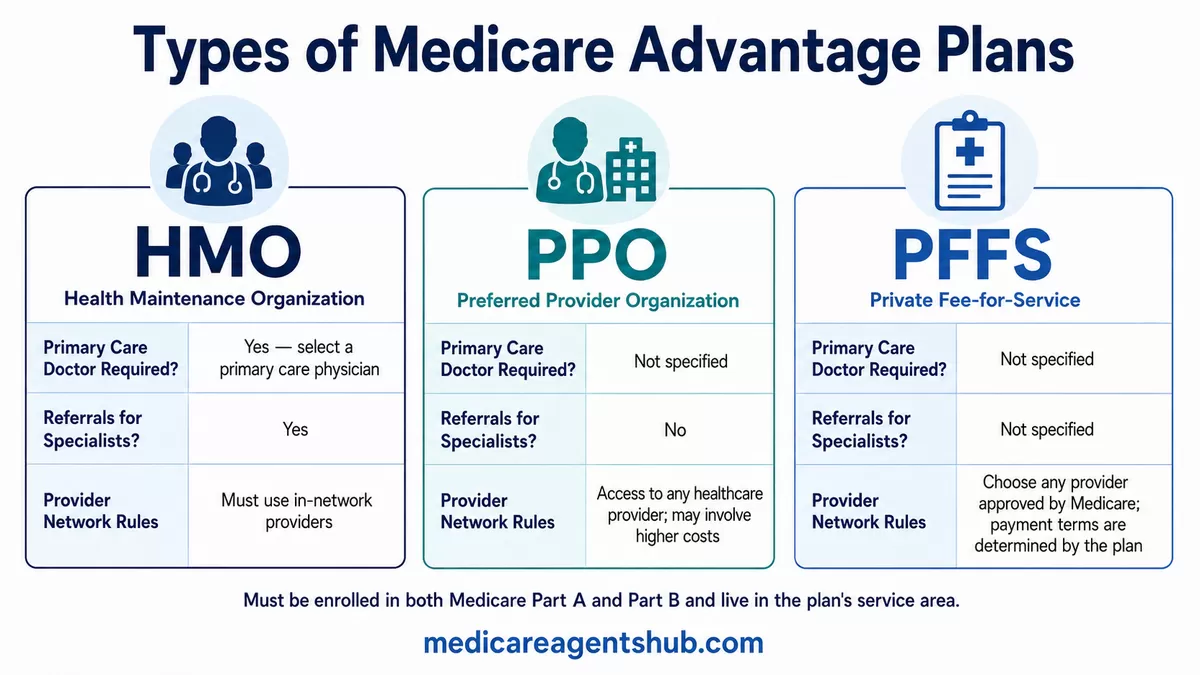
To sign up for Medicare Advantage plans you need to be enrolled in both Parts A and B and reside in the plans service region. Enrollment is possible during the Initial Enrollment Period, Annual Enrollment Period (from October 15 to December 7) and Special Enrollment Periods triggered by life events.
Prescription Drug Coverage (Part D)
Proper management of health conditions often requires prescription medications. The expenses can add up. Medicare Part D assists in covering these costs through:
- Formulary: Each plan includes a list of drugs covered. It's important to ensure that your medications are included in this list.
- Cost Sharing: This encompasses copayments, coinsurance and deductibles that may vary depending on the plan you choose.
- Coverage Gap: The "donut hole" is gone. Part D now runs through three stages: a deductible stage, an initial coverage stage where you pay 25% coinsurance on covered drugs, and a catastrophic stage. Once your out-of-pocket spending on covered drugs reaches the annual cap ($2,100 in 2026), you pay nothing more for covered Part D drugs for the rest of the year. See what actually happens now when your drug costs climb, or review the current stages and amounts on Medicare.gov.
- Enrollment: You can enroll if you qualify for Medicare Part A or B and reside within the plans service area. Enroll during the Initial Enrollment Period, Annual Enrollment Period or Special Enrollment Periods.
- Selecting a Plan: Compare premiums, drug coverage details and preferred pharmacies to identify a plan that suits your requirements.
Long Term Care Insurance
Long term care insurance plays a role in covering services needed when an individual faces challenges performing daily activities due to illness or disability. It helps protect your savings against long-term care costs.
This matters because Original Medicare does not pay for long-term custodial care in most settings. It covers medically necessary short-term skilled care, generally after a qualifying hospital stay, and nothing beyond that. Medicare.gov spells out what it does and does not cover for long-term care.
Benefits of Long-Term Care Insurance
- Freedom and Choice: Allows you to choose the type and location of care that suits you best.
- Peace of Mind: Ensures that your care expenses are taken care of easing worries.
- Enrollment Process: Apply for the policy through your insurance agent. Make sure to review the policy terms, coverage limits and costs before making a decision.
Key Considerations
- Coverage Limits: Verify the benefit amount and duration provided by the policy.
- Premium Costs: Evaluate whether the premiums are affordable and consider any increases.
- Policy Features: Look out for options such as inflation protection.
Frequently Asked Questions (FAQs)
Best Time to Purchase: It is advisable to purchase the policy while in health and before requiring care.
Medicare Coverage: Keep in mind that Original Medicare offers only very limited coverage for short-term skilled nursing care and does not cover long-term custodial care.
Benefits: If you never end up needing long term care there's a possibility that the policy may go unused; however it still works as a financial safeguard.
Putting It All Together
Supplemental Medicare policies like Medigap plans, Medicare Advantage Plans, Prescription Drug Coverage (Part D) and Long Term Care Insurance Policies all help round out healthcare coverage for seniors.
These policies bridge gaps in Medicare coverage providing security against expenses and offering additional benefits. Understanding these policies and securing them guarantees improved health coverage and financial well being. Reach out to a licensed agent today to explore your choices and secure your healthcare future. You can search by state to find someone local, and if you're in Florida you can start with Medicare agents in Florida.
If you would rather get help from a non-commercial source, every state has a State Health Insurance Assistance Program (SHIP) that offers free, unbiased Medicare counseling. You can find your state's program at shiphelp.org or call Medicare directly at 1-800-MEDICARE.

Do I have to answer health questions when switching from one Supplemental/Medigap plan to another?
Yes - in most cases, you'll have to answer health questions and go through medical underwriting when switching from one Medigap (Supplemental) plan to another, unless you qualify for guaranteed issue rights.Author's Bio
Nathan Curry from USA Benefits Group
We are a nationwide insurance agency dedicated to the principles of service, integrity, professionalism and diversity. We provide an extensive range of insurance products and pledge to honor our commitment to our producers, clients and carriers by holding ourselves to the highest ethical standards. Everything that we do is designed to insure that our team present quality products with Servant's Heart and goals of exceeding expectations.
You can reach Nathan Curry through his Broker listing here at Medicare Agents Hub.