Navigating Annual Enrollment Period Successfully


With the Medicare Annual Enrollment Period now here, you have likely noticed changes within your Annual Notice of Change (ANOC) letter. A carrier may have eliminated your plan. You may also see increases in copays, deductibles, and premiums. Another ongoing change is the Inflation Reduction Act and its impact on prescription drug plans and pricing. As if beneficiaries didn’t already have enough stress trying to manage their Medicare, this Annual Enrollment Period is likely to create some anxiety but it doesn’t have to. Below are some thoughts on helping you navigate AEP successfully.
The Inflation Reduction Act (IRA) brought a monumental change to the prescription drug side of the equation. The infamous coverage gap or “donut hole” ended in 2024, and beginning in 2025 the prescription drug structure was simplified with a yearly cap on what you pay out of pocket for covered prescription drugs. That cap started at $2,000 and is adjusted each year. It was $2,100 in 2026. The cap counts what you spend on covered drugs, not your monthly plan premiums. Whether you are covered by a Medicare Advantage with Prescription Drug plan (MAPD) or a standalone Prescription Drug Plan (PDP), you are likely looking at changes.
These changes include but are certainly not limited to (1) elimination of previously offered plans, (2) higher copays for medical services, and (3) higher copays or coinsurance for prescription drugs. With all of these changes, it is critical to not overlook the basic coverage components of your Medicare Advantage plan choices. This is important this year because the insurance companies may have shifted some of the increased costs they have to pay for the Prescription Drug side of the equation to consumers. These include:
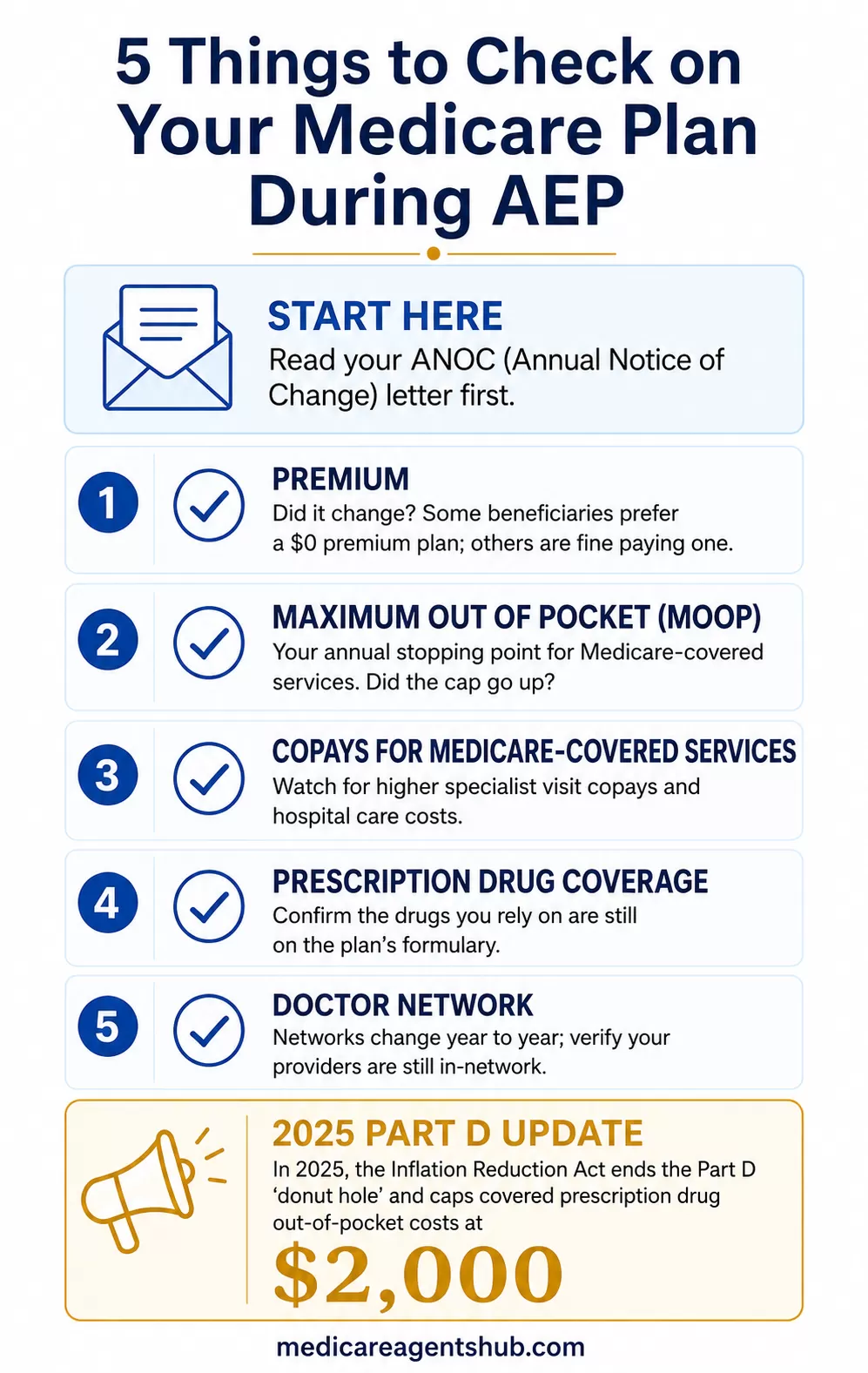
Premium
Each Medicare beneficiary is different and some are okay with a premium where others may look for a $0 premium plan.
How do you explain to clients that "zero-premium" doesn't mean "zero-cost" with Medicare Advantage?
This is a great question and one that I carefully walk through to explain to my current and prospective clients. Medicare Advantage plans MAY or MAY not have a premium, and I always start with that foundation after I explain how the Medicare Part B premium works.If the plan has a premium of any amount ranging from $0 premium to anything beyond $0, it is almost certain that many costs will have copayments or sometimes other coinsurance. The most common examples might be a specialist copay or a hospital admission copay.
There are some common "zero cost" items, and those most commonly include (1) seeing your primary care physician for services, and (2) preventive care services.
I always take a very consultative approach so that the consumer has a really good understanding of how the plan works, and this avoids any surprises.
Maximum Out of Pocket (MOOP)
The maximum out of pocket costs are your stopping point for the year for Medicare covered services. Did this number change? Do you need to look at other options which have a lower out of pocket?
Copays for Medicare covered services
You may be seeing changes in the costs to see your specialist with higher copays or there might be other covered services such as hospital care. Do these increases still work for you or could there be other options worth looking at?
Are your Prescriptions Covered?
This might be the most important piece. It is critical this year to ensure that the prescription drugs you rely on are covered by the plan you are either currently or considering enrolling in.
Are your Doctors Still In Network?
Networks do change from year to year and making sure your doctor is still available for you is always important.
Key AEP dates to know
AEP runs on the same calendar every year, and Medicare's official plan enrollment windows spell out what you can change in each one. Mark these down:
| Date | What happens |
|---|---|
| October 15 | Annual Enrollment Period opens. You can compare plans and enroll. |
| December 7 | AEP closes. Your last change made by this date is the one that counts. |
| January 1 | Your new plan coverage begins. |
| January 1 – March 31 | Medicare Advantage Open Enrollment, if you need a second look. |
A knowledgeable Medicare Insurance Agent who specializes in the various Medicare options, represents a diverse number of carriers, and who can present to you a number of options that will meet your needs will ensure you manage this AEP without overlooking any of the basics features of your coverage that are most important to you.
Ready to review your Medicare options with a licensed agent? Browse our free directory of Medicare agents near you and connect with someone local who can walk through your plan choices with you.
If after AEP you realize your plan isn't working, remember that the Medicare Advantage Open Enrollment Period gives you one more chance to switch. And if you're unsure about your current coverage, start with a review of your plan at the start of the year. Made a choice you regret? Here's what to do if you chose the wrong plan during AEP.
Steve Wilson has worked in the health insurance industry for nearly 30 years including nearly 10 within the Medicare space. He enjoys educating consumers about Medicare and their choices.