Why Arthritis Is a Condition You Should Factor Into Your Medicare Plan Choice

-
December 21, 2025

Reviewed by Austin Pierce
Medicare Agent Licensed in CO, AL, AR & 19 other states
If you’re living with arthritis or have started noticing joint pain that just won’t quit, you already know it can affect your day‑to‑day life. But did you know that your Medicare plan choice can make a real difference in how easy it is to get the care you need? Arthritis isn’t just a passing ache. It is one of the most common chronic health conditions in adulthood, particularly as we age, and it often leads to ongoing treatment needs that can impact your health care costs and access to services.
Let’s talk about what arthritis means for your Medicare coverage and why choosing the right plan matters more than ever.
Arthritis Is More Common Than You Think
Arthritis isn’t a rare condition. It is actually an umbrella term for over 100 different joint and connective tissue problems. The most common types are osteoarthritis, which is wear and tear in your joints, and rheumatoid arthritis, an autoimmune condition that can affect many joints and sometimes organs. Together, these conditions impact millions of adults in the United States.
If you are over 65, there’s a good chance you or someone you love deals with arthritis symptoms like stiffness, swelling, pain, or limited movement. These aren’t just annoying. Over time they can interfere with mobility, sleep, mood, independence, and overall quality of life.
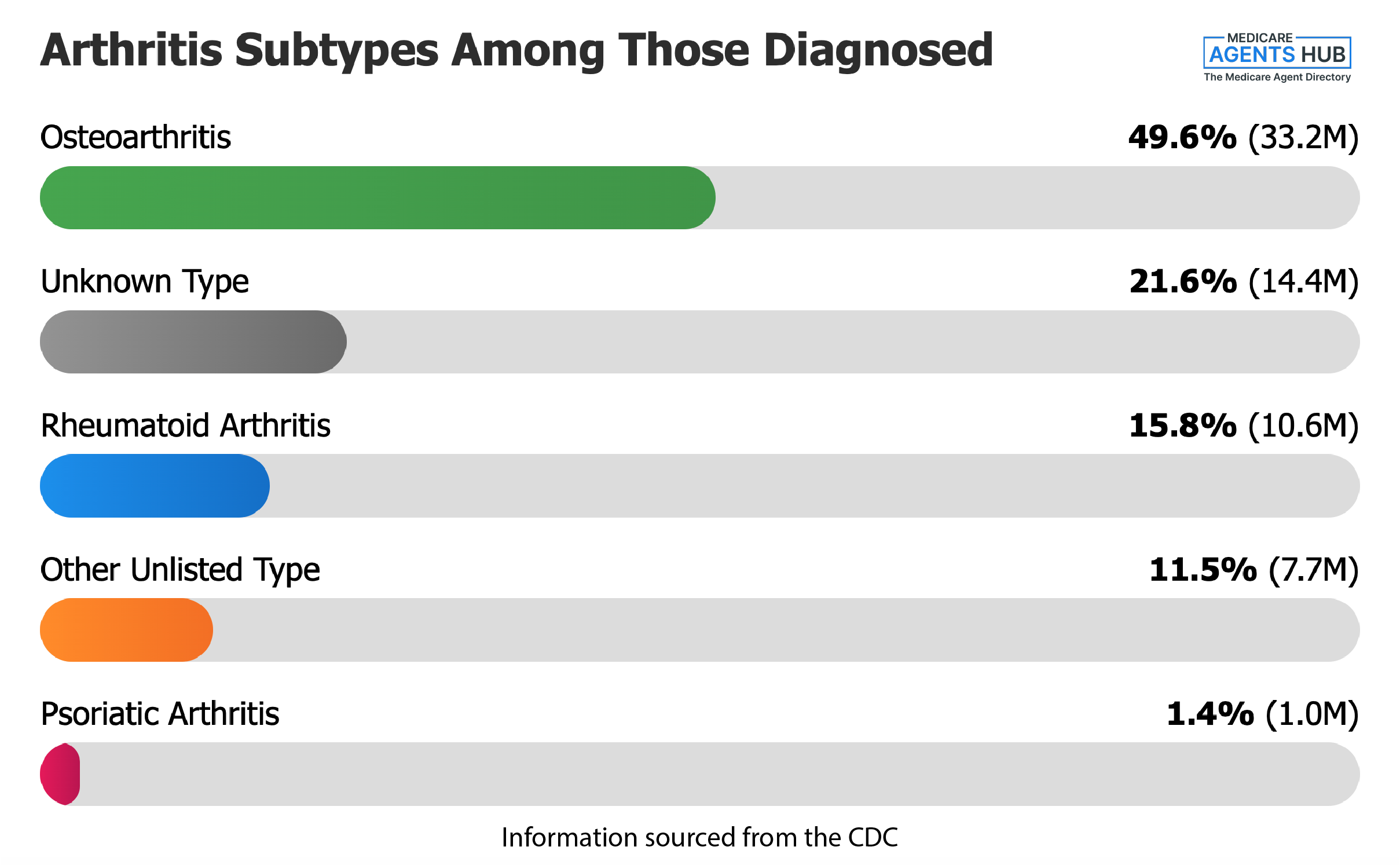
Source: Centers for Disease Control and Prevention (CDC)
Does Medicare Cover Arthritis?
The good news is Medicare does cover a lot of arthritis‑related care, including care for rheumatoid arthritis, as long as it is medically necessary and ordered by a doctor who accepts Medicare.
Here’s a quick look at what’s covered:
-
Doctor visits and specialist care: Medicare Part B covers outpatient care with physicians, including rheumatologists and orthopedists.
-
Physical therapy and occupational therapy: These treatments can help with pain and mobility and are usually covered under Part B when your doctor orders them.
-
Durable medical equipment: Canes, walkers, braces, and other medically necessary devices may be covered by Part B.
-
Medications: Arthritis medications like corticosteroids, DMARDs, and biologics can be covered through Medicare Part D or under Part B if given in a doctor’s office or outpatient facility.
-
Surgery: If joint replacement (including shoulder replacement) or another surgical treatment is medically necessary, Part A or Part B will typically cover these costs when you’re in the hospital or inpatient setting.
That sounds great, right? But the details matter.

How can I use Medicare to cover occupational therapy for arthritis or mobility issues, and what are the limits?
Medicare Part B covers outpatient occupational therapy for arthritis or mobility issues if it's medically necessary and prescribed by your doctor. There's no hard limit on sessions, but you'll pay 20% of the approved cost after meeting your deductible.Different Plans Can Mean Different Costs and Rules
Medicare comes in many forms. There is Original Medicare (Parts A and B), Medicare Advantage plans (Part C), and Part D drug coverage. There are also Medigap plans that help cover out‑of‑pocket costs with Original Medicare.
Each plan type has its pros and cons. For example:
-
With Original Medicare, you can see any doctor that accepts Medicare, but your out‑of‑pocket costs for doctor visits and therapy may add up unless you have a supplemental plan.
-
With Medicare Advantage, everything is bundled together, often including prescription drug coverage and extra benefits like fitness programs, OTC allowances, chiropractic visit allowances, or care coordination. These extras can be great if you want support for things like exercise classes tailored to people with arthritis. Just know that Advantage plans often use provider networks and may require prior authorization for physical therapy, imaging, or specialist referrals, so check that your rheumatologist and preferred therapists are in network before you enroll.
-
Part D drug plans vary a lot. Two plans can cost very different amounts for the same arthritis drugs, especially if you take specialty or biologic medications. Formulary tier placement matters too, since a biologic on a non-preferred tier can cost hundreds more per month than the same drug on a preferred tier.
When arthritis is part of your life, these differences matter. You don’t want a plan that looks cheap on the surface but leaves you with high costs for your prescriptions, therapy, or pain management over the year.

Which Medicare plans offer support for arthritis or chronic pain management?
Original Medicare (Parts A and B), Medicare Advantage (Part C), and Medicare Part D all offer support for arthritis and chronic pain management, with specific coverage depending on the treatment type. Part A covers inpatient care, Part B covers outpatient services like physical therapy and doctor visits, and Part D covers prescription medications.Costs Can Add Up
Even with coverage, arthritis care can add costs. You might have copays for doctor visits or therapy sessions. You might need prescriptions that are expensive. Your Part D plan could have a deductible or coinsurance that makes your medication costs significant before coverage fully kicks in.
One piece of good news: thanks to the Inflation Reduction Act, Part D out-of-pocket drug costs are now capped at $2,000 per year starting in 2025. That is a big deal if you take expensive arthritis medications like biologics. Even with the cap, your share of costs can still vary by plan, so comparing your options carefully is key, especially if you take multiple medications.

I have severe rheumatoid arthritis and my biologic medication costs $6,000 per month. How will the 2025 Medicare Part D changes affect someone in my situation?
Starting in 2025, Medicare Part D adds a big protection for people on very expensive medications like biologics. There’s now a hard cap of $2,000 per year on what you pay out of pocket for covered prescription drugs, no matter how high the actual drug cost is. That means even if your medication costs thousands per month, once you hit that limit, the plan covers the rest for the year. Coverage and formularies still matter, but this change helps prevent the kind of runaway drug costs that many people with serious conditions have faced in the past.Extra Benefits Can Make Life Easier
Some Medicare Advantage plans offer additional benefits that might really matter if you have arthritis. These might include things like:
-
Access to fitness programs designed for people with joint pain
-
Over‑the‑counter allowances that help you buy safe, doctor‑recommended supplements or joint care items
-
Care coordination services that help keep all your health care providers on the same page about your arthritis and other conditions
These extras are not required, and not all plans offer them, which is why comparing plans each year is important if you live with a chronic condition like arthritis.

Which Medicare plans offer support for arthritis or chronic pain management?
Medicare Advantage plans often provide extra benefits for arthritis or chronic pain management, such as fitness programs, expanded physical therapy, and pain management specialists. Original Medicare also covers doctor visits, physical therapy, and medically necessary equipment to help manage symptoms.Don’t Go It Alone When Choosing a Plan
Choosing the right Medicare plan can feel confusing, especially when arthritis makes your health care needs more complex. That is where getting help can really pay off.
Using resources like MedicareAgentsHub.com can help you connect with Medicare advisors to compare plans side by side and see which ones offer the coverage and benefits that matter most for arthritis care. Whether it is lower drug costs, therapy coverage, or fitness and wellness perks, having clear insight can simplify your decision.
Working with local agents can also help you stay up to date with changes in Medicare rules, drug pricing, and new coverage options that come out each year. Medicare Agents Hub makes that process a little less overwhelming by showing plans that align with your health needs and budget.

Which Medicare plans offer support for arthritis or chronic pain management?
Medicare may cover services that help manage arthritis and chronic pain, including doctor visits, physical therapy, certain treatments, and medically necessary services.Medicare Advantage plans may also offer additional benefits, such as fitness programs, transportation, or wellness support (benefits vary by plan).
A licensed Medicare agent can help you compare plans and find coverage that fits your healthcare needs.
What You Can Do Next
If you have arthritis or worry that joint pain might be something you will face more seriously in the future, here are a few action steps:
-
Review your current plan each year during the Medicare Annual Enrollment Period, which runs October 15 through December 7.
-
Make a list of the care you expect next year, including medications, therapy, and doctor visits.
-
Compare plans carefully, especially prescription drug coverage and out‑of‑pocket costs.
-
Get help from a trusted Medicare resource to understand all your options before you make a choice.
Making arthritis part of the conversation about your Medicare plan isn’t pessimism it is practical planning that can save you stress, money, and time down the road.