Medicare Coverage for Common Surgeries: Hip Replacements, Cataracts, and More

-
December 4, 2025

Reviewed by Madaly Buhr
Medicare Broker Licensed in CA, AL, AR & 41 other states
Undergoing surgery can be stressful… Not only because of the procedure itself, but also because of worries about cost and coverage. For many older adults and Medicare beneficiaries, common surgeries like hip replacement or cataract removal are often part of life. Understanding how Medicare covers these procedures can help you plan ahead, avoid surprise bills, and focus on recovery with peace of mind.
This article walks through how Medicare handles coverage for some of the most common surgeries, what you may owe out of pocket, and what you should check before scheduling surgery.
How Medicare Covers Surgery
Medicare helps cover many medically necessary surgeries and related care under different parts of the program.
-
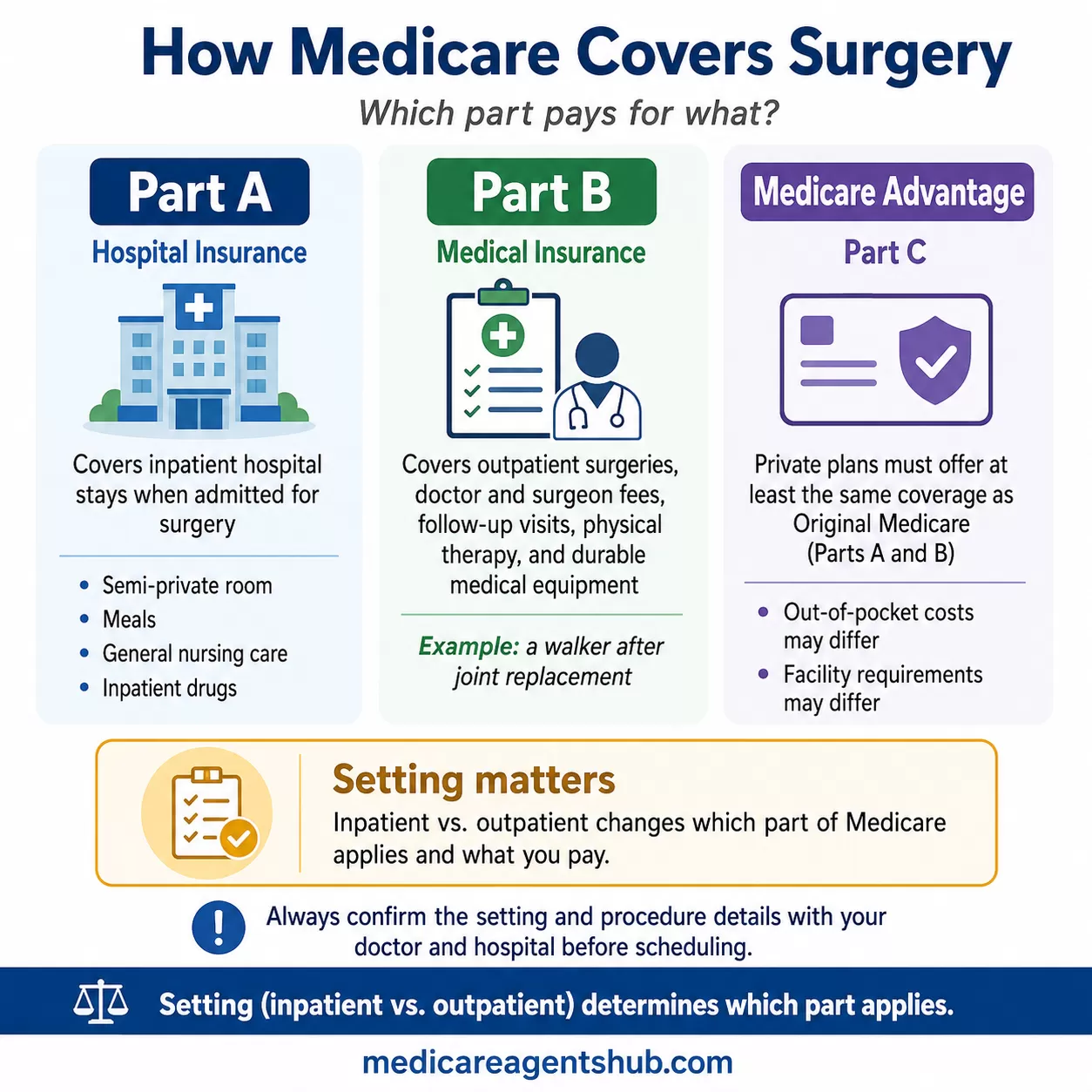
Part A (Hospital Insurance) covers inpatient hospital stays (including room, meals, nursing care, and drugs) when you need to be admitted for surgery.
-
Part B (Medical Insurance) covers outpatient surgeries, doctor services, and related care like follow-up visits, physical therapy, and needed medical equipment (for example, a walker after joint replacement).
-
If you have a private Medicare Advantage (MA) plan, that plan must offer at least the same coverage as Original Medicare (Parts A and B). Depending on your MA plan, out-of-pocket costs and facility requirements may differ.
Because the setting (inpatient vs. outpatient) and the details of the procedure (what exactly is done, what after‑care is required) affect coverage, it is always important to check with your doctor and hospital in advance.

I'm interested in a robotic knee replacement surgery that my surgeon recommends for my specific anatomy. How does Medicare coverage work for this advanced procedure?
In general Medicare takes a look at robotic knee replaces like it does traditional knew replacements. However, like any medical procedure it must be deemed as medically necessary. Medicare Part A covers the inpatient stay while Part B covers outpatient services and doctor fees. If you have a Medicare supplemental plan than that might help with your deductibles, coinsurance, including your out of pocket costs.Confirm the details of your surgery with your surgeon's office, this will help with both Medicare Advantage and traditional Medicare with a supplement.
Coverage for Specific Common Surgeries
Below are how Medicare typically handles several surgeries that many beneficiaries encounter:
Hip and Knee (Major Joint) Replacements
-
When a hip replacement (or similar major joint replacement) is medically necessary. For example, because of advanced arthritis, joint damage, or failure of non-surgical treatments, Medicare helps with the cost. If you're dealing with chronic back pain, Medicare also covers imaging, therapy, and pain management options before surgery becomes necessary.
-
If you are admitted to a Medicare‑approved hospital for the surgery, Part A will cover the hospital stay: semi‑private room, meals, general nursing care, inpatient drugs, and other hospital services.
-
If the surgery occurs at an outpatient surgical facility, Part B applies; covering the surgery itself, the surgeon’s and doctor’s fees, and medically necessary follow-up care (like physical therapy and rehab services, doctor visits, and durable medical equipment such as a walker).
-
For after‑surgery rehabilitation, if you need care at a skilled nursing facility (after a qualifying inpatient stay), Part A may cover a portion.
-
If you have a supplemental coverage plan (sometimes called a “Medigap” policy), it may help cover the cost of coinsurance, deductibles, or other out-of-pocket expenses.
Because each patient’s situation is different, from health condition to type of facility, it is wise to talk with your doctor and the hospital billing department before scheduling surgery.

Does Medicare pay for hip, knee, or shoulder replacement surgery?
Yes—Medicare does cover hip, knee, and shoulder replacement surgery when it’s medically necessary.• The surgery itself is covered under Part A (if you’re admitted to the hospital) and Part B (surgeon fees, outpatient procedures, therapy, etc.).
• Medicare also covers post-surgery rehab, physical therapy, and necessary medical equipment.
• Your exact cost depends on whether it’s inpatient or outpatient and what type of Medicare plan you have.
Cataract Surgery
-
Medicare covers medically necessary cataract surgery under Part B for most beneficiaries. For a deeper look at what the procedure involves and what patients should watch out for, see our guide on what Medicare covers for cataract surgery.
-
This coverage includes removal of the cloudy natural lens and implantation of a standard intraocular lens (IOL).
-
After you meet the Part B deductible, typically you pay 20% of the Medicare‑approved amount for both the surgical facility and the doctor performing the procedure.
-
If you need corrective eyeglasses or contact lenses after surgery (because of the lens implant), Medicare will cover one pair of standard eyeglasses or one set of contacts as long as you get them from a Medicare‑approved supplier.
-
Note that Medicare does not usually cover routine vision care, so coverage applies specifically because of the cataract surgery, not routine eye exams or cosmetic vision procedures.
If you have a Medicare Advantage plan, coverage for cataract surgery is still required. However, copays or facility requirements may vary, so be sure to ask your plan provider.

Is Medicare's coverage for cataract surgery enough, or do seniors still face high out-of-pocket costs?
Yes, there are often out-of-pocket costs for cataract surgery, but it depends on the coverage. If you have Original Medicare, your Part B will cover 80% of the cost after the Part B deductible has been met. If you have a Medicare Supplement in addition to your Part B, the the cost can vary depending on the plan that you chose. Medicare will also cover one pari of standard eyeglasses or contact lenses after cataract surgery with an intraocular lens.If you have a Medicare Advantage plan the plan will cover the surgery but copays and coinsurance vary from plan to plan so it's best to call customer service or your agent to determine the cost.
As for the optional upgrades, Medicare generally does not fully cover these so please check with your doctor.
Other Common Procedures (Tumor Removal, Hernia Repair, Cardiac & Injury‑Related Surgeries)
Medicare also covers many other medically necessary surgeries needed to treat illnesses, injuries, or disease (for example, hernia repair, tumor removal, surgeries after fractures or injuries, some cardiac procedures, etc.). Newer options like robotic-assisted surgery and other medical technologies may also be covered under your plan.

I'm interested in a robotic knee replacement surgery that my surgeon recommends for my specific anatomy. How does Medicare coverage work for this advanced procedure?
Medicare covers robotic-assisted knee replacement the same way it covers a traditional knee replacement if it's medically necessary. Medicare pays for the surgery itself—not the robotic technology. If your surgeon recommends robotic assistance because it's best for your specific anatomy, coverage is generally based on medical necessity, not the surgical technique.Original Medicare (Part A & Part B): Covers the hospital stay, surgeon, anesthesia, and rehabilitation after you meet applicable deductibles and coinsurance.
Medicare Advantage (Part C): Also covers medically necessary knee replacement, but you'll need to use the plan's network and may need prior authorization. Your out-of-pocket costs depend on your plan.
It's always a good idea to confirm that both the surgeon and hospital are in-network (for Medicare Advantage) and that any required prior authorization has been approved before surgery.
After the surgery, if you require medical equipment (walkers, wheelchairs, other durable medical equipment) or outpatient therapy, Medicare may cover these - typically under Part B, subject to deductible and coinsurance.
However, Medicare does not cover every kind of procedure. For example, purely cosmetic surgeries (done for appearance, not for medical necessity) are generally not covered.
Things to Keep in Mind
-
Medicare will only help with surgeries deemed “medically necessary”. If a procedure is elective (or purely cosmetic) Medicare typically will not cover it.
-
Whether surgery is covered under Part A (inpatient) or Part B (outpatient) affects what you pay. Hospital stays under Part A involve a deductible, and Part B outpatient services generally include a deductible plus coinsurance (often 20% of the Medicare-approved amount).
-
If you have other coverage like a Medigap supplement, or Medicaid, or employer/spouse insurance, these could help reduce what you pay out of pocket.
-
Choosing a Medicare-approved hospital or surgeon is important. Also verify that the surgical center or equipment supplier accepts Medicare assignment or is Medicare‑enrolled before your procedure.
-
If you have a Medicare Advantage (MA) plan, coverage is at least the same as Original Medicare, but details like out-of-pocket costs, network providers, and plan rules may differ. Always confirm coverage with your plan before scheduling surgery. Medicare Advantage plans often require prior authorization for surgeries like joint replacements, so make sure that step is handled before your procedure date.
Why It Helps to Work With a Medicare Broker or Agent
If you find Medicare benefits and surgical coverage confusing, you are not alone. Many beneficiaries benefit from speaking with a knowledgeable broker or agent who can help explain plan differences, check that your providers are Medicare‑approved, and help you understand what your out-of-pocket costs might be.
That is where a resource such as Medicare Agents Hub can help by connecting you to Medicare brokers or agents who specialize in helping people navigate Medicare coverage, especially when surgery or other major medical needs are involved.
A good agent can help you choose a plan that works for your health needs, and help you anticipate costs for surgeries, aftercare, physical therapy, and durable medical equipment.
Conclusion
For many older adults, surgeries like hip replacements and cataract removal are common and often medically necessary. The good news is that Medicare, whether Original Medicare (Parts A and B) or a Medicare Advantage plan, generally covers these procedures if they are deemed medically necessary.
While there may still be some out‑of‑pocket costs (deductibles, coinsurance, equipment, or supplies), knowing ahead of time how Medicare handles coverage can help you plan financially and medically. Working with a licensed Medicare broker or agent (for example through Medicare Agents Hub) can make the process smoother and help ensure you get the care you need.