Chronic Back Pain: What Medicare Covers for Imaging, Therapy, and Pain Management

-
December 2, 2025

Reviewed by Austin Farley
Medicare Broker Licensed in KS, AK, AL & 44 other states
Chronic back pain is one of the most common health concerns among older adults, and it can significantly impact mobility, sleep, and overall quality of life. Whether the pain stems from arthritis, degenerative disc conditions, past injuries, or long-term wear and tear, many Medicare beneficiaries want to know which treatment options are covered and how to access them. Understanding what Medicare pays for can help you make informed decisions and avoid unnecessary out of pocket costs.
This guide explains how Medicare covers imaging, physical therapy, medical equipment, pain management services, and specialist care. It also highlights where working with a knowledgeable local Medicare agent or broker can help you understand your specific plan options. Many beneficiaries use resources like Medicare Agents Hub to quickly connect with someone who can walk them through coverage details.
Key takeaways
- Medicare Part B covers medically necessary imaging, physical therapy, injections, and durable medical equipment.
- Acupuncture is covered only for chronic low back pain, up to 20 visits per year under specific rules.
- Chiropractic care is covered only for spinal subluxation adjustments, not for massage or other add-ons.
- Prescription pain medications are covered under Part D or a Medicare Advantage plan with drug coverage.
Understanding Chronic Back Pain and Why Coverage Matters
Back pain affects millions of older adults, ranging from mild stiffness that comes and goes to severe pain that limits daily activities. Conditions like spinal stenosis, osteoarthritis, herniated discs, osteoporosis, and degenerative disc disease become more common with age. Because back pain can have many causes, proper evaluation is the first step. Medicare provides coverage for a wide range of diagnostic and treatment services, but knowing what is included under each part of Medicare makes a big difference in your care experience.

Which Medicare plans offer support for arthritis or chronic pain management?
Original Medicare (Parts A and B) and Medicare Advantage (Part C) both offer comprehensive support for arthritis and chronic pain lasting longer than 3 months. Specific covered benefits include:Chronic Pain Management: Outpatient monthly services including pain assessment, medication management, and care coordination (covered under Medicare Part B).
Therapies: Physical and occupational therapy, chiropractic services, and acupuncture for lower back pain.
Specialized Plans: Medicare Chronic Special Needs Plans (C-SNPs) for rheumatoid arthritis, which tailor benefits and care teams to your exact condition.
Medications: Outpatient medications are covered through Medicare Part D or Medicare Part B depending on how they are administered (e.g., self-administered pills vs. doctor-injected biologics).
If you want me to look up plans in your area, please contact me.
Imaging for Back Pain: What Medicare Covers
Imaging tests help doctors diagnose the cause of back pain, rule out serious issues, and create an effective treatment plan. Medicare Part B covers imaging when it is medically necessary and ordered by a doctor.
X Rays
X rays are often the first imaging test used. Medicare covers them under Part B, and you generally pay 20 percent of the Medicare approved amount after your Part B deductible.
MRI Scans
An MRI provides a detailed look at soft tissue, discs, nerves, and spinal structures. Medicare covers MRI scans when your doctor believes they are necessary to diagnose or monitor your condition. Since MRIs are typically more expensive, it is helpful to confirm whether your imaging center accepts Medicare assignment.
CT Scans
If your doctor suspects fractures, severe degeneration, or certain structural problems, a CT scan may be ordered. Medicare covers CT scans under Part B with the same general cost sharing rules.
Other Diagnostic Tests
In some cases, nerve conduction studies or bone density scans may be part of the evaluation. These are also covered when medically necessary.

Are x-rays, exams, or therapies done by chiropractors covered under Medicare?
Medicare only covers one specific chiropractic service: manual manipulation of the spine to correct a vertebral subluxation. X-rays, exams, and other therapies ordered or performed by chiropractors are not covered.Physical Therapy and Conservative Treatment Options
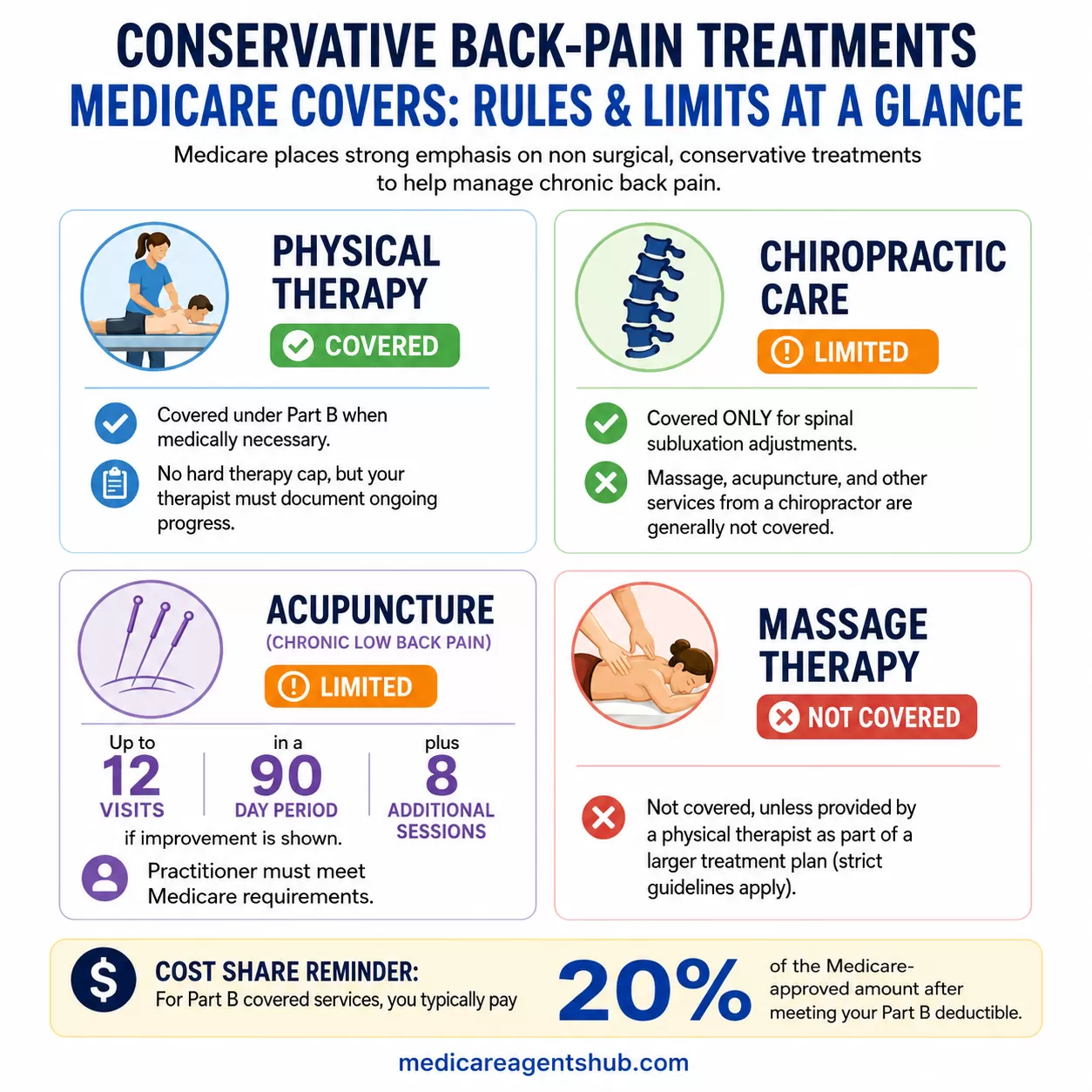
Medicare places strong emphasis on non surgical and conservative treatments for chronic back pain, which often provide long term relief without the risks that come with advanced procedures.
Physical Therapy
Medicare Part B covers physical therapy that is considered medically necessary. This includes strength training, flexibility exercises, manual therapy, and education on posture and movement. There is no longer a hard therapy cap, but Medicare does track usage. Your therapist must regularly document your progress to ensure continued coverage.
Chiropractic Care
Medicare covers chiropractic adjustments specifically when they treat a spinal subluxation, as outlined in the official Medicare chiropractic coverage rules. Other services offered by a chiropractor, such as massage or acupuncture, are generally not covered unless medically approved under a separate benefit.

My dad’s back pain is getting worse. Can Medicare cover ongoing chiropractic care, or is it just short-term treatment?
Medicare only covers chiropractic adjustments when they’re treating a specific spinal problem that’s expected to improve. Medicare Part B only covers manual adjustments when it’s medically necessary. The patient typically pays 20% after the Part B deductible. Services like routine maintenance adjustments, X-rays ordered by the chiropractor, massage, and other therapies are not covered under Original Medicare. Once it becomes routine maintenance, Medicare stops paying.Some Medicare Advantage plans offer additional chiropractic benefits, often including a set number of visits per year with a copay.
Acupuncture
For chronic low back pain, Medicare covers up to twelve acupuncture visits in a ninety day period, with the possibility of eight additional sessions if improvement is shown. Acupuncture must be performed by a practitioner who meets Medicare requirements. Acupuncture for back pain is actually one of several coverage answers that surprise many beneficiaries.

My doctor wants me to try acupuncture for my back pain. Will Medicare cover any of this?
Yes — Medicare only covers acupuncture for chronic lower back pain that’s lasted at least 12 weeks with no known cause. They’ll cover up to 20 visits per year if it’s done by a Medicare-approved provider. For any other reason, you’d have to pay out of pocket.Massage Therapy
Massage therapy is not covered by Medicare unless it is provided by a physical therapist as part of a larger treatment plan, and even then it must meet strict guidelines.
Medications and Pain Management
Managing chronic back pain often requires a combination of medication and non medication strategies. Medicare provides coverage based on which part of the program the treatment falls under.
Medications
-
Over the counter pain relievers are not covered by Medicare.
-
Prescription medications, including muscle relaxants, anti inflammatories, and certain nerve pain medications, are covered under Medicare Part D or a Medicare Advantage plan that includes drug coverage.
-
Opioids are covered in specific situations, but Medicare has monitoring and safety rules to reduce overuse and addiction risks.
Checking your plan’s formulary is important because different plans may cover medications differently. This is an area where working with a local Medicare agent, especially one found through Medicare Agents Hub, can save beneficiaries time and help avoid paying more than needed for prescriptions.
Injections and Medical Procedures
Many beneficiaries receive pain relief from injections such as epidural steroid injections or nerve blocks. Medicare Part B covers these when they are medically necessary and performed by a qualified specialist. You typically pay 20 percent of the approved amount after your deductible.
Radiofrequency ablation, spinal stimulation, and other advanced pain management procedures may also be covered when conservative treatments have failed. Coverage decisions are based on medical necessity.
Durable Medical Equipment for Back Pain
If your doctor determines that you need certain medical equipment for mobility, posture, or pain relief, Medicare Part B covers a portion of the cost under its durable medical equipment (DME) benefit.
Examples include:
-
Back braces that support weakened muscles
-
Walkers or canes to improve mobility
-
Adjustable hospital style beds for home use
-
TENS units for pain management, approved on a case by case basis
All equipment must be ordered by a doctor and obtained through a Medicare approved supplier.
Surgery and Hospital Care
Surgery is typically recommended only when other treatments fail or when a condition poses a serious risk. Medicare Part A covers hospital stays, while Part B covers outpatient procedures and doctor visits.
Common surgeries covered by Medicare include:
-
Spinal fusion
-
Laminectomy
-
Microdiscectomy
-
Vertebroplasty or kyphoplasty for certain fractures
Recovery may include follow up visits, physical therapy, and home health services.
Choosing the Right Medicare Plan for Back Pain Care
Back pain treatment can involve multiple providers, medications, imaging centers, and therapies, which means choosing the right Medicare plan is important. Original Medicare allows broad access to specialists, while Medicare Advantage plans may offer additional benefits like wellness programs or lower costs for therapy sessions, though they typically require prior authorization for imaging, injections, and surgical procedures. Each beneficiary’s situation is different, so speaking with a knowledgeable Medicare agent can help you compare your options clearly.

Which Medicare plans offer support for arthritis or chronic pain management?
While Original Medicare Part B does offer coverage for chronic pain and arthritis treatments, there are more options which provide more comprehensive support. Many Medicare Advantage Part C private plans offer the same coverage as Original Medicare, but also include extra benefits like OTC allowances, massage therapy, and wellness programs tailored to joint pain. In addition, Chronic Condition Special Needs Plans (C-SNPs) are Medicare Advantage Part C plan options which are designed specifically for individuals with severe or disabling chronic conditions, including rheumatoid arthritis.Platforms like Medicare Agents Hub make it easier to find a local licensed agent who can explain how different plans handle physical therapy limits, imaging approvals, and prescription drug coverage, making sure you understand the most cost effective route for your care.
Final Thoughts
Chronic back pain can make daily life difficult, but Medicare offers a wide range of tools to help diagnose, manage, and treat it. From imaging and physical therapy to medications, injections, and even surgical options, Medicare provides coverage for many of the most effective treatments. Understanding what is covered and how the different parts of Medicare work can help you plan ahead and avoid unnecessary costs.
If you ever feel unsure about whether your treatment will be covered or want to compare plan options that better support your back pain care needs, connecting with a local Medicare agent can be extremely helpful. With the right information and resources, you can take steps toward long term relief and improved quality of life.