Seeing Clearly: What Medicare Covers for Cataract Surgery and Why Some Patients Feel Pressured to Pay More


The Growing Confusion Around Cataract Surgery
Cataract surgery is one of the most common medical procedures performed on Americans over 65. But lately it seems to cause a lot of confusion. Every month I meet Medicare beneficiaries who tell me the same story. They went to an eye doctor expecting a routine, covered procedure, and left feeling like they were being pushed toward an expensive “advanced” option that Medicare would not fully pay for.
The confusion is understandable. Most Medicare plans have what seems like a reasonable copay or coinsurance amount for cataracts. But cataract surgery today comes with several choices like standard surgery, laser-assisted surgery, premium lenses, astigmatism correction, and packages promising freedom from glasses. Often patients are also told these options are not optional. The result is anxiety, uncertainty, and sometimes bills in the thousands of dollars when the patient was expecting much less.
To make sense of it, we need to understand what Medicare covers and why the upgrade conversation has become so common.
Does Medicare Cover Cataract Surgery?
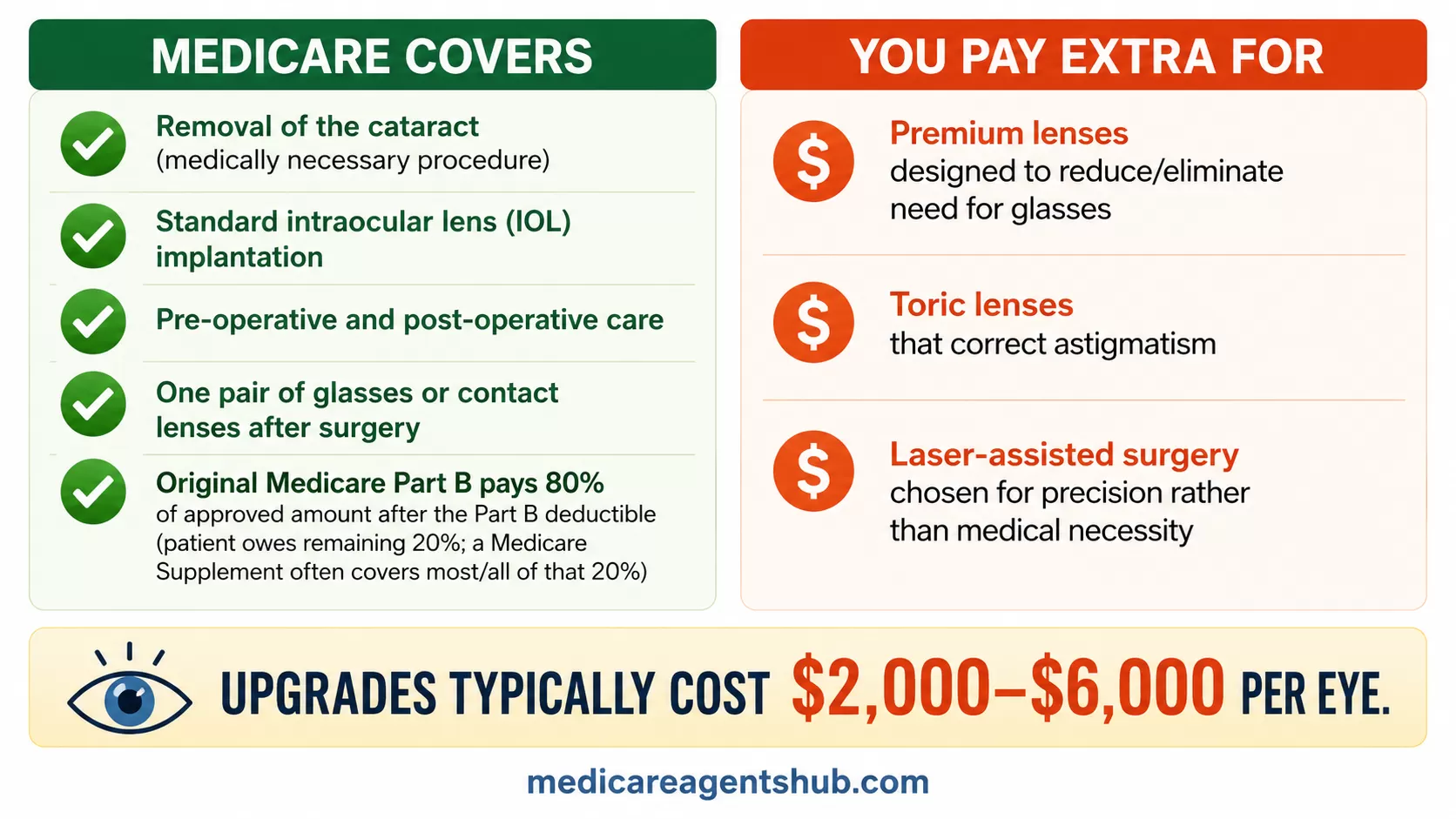
When cataracts interfere with your daily life like driving, reading, and recognizing faces, Medicare considers surgery medically necessary. That means Medicare Part B will cover removal of the cataract and implantation of a standard intraocular lens. Pre-operative and post-operative care are included, and Medicare even pays for one pair of glasses or contact lenses after surgery.
Under Original Medicare, the program typically pays 80 percent of the approved amount after the Part B deductible. The remaining 20 percent is the patient’s responsibility. If someone has a Medicare Supplement policy, that plan often covers most or all of the remaining balance. This is one reason many beneficiaries love their Supplement coverage. When surgeries happen, the costs are predictable and usually modest.
Medicare Advantage plans work differently, but they must still cover cataract surgery when it is medically necessary. A Medicare Advantage HMO may require a copay, prior authorization, and an in-network provider, but the surgery itself is still covered. Before scheduling, patients should confirm coverage with their plan or their agent. A quick call can prevent a surprise bill.
Are some Medicare Advantage providers better than others?
Because CMS uses a variety of measurements, and there are many plans throughout the nation, it's difficult to say that one carrier is better than another. A better way to judge plans is by looking at their STAR Ratings. All Advantage plans are rated on a 5-star system, 5 stars being the highest rating. Use a local broker to help you determine the highly rated plans in your area.What Medicare Doesn’t Pay For: Laser Surgery, Premium Lenses, and Astigmatism Correction
The real confusion comes from what Medicare does not cover. Medicare pays for the medically necessary procedure and standard lenses. It does not pay for elective upgrades that improve convenience or lifestyle. Premium lenses designed to eliminate glasses, Toric lenses that correct astigmatism, or laser techniques chosen for precision rather than medical necessity are typically considered optional upgrades. Medicare will still pay its share for the basic procedure, but the patient must pay the additional cost of those upgrades.
This is where many people feel pressured. Cataract surgery is emotional. Patients are worried about losing vision. They want the best outcome possible. When a doctor says, “This advanced option gives better results,” it is natural to feel like the standard option is inferior. In reality, standard cataract surgery has an extremely high success rate and restores vision for millions of people every year. Laser-assisted surgery and premium lenses can be helpful in certain situations, but they are not required in most cases.
Medicare’s rule is simple. It pays for medical necessity, not convenience. Choosing upgraded lenses is like choosing designer eyeglass frames. Medicare pays for the basic frames. You can pay extra for upgrades if you want. The important point is that the decision should be informed and voluntary. No one should feel that they must choose an expensive option to get safe care.
How Much Does Medicare Pay for Cataract Surgery? Coverage at a Glance
| Service | Covered by Medicare? | What You Pay |
|---|---|---|
| Cataract surgery (medically necessary) | Yes (Part B or Medicare Advantage) | Part B deductible + 20% coinsurance (or MA plan cost share) |
| Standard monofocal intraocular lens | Yes | Included with surgery cost share |
| Premium, multifocal, or accommodating lenses | No | Full upgrade cost out of pocket |
| Toric (astigmatism-correcting) lenses | No (rare exceptions if medically necessary) | Full upgrade cost out of pocket |
| Laser-assisted surgery for convenience | No | Full upgrade cost out of pocket |
| One pair of eyeglasses or contacts after surgery | Yes (after standard lens implant) | Part B deductible + 20% coinsurance |
How to Protect Yourself From Unexpected Costs
If you are told you need cataract surgery, slow down and ask questions. Ask whether standard surgery is medically appropriate for you. Ask for a written estimate that separates what Medicare covers from what you would pay. Upgrades can cost two to six thousand dollars per eye. That is manageable for some households and stressful for others. If something feels unclear or pressured, get a second opinion. If a provider says they only do the advanced laser surgery, that is a decision they made for their practice. Providers should explain both options to you and let you make the choice. If you feel forced, get a second opinion.
Another step that helps is calling your Medicare agent. Your agent can review cataract surgery coverage before you schedule anything. They can confirm whether your Medicare Advantage plan requires prior authorization, what their co-pay will be, and whether the surgeon is in network.
Clear Information Leads to Clear Vision
Cataract surgery is one of Medicare’s most valuable benefits. It restores vision, independence, and quality of life for millions of seniors. Medicare covers the surgery most people need. Patients are not required to choose expensive upgrades unless they want them.
If you or a loved one is facing cataract surgery, ask questions, get written estimates, and talk with someone who understands your coverage. Clear information leads to clear vision, both medically and financially.
Where to Learn More
- Medicare.gov – Cataract Surgery Coverage
- Medicare Procedure Price Lookup – compare typical costs in your area
- State Health Insurance Assistance Program (SHIP) – free, unbiased Medicare counseling
- Medicare Help Line: 1-800-MEDICARE (1-800-633-4227)
About the Author: Mark Bilgere is an insurance broker specializing in Medicare, Life, and Long-Term Care and other Health Insurance products. His mission is to go beyond just selling policies; he focuses on educating our clients and ensuring they fully understand their options. Mark's firm prides themselves on delivering personalized service that fosters meaningful relationships. Bilgere Insurance is committed to helping you navigate your insurance needs with confidence and care, ensuring your peace of mind and financial security. Mark is also a Certified Long Term Care Consultant (CLTC) and a Registered Social Security Advisor (RSSA).