Does Medicare Cover Vision? What Beneficiaries Need to Know

-
Last Updated August 21, 2026

Reviewed by Austin Pierce
Medicare Agent Licensed in CO, AL, AR & 19 other states
Quick answer: Original Medicare (Parts A and B) does not pay for routine eye exams, glasses, or contact lenses. It does cover medically necessary vision care like cataract surgery, glaucoma screenings for high-risk patients, and diabetic eye exams. For routine vision benefits, you'll need a Medicare Advantage plan or a stand-alone vision policy.
When it comes to health, vision doesn’t get as much attention as other aspects of care, but for Medicare beneficiaries, eye health is critical. Regular eye exams, glasses, and treatment for conditions like cataracts or glaucoma can make a huge difference in maintaining independence and quality of life. One of the most common questions beneficiaries ask each year is: “Does Medicare cover vision care?” The answer is both simple and a little complicated.
What Original Medicare Covers for Vision
Original Medicare (Parts A and B) is designed to cover medically necessary care rather than routine services. That means it generally does not cover standard eye exams, glasses, or contact lenses. However, there are exceptions when vision care is tied to a medical condition or necessary treatment.
For example, Medicare Part B helps cover:
-
Cataract surgery (including one pair of standard eyeglasses or contact lenses after surgery), as outlined by Medicare.gov.
-
Glaucoma screenings once per year if you are considered high risk. Medicare defines high risk as having diabetes, a family history of glaucoma, being African American age 50 or older, or being Hispanic American age 65 or older.
-
Diabetic eye exams to check for diabetic retinopathy.
-
Macular degeneration treatment, including certain drugs administered by your doctor.
If you are hospitalized due to a severe eye condition or surgery, Part A may cover hospital-related costs, but this doesn’t extend to routine vision care.

Does Medicare cover vision care?
No, Original Medicare typically does not cover routine eye exams, eyeglasses, or contact lenses. However, Medicare Part B does cover medically necessary eye exams and services, such as annual diabetic eye exams and glaucoma screenings for high-risk individuals, and one pair of eyeglasses or contacts after cataract surgery with an intraocular lens implant.Routine Vision Care and Original Medicare
If you simply want an annual eye exam to check your vision or need new glasses because your prescription has changed, Original Medicare will not pay for it. This can be frustrating for beneficiaries, especially since vision tends to decline naturally with age.
Vision is just one piece of a larger coverage gap; the question of whether Medicare should cover dental, vision, and hearing has been an ongoing policy debate for years. (This gap is similar to how Medicare handles dermatology, covering medical skin conditions but not cosmetic ones.) Many people are surprised to learn that they’ll need to pay out-of-pocket for routine exams, glasses, and contact lenses unless they have other coverage in place.

Does Medicare cover vision care?
Medicare generally does not pay for routine eye exams or glasses. It will cover vision care when it's tied to a medical condition, like after cataract surgery or for monitoring certain eye diseases.How Medicare Advantage Helps with Vision Coverage
This is where Medicare Advantage (Part C) plans step in. These plans, offered by private insurance companies approved by Medicare, are required to provide the same coverage as Original Medicare but often include extra benefits. One of the most popular add-ons is vision coverage.
Most Medicare Advantage plans include routine eye exams and may also provide allowances for eyeglasses or contact lenses. Some plans even extend coverage for progressive lenses, specialized contacts, or designer frames. However, the amount of coverage varies widely, and there may be limits on how often you can get glasses or how much the plan will pay toward your frames and lenses.
For beneficiaries who want vision coverage beyond what Original Medicare provides, Medicare Advantage is often the most affordable solution.

I've got a Medicare Advantage plan, and I'm curious if my upcoming eye surgery is fully covered or if I'll owe extra out of pocket.
Medicare Advantage plans are required to cover everything Original Medicare (Parts A & B) covers—this includes outpatient eye surgeries when deemed medically necessary by your doctor. You’ll be responsible for cost-sharing—coinsurance, copays, and deductibles. It is best to check your evidence of coverage with your carrierMedicare Supplement (Medigap) and Vision
Unlike Medicare Advantage, Medigap policies do not usually offer extra benefits such as vision or dental coverage. Their primary role is to help pay the out-of-pocket costs that come with Original Medicare, such as deductibles and coinsurance. If you’re relying only on Original Medicare plus Medigap, you’ll likely need to purchase a separate vision insurance policy or pay out-of-pocket for routine care.

How can I get dental and vision coverage with Medicare?
Original Medicare and Medicare Supplements do NOT include dental and vision coverage, you would need to pair them with stand-alone dental/vision products. If you want a Medicare policy that INCLUDES dental and vision you will need to explore your available Medicare Advantage options.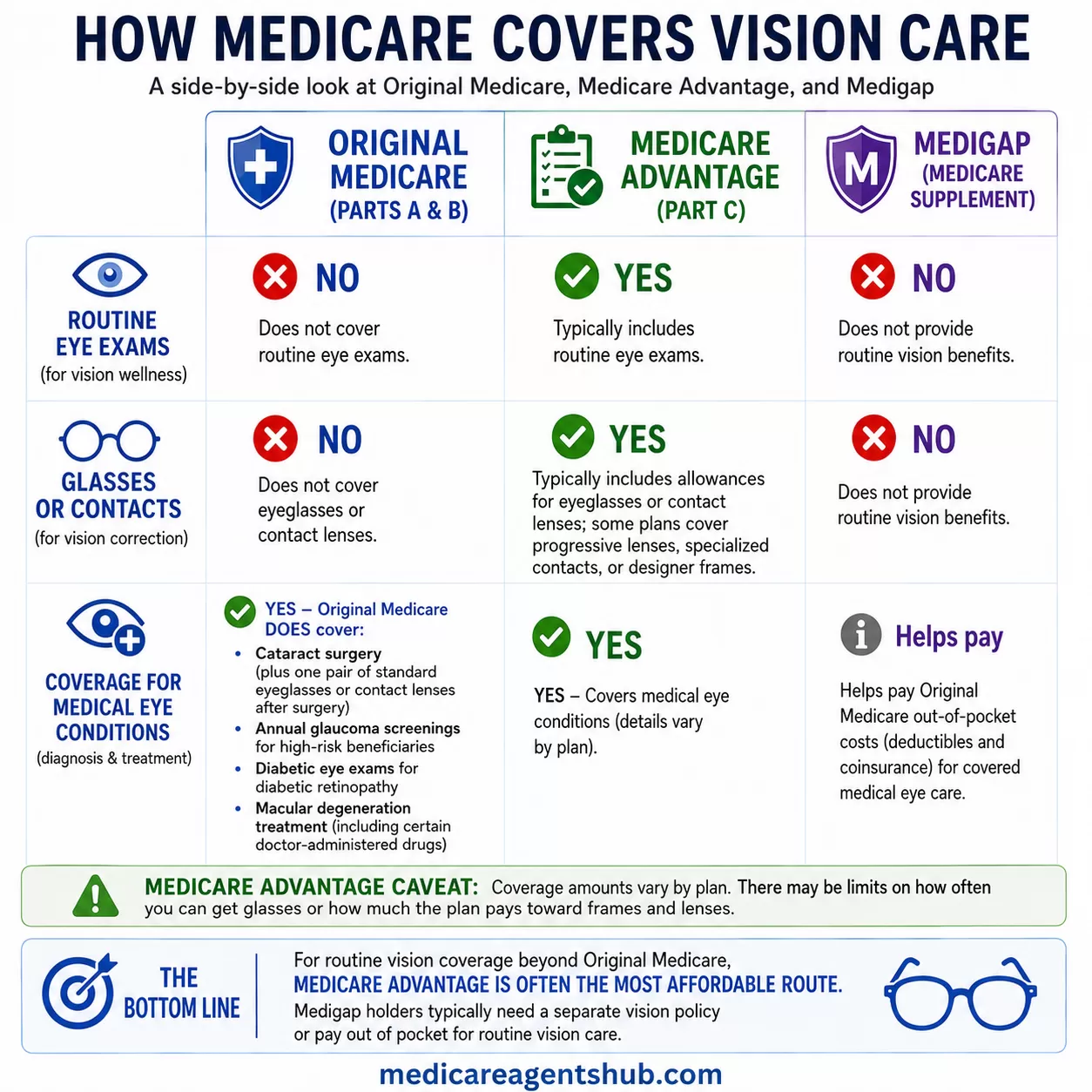
Why Vision Care Matters for Seniors
Even if you’ve had excellent eyesight most of your life, changes in vision often come with age. Regular eye exams can detect early signs of serious conditions such as glaucoma, cataracts, and macular degeneration. For people with diabetes, monitoring eye health is especially important to prevent long-term complications.
Poor vision can also contribute to falls, accidents, and a reduced ability to manage daily tasks. Something as simple as updating your eyeglasses can help maintain independence and safety. That’s why reviewing your coverage options each year during Medicare’s Annual Enrollment Period (October 15–December 7) is so important.
What Beneficiaries Should Do Next
If you’re unsure what your current plan covers, check your plan’s Annual Notice of Change (ANOC) and Evidence of Coverage (EOC) documents. These will outline exactly what vision services are included and what your out-of-pocket costs may be.
When exploring your options, keep in mind these steps:
-
Work with a licensed Medicare agent. An experienced agent can walk you through your vision coverage options, explain the differences between plans, and help you find one that best meets your needs.
-
Review your current vision needs. Do you need routine exams, new glasses, or treatment for a medical eye condition?
-
Compare plans during enrollment. Look at Medicare Advantage options that include vision benefits and compare allowances, copays, and provider networks.
Making Your Vision Coverage Decision
While Original Medicare offers only limited vision benefits, you do have options for more comprehensive coverage. Medicare Advantage plans, stand-alone vision insurance, and discount programs can help cover the costs of routine eye care, glasses, and contacts.

Does Medicare cover vision care?
No, Original Medicare (Parts A & B) generally does not cover routine vision care like eye exams for glasses, eyeglasses, or contact lenses, but it does cover medically necessary vision services, such as exams for diabetic retinopathy, glaucoma, or macular degeneration, and one pair of glasses after cataract surgery. For comprehensive vision benefits, many people enroll in a Medicare Advantage Plan (Part C), which often includes routine eye exams, glasses, and contacts.Eye health plays a major role in overall well-being. Sitting with a Medicare advisor and taking the time to understand your Medicare vision coverage (and making adjustments if needed) can help ensure you keep your sight sharp and your quality of life strong for years to come.