Comparing Medicare Plans for COPD: Finding the Right Coverage for Lung Health

-
October 27, 2025

Reviewed by Joel McClure
Medicare Agent Licensed in NJ, AL, AR & 42 other states
Chronic Obstructive Pulmonary Disease (COPD) affects millions of Americans, making it one of the most common chronic conditions among older adults. Managing COPD involves more than just medication, it requires regular doctor visits, pulmonary rehabilitation, oxygen therapy, and sometimes hospital care. For those eligible for Medicare or approaching enrollment age, understanding how different Medicare plans cover COPD care can make a significant difference in both cost and quality of life.
Below, we’ll break down how Medicare covers COPD, the pros and cons of different plan types, and what to consider when comparing options for your lung health.
Understanding How Medicare Covers COPD
Original Medicare, which includes Part A (hospital insurance) and Part B (medical insurance), provides a strong foundation for COPD-related care.
-
Part A covers inpatient hospital stays, skilled nursing facility care, and some home health services. If your COPD symptoms worsen and you need hospitalization, Part A will handle most of those expenses after your deductible.
-
Part B covers outpatient doctor visits, pulmonary specialists, lab tests, preventive screenings, and durable medical equipment (like oxygen concentrators). It also covers pulmonary rehabilitation, which is one of the most important treatments for improving breathing and quality of life in COPD patients. Medicare’s official rules for this benefit are outlined on the Medicare.gov pulmonary rehabilitation page.
Medicare Part B also covers flu and pneumonia vaccines, which are essential for preventing respiratory infections that can make COPD symptoms worse.
However, even with Original Medicare, there are out-of-pocket costs like deductibles and 20% coinsurance for most Part B services. That’s why many beneficiaries look for additional coverage through Medicare Advantage or Medigap plans.

How does Medicare cover COPD treatment and oxygen therapy?
Medicare covers treatment for COPD, including doctor visits, pulmonary testing, medications, pulmonary rehabilitation, and hospital care when needed.If your doctor determines that oxygen therapy is medically necessary, Part B will help pay for the oxygen equipment, supplies, and maintenance through a medical equipment provider.
You are typically responsible for the Part B deductible and 20% of the Medicare approved amount. Prescription inhalers and other COPD medications are typically covered under a Part D drug plan or a Medicare Advantage plan that includes drug coverage.
Comparing Original Medicare + Medigap vs. Medicare Advantage
When it comes to COPD care, both of the coverage paths, Original Medicare + Medigap and Medicare Advantage (Part C), have strengths and trade-offs.
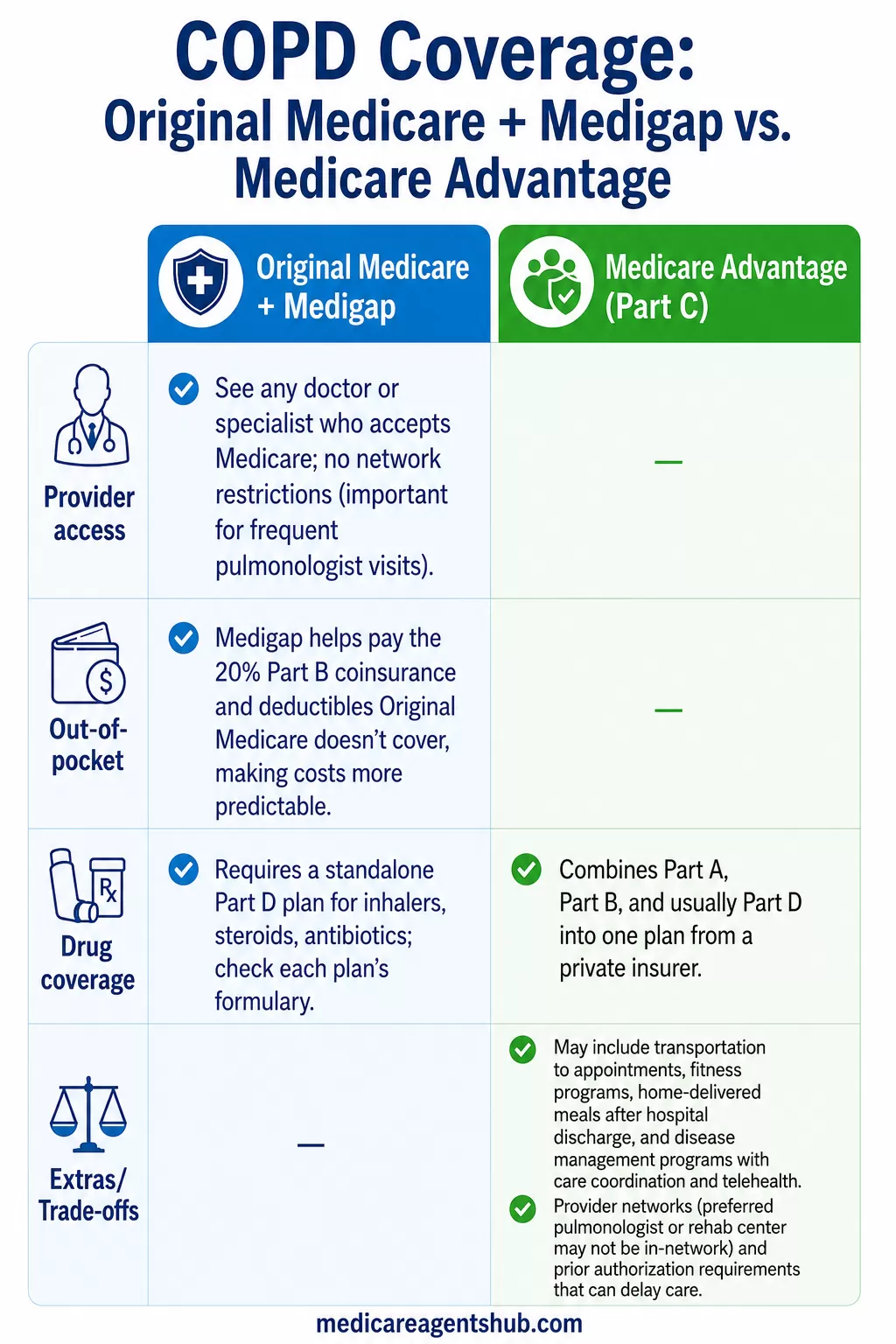
Here’s how the two paths stack up on the factors that matter most for COPD patients:
| Factor | Original Medicare + Medigap | Medicare Advantage (Part C) |
|---|---|---|
| Provider choice | Any doctor or hospital nationwide that accepts Medicare | Network-based; may need referrals or prior authorization |
| Out-of-pocket costs | Predictable with Medigap covering most coinsurance and deductibles | Lower premiums, but copays and coinsurance up to an annual out-of-pocket max |
| Prescription drugs | Requires a separate Part D plan | Usually bundled into the plan |
| Extra benefits | None built in | Often includes dental, vision, transportation, meals, or fitness |
| Disease management | Not included | Many plans offer COPD care coordination and telehealth check-ins |
Original Medicare + Medigap
With Original Medicare, you can see any doctor or specialist who accepts Medicare, without network restrictions. That’s important for COPD patients who might need frequent visits to pulmonologists or specialty clinics.
Adding a Medigap policy (also called a Medicare Supplement) helps pay for the 20% coinsurance and deductibles that Original Medicare doesn’t cover. This makes out-of-pocket costs more predictable, which is a major advantage for people managing chronic illnesses like COPD.
You’ll also need a standalone Part D prescription drug plan to cover your inhalers, steroids, antibiotics, and other medications. Drug coverage varies by plan, so it’s important to check each plan’s formulary to make sure your medications are covered affordably.
Medicare Advantage (Part C)
Medicare Advantage plans combine Part A, Part B, and usually Part D into one plan offered by private insurers. Many include extra benefits Original Medicare doesn’t, like coverage for transportation to appointments, fitness programs, or home-delivered meals after hospital discharge.
For COPD patients, some Medicare Advantage plans offer disease management programs, which can include personalized care coordination, telehealth check-ins, or case managers to help monitor symptoms and medication use. These programs can be very helpful in preventing hospital readmissions.
However, there are trade-offs. Most Medicare Advantage plans have provider networks, meaning you must use doctors and hospitals within the plan’s network. If your preferred pulmonologist or rehab center isn’t included, you might pay more out of pocket or have to switch providers. Some services also require prior authorization, which can delay care.

Isn't Medicare Advantage just private health insurance? What is the difference?
Medicare Advantage plans are essentially plans that are required to offer at a minimum, the same level of coverage that is offered by Original Medicare. The benefits are provided through private insurance companies who typically charge copays for services, whereas Original Medicare charges a flat 20% coinsurance on covered services. Medicare Advantage plans have Maximum Out of Pocket Limits to prevent members from being overcharged for covered services, and the copays are sometimes substantially lower than 20% of the cost of a covered services. Another major difference in Medicare Advantage plans is that because they are offered through private insurance carriers, many of them have a network of doctors and hospitals that members must use to ensure that their medical services are covered.What to Look for When Comparing Plans
When evaluating Medicare coverage for COPD, keep your current and future health needs in mind. Look beyond just the premiums to consider total costs and access to care.
Here are a few key factors to review:
-
Medication coverage: COPD treatment often involves multiple prescriptions; long-acting bronchodilators, inhaled corticosteroids, maintenance inhalers like Breztri and Trelegy, rescue inhalers, and sometimes oxygen supplies. Check that all your medications are included in the plan’s formulary and confirm what tier they’re listed under, since this affects copays.
-
Pulmonary rehabilitation: Make sure your plan covers pulmonary rehab at facilities near you, as these programs are critical for maintaining lung strength.
-
Oxygen and equipment: Confirm coverage for home oxygen therapy, nebulizers, and durable medical equipment providers. See Medicare’s oxygen equipment coverage rules for the specifics on what qualifies.
-
Out-of-pocket limits: Medicare Advantage plans have annual out-of-pocket maximums that cap what you’ll pay in a year, which can be useful if you expect frequent care.
-
Provider access: If you have a trusted pulmonologist or preferred hospital, verify that they accept your plan before enrolling.
Taking the time to compare these factors will help you choose the coverage that keeps your treatment accessible and affordable year-round.

How does Medicare cover COPD treatment and oxygen therapy?
Answer from Janix Barbosa-Llanos, MBA, PMP, CEP, RSSA, FSN(Licensed Insurance Agent — For Educational Purposes Only)
COPD treatments are usually paid for by Medicare through various parts of Medicare, depending on the type of services provided.
Under Medicare Part B, patients with COPD could get help paying for visits to physicians, pulmonary rehabilitation, breathing studies, nebulizers, durable medical equipment, including oxygen equipment, and medically necessary oxygen therapy prescribed by a physician. Durable medical equipment includes oxygen concentrators and portable oxygen systems, which are covered under Medicare Part B after Medicare requirements are met.
Medicare Part D or a Medicare Advantage plan with prescription drug coverage will help cover inhalers and other COPD prescriptions.
Medicare / CMS Disclosure
For educational purposes only. Not affiliated with or endorsed by Medicare or any government agency. Plan availability and benefits vary by ZIP code and individual eligibility.
The Value of Local Guidance
Medicare can be complex, especially when managing a chronic illness like COPD. A local Medicare advisor who understands your healthcare network and area-specific plan options can make this process easier. Advisors can review your medications, doctors, and oxygen needs to pinpoint which plan structure offers the most support.
If you’d like personalized help, you can find local and experienced advisors through Medicare Agents Hub, a reliable resource that connects beneficiaries with professionals who specialize in helping people with chronic conditions navigate their Medicare choices.
Choosing the Right Plan for Your Lung Health
For many people with COPD, the “best” Medicare plan depends on balancing flexibility, predictable costs, and coverage for medications and rehab.
-
If you want nationwide access to specialists and predictable costs with no network restrictions, Original Medicare + Medigap + Part D is a strong choice.
-
If you prefer extra benefits, disease management support, and a single bundled plan, Medicare Advantage may be more appealing. Just review the provider network and prior authorization policies carefully.
Either way, take time to review plan details every year. COPD needs can change, and so can plan coverage. Comparing your options thoughtfully by getting help from a trusted local Medicare advisor when needed, ensures you’ll have the coverage and care you need to keep breathing easier.