Healthy Aging With Medicare: Preventive Services That Support Long-Term Wellness

-
November 24, 2025

Reviewed by Kyle Billingsley
Medicare Agent Licensed in FL, AL, AR & 42 other states
Aging well is not something that happens by chance. It requires consistent attention to your health, regular checkups, and taking advantage of preventive services that can help detect problems early. Medicare plays a major role in supporting long-term wellness by covering a wide range of preventive benefits that can keep you healthier, more active, and more informed about your overall health. Whether you are new to Medicare or have been enrolled for years, understanding these services can make a real difference in how you age.
Medicare’s preventive care benefits are designed to reduce the likelihood of developing serious conditions and help you catch issues before they become more difficult or costly to manage. These services are covered under Medicare Part B, and in most cases you can receive them with no out-of-pocket cost as long as your provider accepts Medicare assignment. Learning how and when to use these benefits empowers you to take control of your well-being, stay independent longer, and enjoy a healthier life as you age.

I'm confused about preventive services under Medicare. Which screenings are actually free?
Many Medicare Part B preventive services, including various cancer screenings, vaccinations, and wellness visits, are no cost to beneficiaries, as long as the service is provided by a provider who accepts assignment. For example, colorectal cancer screenings like colonoscopies, mammograms, and prostate cancer screenings are covered without cost. Additionally, the Welcome to Medicare and yearly wellness visits are also no cost.Understanding Medicare’s Focus on Prevention
Medicare invests in preventive care for a simple reason. When people stay on top of their health, they avoid many complications that come from undiagnosed or unmanaged conditions. For older adults, preventive care is especially important because chronic illnesses such as heart disease, diabetes, osteoporosis, and cancer become more common with age. Early detection increases treatment success, lowers the chance of hospitalization, and improves quality of life.
Preventive services can include screenings, vaccinations, counseling, and annual wellness appointments. These benefits help your doctor keep track of changes in your health, identify risks, and create a long-term plan that fits your needs. Taking advantage of these services every year forms the foundation of healthy aging.
The Welcome to Medicare Visit
If you are new to Medicare Part B, you can receive a one-time Welcome to Medicare preventive visit within your first 12 months of enrollment. This visit gives you and your provider an opportunity to review your medical and family history, discuss current health concerns, and assess your risk for certain conditions. It also includes measurements such as height, weight, blood pressure, a vision check, and guidance on future preventive services.
Many people skip this visit without realizing how valuable it is. It creates a baseline for your doctor to track your health over time and ensures you begin your Medicare journey with a clear understanding of your needs and goals.
Your Annual Wellness Visit
After your first year on Medicare, you are eligible for an Annual Wellness Visit once every 12 months, as outlined by Medicare.gov. This is not a physical exam, but a detailed check-in focused on preventive planning. During your visit, your provider will review your current health status, medications, cognitive function, risk factors, and lifestyle habits. You will also work together to create or update a personalized prevention plan.
Many important health assessments can be reviewed during this appointment, including fall risk, memory concerns, depression, mobility limitations, and changes to your vital signs. This visit helps catch problems early and keeps you on track with your long-term wellness strategy.
Key Preventive Screenings Covered by Medicare
Medicare covers a wide range of screenings that are essential to maintaining long-term health. Beyond traditional screenings, Medicare also covers a growing number of health technologies — from AI-powered diagnostics to remote patient monitoring — that support preventive care. These screenings vary in frequency based on your age, history, and risk factors. The table below summarizes several of the most common preventive services covered under Part B and how often they are typically available.
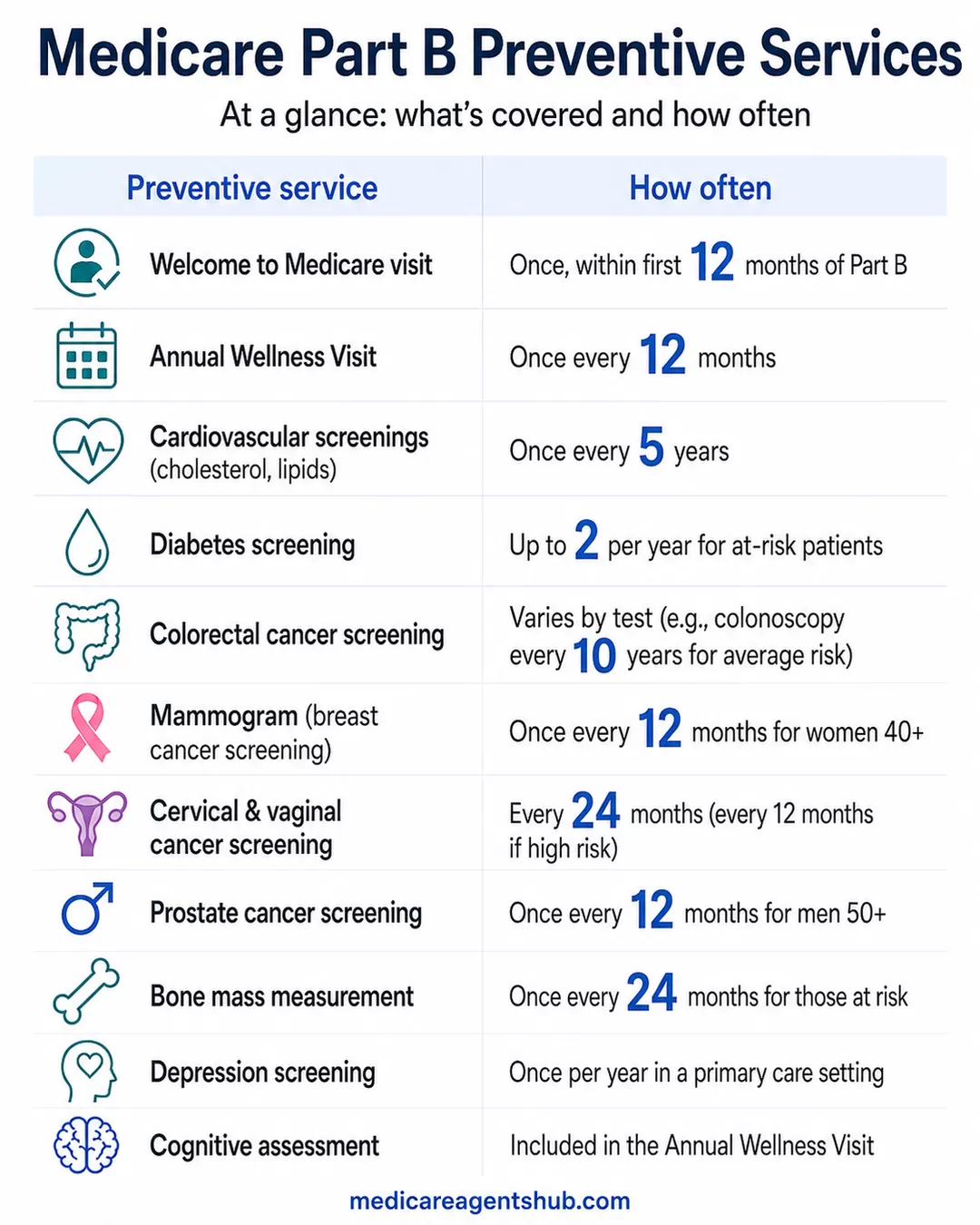
| Preventive Service | Typical Frequency |
|---|---|
| Welcome to Medicare visit | Once, within first 12 months of Part B |
| Annual Wellness Visit | Once every 12 months |
| Cardiovascular screenings (cholesterol, lipids) | Once every 5 years |
| Diabetes screening | Up to 2 per year for at-risk patients |
| Colorectal cancer screening | Varies by test (e.g., colonoscopy every 10 years for average risk) |
| Mammogram (breast cancer screening) | Once every 12 months for women 40+ |
| Cervical & vaginal cancer screening | Every 24 months (every 12 months if high risk) |
| Prostate cancer screening | Once every 12 months for men 50+ |
| Bone mass measurement | Once every 24 months for those at risk |
| Depression screening | Once per year in a primary care setting |
| Cognitive assessment | Included in the Annual Wellness Visit |
1. Cardiovascular Screenings
Medicare covers cholesterol, triglyceride, and lipoprotein screenings once every five years. These tests help identify heart disease risk, which remains the leading cause of death for older adults. Early detection allows you and your doctor to create a plan that might include lifestyle changes, medication, or closer monitoring.

I'm at high risk for heart disease based on my family history. What additional preventive services might Medicare cover for someone with my risk factors?
1. Cardiovascular Disease Screenings: Medicare Part B covers these screenings once every 5 years. This includes blood tests to check your cholesterol, lipid, and triglyceride levels, which can indicate conditions that may lead to a heart attack or stroke. If your provider accepts assignment, you won't have to pay anything for these screenings.2. Cardiovascular Behavioral Therapy: Medicare Part B covers one session each year with your primary care physician or practitioner. This therapy helps you lower your risk for cardiovascular disease and may include a blood pressure check and healthy diet advice. You pay nothing if your provider accepts assignment.
3. Abdominal Aorta Aneurysm Screening: If you have a family history of abdominal aorta aneurysm, Medicare covers a one-time screening. This screening involves a one-time ultrasound to check for a ballooning of the main blood vessel transporting blood to the legs.
4. Intensive Behavioral Therapy (IBT) for Obesity: Medicare covers IBT for obesity, especially relevant if being overweight contributes to your heart disease risk. This counseling is typically done by a doctor or other healthcare professional in a primary care setting. If the provider accepts Medicare assignment, there are no out-of-pocket costs for the counseling and assessments.
5. Other Related Preventive Services: Tobacco Cessation Counseling: If you use tobacco, Medicare Part B covers counseling to help you quit.
Medical Nutrition Therapy: Medicare covers medical nutrition therapy if your doctor determines it is medically necessary.
Intensive Behavioral Therapy for Cardiovascular Disease: This therapy is specifically designed to reduce CVD risk through counseling on diet, exercise, and aspirin use.
Annual Wellness Visit: This annual visit provides an opportunity to discuss preventive care and establish a personalized screening schedule.
2. Cancer Screenings
Screenings for colorectal cancer, breast cancer, prostate cancer, and cervical cancer are included under Part B. The frequency of these depends on your age and risk level, and early detection can significantly improve outcomes. Colonoscopies, for example, can prevent cancer by finding and removing polyps before they become dangerous. One thing to know: if a screening turns into a diagnostic procedure — for example, if a polyp is removed during a colonoscopy — you may owe part of the cost, because the visit is no longer billed as purely preventive.

I'm considering genetic testing to assess my cancer risk based on family history. Will Medicare cover this preventive approach in my situation?
Medicare may cover genetic testing for cancer risk—but only in specific situations. In general, Medicare Part B covers genetic tests when they are medically necessary and ordered by a doctor, typically if you already have a personal history of cancer or symptoms that could affect treatment decisions. However, if you’re looking at genetic testing purely as a preventive step based only on family history, Medicare usually does not cover it, because it’s considered screening rather than diagnostic care. The best approach is to speak with your doctor or a licensed agent to review your specific situation and determine whether you meet the criteria for coverage.3. Diabetes Screenings
If you have risk factors such as high blood pressure, obesity, or a family history of diabetes, you may be eligible for up to two diabetes screenings per year. Diabetes is a major driver of long-term complications, including kidney disease, nerve damage, and vision problems, so catching it early is essential.
4. Bone Density Tests
Medicare covers bone mass measurements for people at risk of osteoporosis, typically once every two years. This is especially important for older women and anyone with a history of fractures or certain medications that reduce bone density.
5. Behavioral and Mental Health Screenings
Depression, alcohol misuse, and cognitive decline become more common with age. Medicare covers screenings that can identify these issues early, along with counseling or referrals when needed. Cognitive assessments are especially important for detecting early signs of dementia or Alzheimer’s.
Vaccinations That Support Long-Term Health
Preventive care includes staying up to date on vaccinations. Medicare covers most essential adult vaccines recommended by the CDC, which protect older adults from serious and sometimes life-threatening illnesses.
These include:
-
The flu shot each year
-
The COVID-19 vaccine, including recommended boosters
-
The pneumococcal vaccine, which prevents types of pneumonia
-
The RSV vaccine, now recommended for many older adults and covered under Part D
-
Hepatitis B vaccines for those at higher risk
Staying current on vaccines is one of the simplest ways to avoid hospitalizations and maintain long-term wellness.

I'm confused about which vaccines Medicare covers. Can you explain which ones are free?
Medicare Part B covers vaccines for the Flu, COVID, Pneumonia, and Hepatitis B. Part B also covers vaccines if you’re exposed to a harmful virus or bacteria by accident, such as a tetanus shot or rabies shot.Part D (prescription drug) plans cover vaccines for RSV, Shingles, Tdap (tetanus, diphtheria, and pertussis/whooping cough), and vaccines that are "reasonable and necessary" to prevent illness and are not covered by Part B. Part D may also cover vaccines required to travel internationally.
Lifestyle and Counseling Services
Medicare also covers several counseling and lifestyle support services that help you manage or reduce your risk of chronic disease. Services such as nutrition counseling for individuals with diabetes or kidney disease, smoking cessation programs, and obesity counseling can make a major difference in overall health.
These benefits help you build healthy habits, understand your risk factors, and address lifestyle challenges that may affect your mobility, energy levels, or long-term independence.
Putting Preventive Care Into Action
To make the most of Medicare’s preventive benefits, schedule your Annual Wellness Visit each year and ask your provider which screenings you are due for. Keep track of your vaccination schedule, discuss any new symptoms or concerns, and review your medications regularly. Small, consistent steps can have a significant impact on your long-term health. If you have a Medicare Advantage plan, you get the same preventive services Original Medicare covers, but network rules and plan-specific extras vary, so check your plan documents or ask your agent before scheduling.
If you are unsure which benefits apply to you, a Medicare agent or advisor can walk you through the details. Platforms such as Medicare Agents Hub make it easy to connect with knowledgeable brokers who can help you understand your plan and ensure you are using your preventive services effectively. This support can be especially valuable during enrollment periods when reviewing your coverage options.
Conclusion: The Takeaway
Healthy aging is about staying proactive, informed, and connected to the preventive services that Medicare offers. With regular screenings, yearly wellness visits, immunizations, and ongoing conversations with your doctors, you can take control of your long-term wellness and enjoy a healthier, more active life. Preventive care is one of the strongest tools Medicare provides, and understanding how to use it is essential to aging well. The first step is often a conversation — use the Medicare Agents Hub directory to find a local, licensed agent who can review your current coverage and make sure you’re not missing out on these preventive benefits.