Can You Lower Your Medicare Costs With Smart Tax Planning?

-
January 5, 2026

Reviewed by Re'al Sutton
Medicare Agent Licensed in FL, AL, AR & 19 other states
Short answer: yes, sometimes.
Longer answer: it depends on your income, how that income is reported on your tax return, and whether you plan ahead or let Medicare costs happen to you by surprise.
Key takeaways:
- Medicare Part B and Part D premiums can rise sharply once your income crosses the IRMAA thresholds.
- IRMAA is based on your MAGI from two tax years ago, so 2026 premiums come from your 2024 return.
- Timing withdrawals, spacing Roth conversions, and using Roth funds strategically can keep you under the thresholds.
- If your income drops after a life event, you can appeal IRMAA using Form SSA-44.
Many people assume Medicare costs are fixed. You pay Part B, maybe a Part D plan, and that is that. But for millions of beneficiaries, taxable income directly affects Medicare premiums, sometimes by thousands of dollars a year. Understanding that connection puts you back in control.
Let’s break it down in plain English.
Why Taxes Matter More Than You Think With Medicare
Medicare bases some of its costs on your Modified Adjusted Gross Income, or MAGI. This number comes straight from your federal tax return.
If your MAGI crosses certain thresholds, you may pay an Income-Related Monthly Adjustment Amount, better known as IRMAA. This is a surcharge added to:
-
Medicare Part B premiums
-
Medicare Part D premiums
IRMAA does not affect Part A.

Am I responsible for an IRMAA surcharge?
Possibly — IRMAA is an extra surcharge on Medicare Part B and Part D if your income is above certain limits. Medicare looks at your tax return from two years ago to determine this.You’ll get a letter from Social Security if IRMAA applies to you, and it will show the amount. If your income has gone down due to something like retirement, you can usually appeal it.
Here’s the part that catches people off guard: Medicare looks at your income from two years ago, not last year or this year. Your 2026 premiums are based on your 2024 tax return.
That means a financial decision you already made can quietly raise your Medicare costs today.
What Triggers Higher Medicare Premiums? (2026 IRMAA Brackets)
You do not need to be ultra-wealthy to get hit with IRMAA. For 2026, IRMAA is projected to begin when MAGI exceeds:
-
$109,000 for individuals
Go just one dollar over, and the surcharge applies. Higher income tiers pay progressively larger Part B and Part D surcharges, and the top tier can add several hundred dollars a month per person. The tier amounts are confirmed each fall by CMS and adjusted annually — always verify the current-year numbers on the official Medicare.gov costs page before making a planning decision.

What happens if my dad’s income changes? Can his Medicare plan or costs change too?
It is possible for both higher and lower incomes. There is an IRMAA high-income penalty which changes each year:In 2026, higher-income beneficiaries will pay increased premiums for Medicare Part B and Part D based on their modified adjusted gross income (MAGI). For individuals, the income thresholds start at $109,000, and for married couples, it begins at $218,000, with premiums increasing based on higher income levels.
Medicare Income Limits for 2026
In 2026, Medicare beneficiaries with higher incomes will face increased premiums for both Medicare Part B and Part D. The income thresholds that determine these increased premiums are based on modified adjusted gross income (MAGI).
Income Thresholds
The following table outlines the income thresholds for Medicare beneficiaries in 2026:
Filing Status Income Threshold (MAGI) Monthly Part B Premium Amount
Individual ≤ $109,000 $202.90
> $109,000 - ≤ $137,000 $284.10
> $137,000 - ≤ $171,000 $364.30
> $171,000 - ≤ $500,000 $444.50
> $500,000 $689.90
Married Filing Jointly ≤ $218,000 $202.90
> $218,000 - ≤ $274,000 $284.10
> $274,000 - ≤ $342,000 $364.30
> $342,000 - ≤ $750,000 $444.50
> $750,000 $689.90
Also, if income goes down, each State offers different levels of income assistance for Medicare/Medicaid reduced charges program.
Common triggers include:
-
Required Minimum Distributions from retirement accounts
-
Capital gains from selling investments
-
Selling a home or business
-
Roth IRA conversions
-
One-time income events like bonuses or large withdrawals
These are normal financial moves — and some you don't even choose, like inheriting an IRA and being required to take taxable distributions. The problem is when they happen without considering Medicare.
Smart Tax Planning Can Reduce or Avoid IRMAA
This is where strategy comes in. Smart tax planning is not about dodging taxes. It is about managing when and how income shows up. For a deeper look at the income game retirees face with IRMAA, see our guide on how to beat IRMAA with smarter income strategies.
Here are some proven ways people reduce Medicare-related costs.
1. Control the Timing of Income
Because Medicare looks back two years, timing matters. Spreading income over multiple years can keep you under IRMAA thresholds.
Examples include:
-
Taking smaller retirement withdrawals over time
-
Spacing out Roth conversions instead of doing one large conversion
-
Planning asset sales across tax years
This approach helps smooth income instead of creating spikes that trigger higher premiums.

I retired in August 2026 and want to take a large retirement-account withdrawal this year, which would push my 2026 MAGI above the IRMAA threshold. Since my income will be lower in 2027 due to retirement, could I use the work-stoppage life-changing event to have my 2028 IRMAA based on my lower 2027 income instead?
Yes, you can use the Work Stoppage life-changing event in this scenario. When you get your 2028 IRMAA notification (typically comes late 2027), you can file the appeal and indicate Work Stoppage- Life Changing Event, submit the supporting attestation and your estimated income without the one-time IRA withdrawal in 2026.Keep in mind, Medicare utilizes a 2-year look-back rule. Therefore, your 2028 IRMAA is calculated off of your 2026 income.
If you are planning to retire in the next 1-2 years, it's best to consult an advisor and agent that can assist you with properly preparing for retirement. There are a lot of rules that need to be considered to minimize your taxes, impact on IRMAA, how to maximize your assets, and when to start drawing from your accounts (Social Security, 401K, IRA, etc.) and stop funding HSA accounts, and how to AVOID PENALTIES.
2. Understand How MAGI Is Calculated
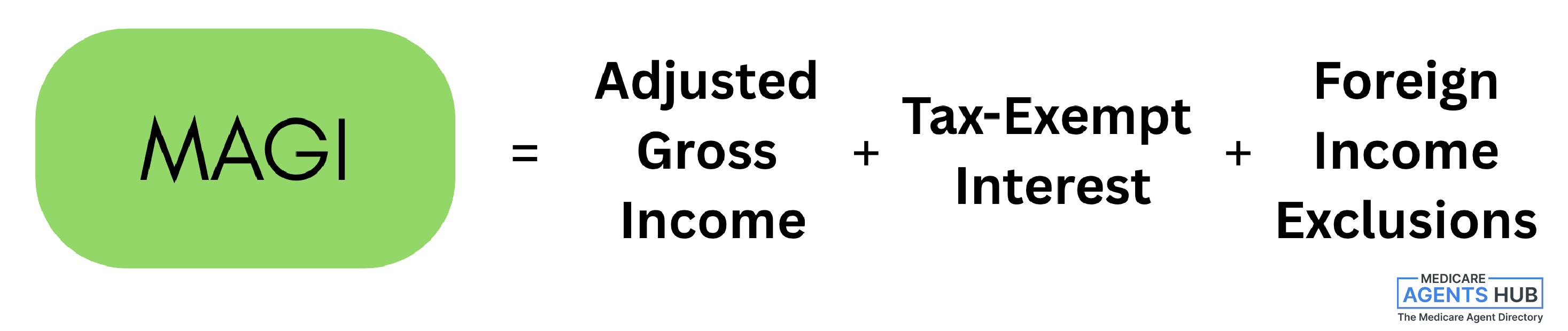
MAGI is not just your paycheck. For Medicare purposes it is your Adjusted Gross Income plus a few add-backs:
-
Adjusted Gross Income (AGI)
-
Tax-exempt interest (like municipal bond income)
-
Certain foreign income exclusions
Some income sources feel “invisible” but still count for Medicare. Knowing what feeds into MAGI helps you make better decisions before tax season arrives.
3. Use Roth Accounts Strategically
Withdrawals from Roth IRAs do not count toward MAGI when taken correctly. That can make Roth funds valuable for covering expenses without increasing Medicare premiums.
This does not mean Roth accounts are always the answer, but when used intentionally, they can help manage taxable income in retirement.
4. Appeal IRMAA After Life Changes
Not all income increases are permanent. Medicare allows appeals when you experience a life-changing event, such as:
-
Retirement or reduced work hours
-
Divorce
-
Loss of income-producing property
You can file Form SSA-44 with the Social Security Administration and request that Medicare re-evaluate your premiums based on current income instead of past earnings.

How can I lower my Medicare Part B premium if my income drops after retirement?
If your income drops after retirement, you can request a reduction in your Part B premium by filing an IRMAA appeal with the Social Security Administration. This is done using Form SSA-44, which allows you to report a “life-changing event” such as retirement or loss of income. Medicare normally uses income from two years ago, so this process updates your premium to reflect your current situation. You’ll need to provide documentation, such as proof of retirement or reduced income. If approved, your Part B premium can be adjusted downward.Many people qualify for relief and never realize it.
Medicare Planning Is Not Just a Tax Issue
Tax planning affects Medicare, but Medicare choices also affect your overall costs.
Plan selection, drug coverage, and enrollment timing all matter. This is where working with a knowledgeable local Medicare agent in your state can help. A local agent understands regional plan options and can coordinate with your tax or retirement strategy so one decision does not accidentally raise costs elsewhere.
The goal is alignment, not guesswork.
What Smart Planning Really Looks Like
Smart Medicare tax planning is not about chasing loopholes. It is about:
-
Knowing your income thresholds
-
Avoiding unnecessary income spikes
-
Planning withdrawals intentionally
Even small adjustments can prevent large premium increases.

What happens if my dad’s income changes? Can his Medicare plan or costs change too?
Yes. Your Medicare Part B is definitely affected by his income. People who have a higher-than-average income (based on your taxes two years prior) you will pay a much higher rate for your Medicare Part B premiums.People who have a very very low income will get assistance with their Medicare and can be exempted from paying their Medicare Part B premium at all.
Your father should always have a meeting with his agent if his income substantially changes in either direction.
Even without a change in income, he should be having a short meeting every year with his agent to review any rate increases, coverage changes, and changes in his situation.
And because rules and thresholds change over time, reviewing your situation annually matters. A local Medicare agent who works with beneficiaries year after year can help spot issues early, before they turn into expensive surprises.
The Bottom Line
Yes, you can lower your Medicare costs with smart tax planning, but only if you understand how taxes and Medicare interact.
Medicare premiums are not just about age or enrollment. They are tied directly to income decisions you make, often years earlier. With a little foresight and the right guidance, many beneficiaries avoid overpaying and keep more of their retirement income where it belongs.
If you are approaching Medicare or already enrolled, now is the time to look beyond premiums and start looking at the tax picture behind them.