How to Talk to Your Parents About Medicare

-
Last Updated August 24, 2026

Reviewed by Annabelle Gerhardt-Hobbs
Medicare Agent Licensed in MI, AL, AR & 41 other states
Conversations about health and finances aren’t always easy, especially between adult children and their aging parents. But when it comes to Medicare, waiting too long to talk can lead to missed deadlines, unexpected costs, and confusion that could have been avoided. If your parent is approaching age 65 (or is already enrolled but unsure about their coverage) it’s worth sitting down together to make sure everything is on track.
This guide is written for sons and daughters who want to support their parents through the Medicare process. For specific questions to bring to the conversation, see our companion guide: 8 questions every caregiver should ask a Medicare agent. By approaching the conversation with patience, clarity, and a little preparation, you can help your parent feel confident about their choices without overwhelming them.
Start With Empathy and Understanding
For many parents, turning 65 and enrolling in Medicare is more than just a paperwork milestone, but it’s also a reminder of aging. That can make the subject emotional. Your mother or father may feel nervous about losing employer-based insurance, or worried that Medicare won’t cover the doctors and treatments they need and use. Some may avoid the topic altogether because the options feel complicated. Understanding the real frustrations seniors face with Medicare can help you approach the conversation with more empathy.
Before diving into the details, acknowledge their feelings. Many seniors experience Medicare fatigue from feeling overwhelmed by the sheer volume of choices and information. Let your loved one know that you’re not there to make decisions for them, but to help them understand their choices and feel supported. A calm, respectful tone can set the stage for a productive conversation.

How can you create a comfortable environment for discussing Medicare with your parents?
Listening to their concerns and offering reassurance will make the process less overwhelming for them. Put yourself into their shoes. Imagine what it's like. This empathy will not only make the process easier for them but also strengthen your bond with your parents.Do Your Homework First
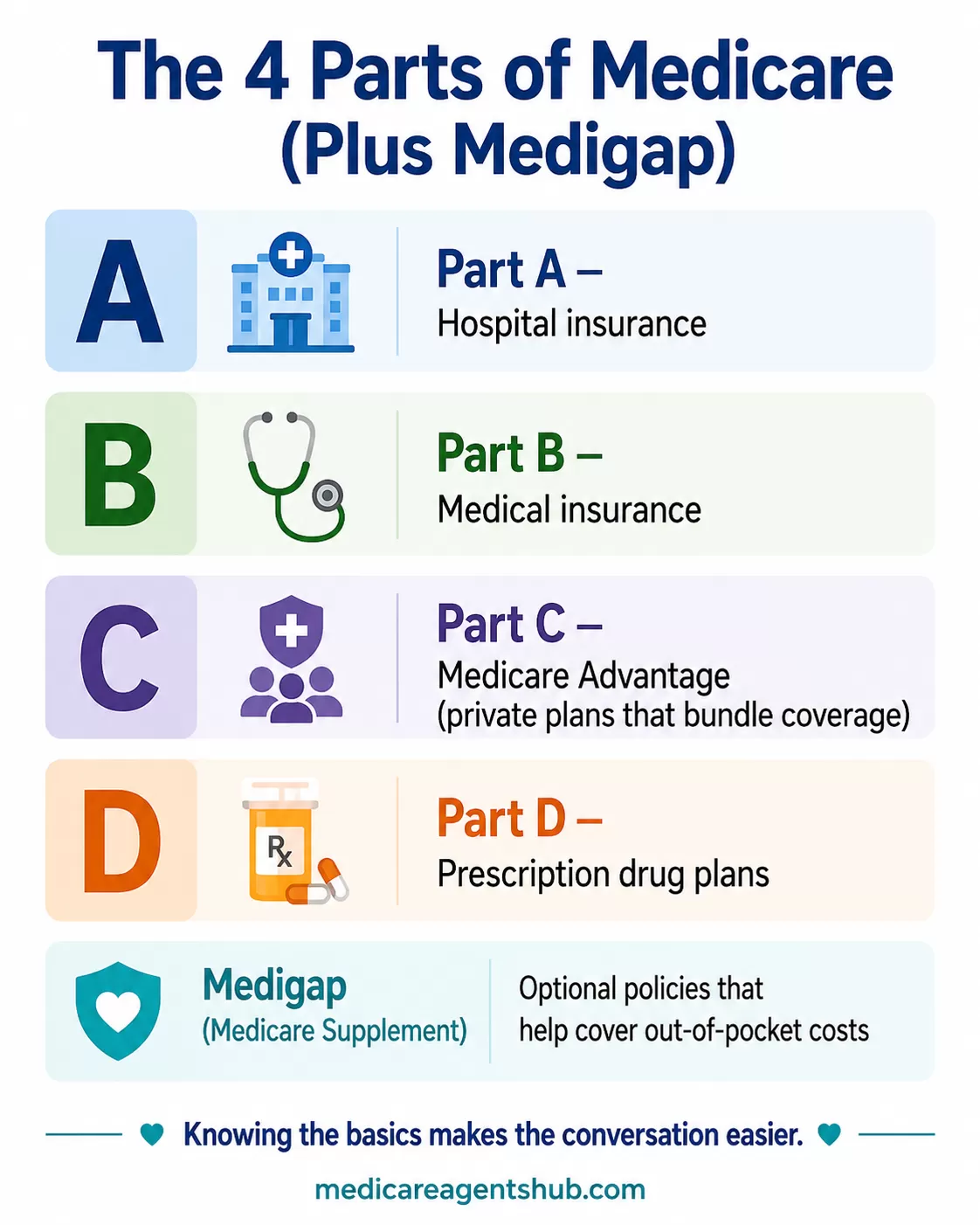
It’s helpful to learn the basics of Medicare before you bring it up. That way, you can explain things in plain language and answer simple questions. Medicare is divided into four main parts:
-
Part A (hospital insurance)
-
Part B (medical insurance)
-
Part C (Medicare Advantage, private plans that bundle coverage)
-
Part D (prescription drug plans)
On top of that, many people consider Medigap (Medicare Supplement) policies to help cover out-of-pocket costs. While you don’t need to be an expert, having a general idea of these parts will make the conversation smoother and show your mom or dad you’ve put in effort to understand the system.
Timing Matters
Medicare enrollment has specific deadlines, and missing them can result in late penalties or gaps in coverage. The Initial Enrollment Period starts three months before your parent’s 65th birthday, includes the birthday month, and ends three months after. If your parent is still working and has employer-provided insurance, the rules may be different, so it’s important to confirm their situation.
Talking early gives you time to explore the options without pressure. Even if your parent’s 65th birthday feels far away, starting the conversation now can prevent stress later.
Keep the Conversation Simple
Medicare can feel like alphabet soup, and too much information at once may overwhelm a parent. Break the conversation into smaller, digestible pieces. Instead of trying to explain every coverage rule in a single sitting, focus on the basics: what Medicare is, when they need to enroll, and what choices they have.
You can always schedule follow-up discussions to go deeper. Remember, your role is to guide, not to overload.
Listen to Their Priorities
Every parent will have unique health needs and financial concerns. Some care most about keeping their doctor, while others want the lowest monthly premium. Some may need strong prescription drug coverage, while others hardly take any medications.
By asking them about their priorities, you’ll better understand what kind of Medicare plan will work best. This also keeps the focus on them, rather than you making the choices.

What are some ways to ensure your parents feel supported during the Medicare decision-making process?
Start by listening to their priorities, explaining Medicare options in plain language, and reviewing plans together so they feel involved rather than overwhelmed. Offer to help compare coverage for their doctors, prescriptions, and budget, and reassure them that you'll be there to support them before, during, and after enrollment.Bring in a Medicare Agent or Broker
One of the best ways to reduce stress (for both you and your parent) is to find a professional Medicare agent or broker. Working with a licensed agent or broker is typically free for the client, since they’re paid by the insurance companies rather than by you. These experts can do the heavy lifting: they know how to compare plans, explain differences clearly, and match them with coverage that fits their health and budget.
An independent agent or broker works with multiple insurance carriers, meaning they aren’t tied to just one company’s plans. They can help your loved one not only choose the right plan now but also make adjustments in future years if their needs change. This ongoing support ensures that your mother or father won’t be left alone to navigate changes in premiums, coverage, or prescription drug formularies.
For you, the son or daughter, this takes a huge burden off your shoulders. Instead of trying to sift through dozens of plan options, you can focus on supporting your parent emotionally while letting the professional handle the technical side.

What are some ways to ensure your parents feel supported during the Medicare decision-making process?
I good local Medicare agent should help from the first phone call, through plan decisions, enrollment and for as long as your parents have their Medicare plans. Medicare is individual plans and an annual renewal. Your agent should support you and your parents every step of the way.Common Concerns to Address
As you guide the conversation, a few common concerns may come up:
-
“Will I lose my doctor?” – Reassure your parent that most doctors accept Medicare, but certain Advantage plans may limit networks. This is where an agent’s expertise is helpful.
-
“How much will this cost?” – Premiums, deductibles, and copays vary. Having someone explain the costs clearly can help avoid surprises.
-
“What if I make the wrong choice?” – Remind your parent that Medicare’s Annual Enrollment Period (October 15 to December 7) allows plan changes each year, and a Special Enrollment Period may open if their circumstances change. Working with an agent ensures they won’t be stuck with the wrong plan long-term.
Wrapping Up the Conversation
Your parent may not be ready to make a decision after the first discussion, and that’s okay. The goal is to start the dialogue, reassure them they aren’t alone, and set up the next steps. Encourage them to meet with a Medicare agent or broker so they can make an informed decision with expert guidance.
By approaching the topic with patience, preparation, and compassion, you’ll help your parent feel cared for and supported. Medicare doesn’t have to be intimidating when it’s handled as a team effort; with you, your parent, and a trusted professional working together.

What are some ways to ensure your parents feel supported during the Medicare decision-making process?
Here are 3 things you can do to better support your parents, friends, and family when it comes to navigating all things Medicare.1. Start with Active Listening and Being Present for them along their Medicare journey.
*As a Medicare Agent, I always recommend inviting friends/family that they trust to be part of the process and as an ongoing support throughout their Medicare journey. Your parents will feel more comfortable when there is someone there they already know and trust and is already familiar with their unique situation and potential needs.
2. Do Not Make Assumptions
- It's important to understand that each person is different and how they feel about navigating Medicare, what information they already know about Medicare, and if there are or are not any questions, concerns, or gaps in their Medicare Discovery and Enrollment journey.
3. Participate in as many of the meetings about Medicare with them.
-You will also someday be at this important milestone (Medicare and Retirement) and can get a head start on building a solid foundation about the process and options available through your Medicare benefits.
- I always encourage clients and their support team to take notes, ask questions, and fully engage in the process. It's a lot of information, especially for someone new to Medicare, and there can be a fear of missing something or not fully understanding or forgetting to ask about important details.
- It's ok to ask someone to repeat or restate any portion of the discussion.
- Before the conclusion of a meeting, ask the Agent/Facilitator to recap key details and ask if there are any lingering questions or elements that need to be re-visited before moving forward with making such an important decision.
As a support for your parents, it's about being present, available, and resource to help them navigate their journey. You will be a great resource for them. I promise!
Final Thoughts
Talking to your parents about Medicare is one of the most important ways you can support them as they age. While the system can feel complicated, starting the conversation early, listening to their concerns, and bringing in expert help can make the process manageable. With the right plan in place, you’ll give your mom or dad peace of mind, and yourself reassurance that their health and financial future are protected.