What Is Medicare Fraud & Why You Should Care

-
November 2, 2025

Reviewed by Ashley Luttjohann
Medicare Agent Licensed in IL, AK, AL & 44 other states
Medicare fraud isn't just an abstract government problem: it can directly harm you and your family by exposing your personal data, getting false claims billed to your record, and even interfering with legitimate care. Scammers and bad actors target Medicare because of its size, and the consequences land on real people. Knowing what Medicare fraud looks like, how it happens, and what you can do about it is one of the best ways to protect your health and finances.
What "Medicare Fraud" Means in Plain Language
At its core, Medicare fraud happens when someone knowingly submits false information to get Medicare to pay for services, equipment, or prescriptions that were not provided or were unnecessary.
Fraud also includes schemes where criminals impersonate Medicare or health-care providers to trick you into sharing your Medicare number or bank information. These schemes can be run by dishonest providers, organized groups, or opportunistic scammers. Understanding common misconceptions about Medicare can also help you recognize when something doesn't add up.
Why It Matters to You and Your Family
Fraud hurts more than the government budget. When fraudulent claims are filed in your name, your Medicare records can show treatments or prescriptions you never received, which can cause confusion or even put you at medical risk.
Fraud also increases program costs overall, contributing to higher Medicare spending and, indirectly, pressure on premiums and benefits. Government reports show that improper payments and fraud in Medicare and Medicaid are measured in the billions, and program integrity efforts remain a top priority.
This is one of many critical Medicare mistakes worth avoiding. Unlike enrollment errors, fraud can happen to you without any action on your part.

Is Medicare fraud an issue I should be worried about?
Unfortunately, yes. And I say that from personal experience.Someone in my own family had fake charges show up from a bogus company billing Medicare for medical supplies they never needed and never received. It looked official, and unless you’re really paying attention, it’s easy to miss stuff like that.
Fraud is a big business, and seniors are prime targets, especially when their personal info gets out there. We’re talking shady companies billing Medicare for mobility devices, braces, tests... you name it. And most of the time, the person being billed has no idea it’s even happening.
So yeah, it’s a big problem for everyone. It’s easy to think “Medicare’s paying, not me,” but fraud drives up costs for everyone.
The best thing you can do is look over the Medicare summary notices or plan EOBs regularly. If something looks off, say something. You can report it, and in many cases, it gets cleaned up pretty quickly if you catch it early.
New and Heightened Fraud Methods to Watch for in 2026
Scam tactics are evolving, and experts are already identifying new methods heading into 2026:
- AI voice cloning / deepfake impersonation: Scammers are using cloned voices (your doctor, family member) to ask for your Medicare number or bank info.
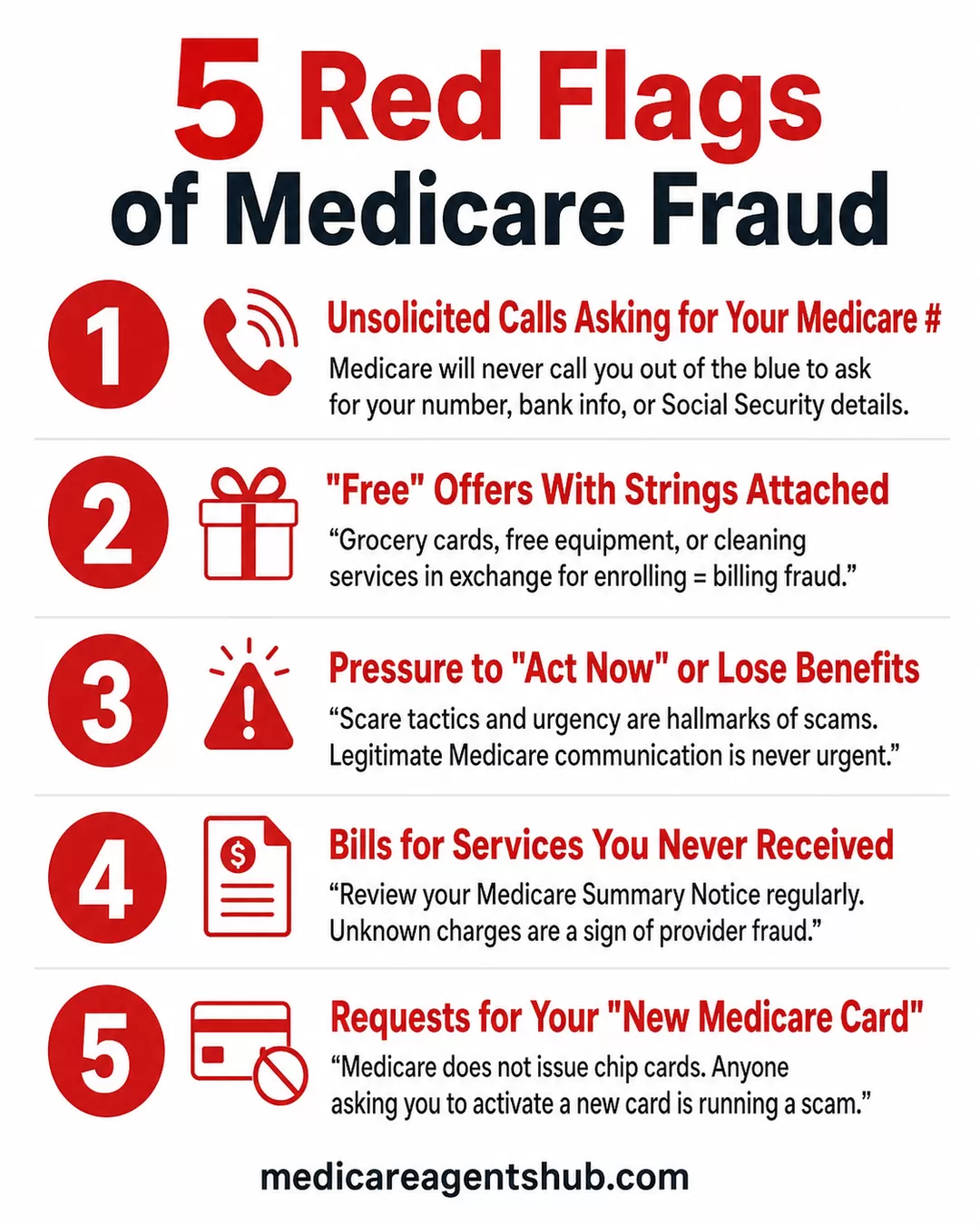
- Fake "chip card" claims: Fraudsters say "Medicare is issuing a new chip card" and ask you to provide or "activate" it. It's a lie used to steal your info.
- Free "benefit" offers tied to enrollment: Offers like grocery debit cards, cleaning services, or "free equipment" if you enroll now, but the enrollment triggers billing to Medicare, often for unneeded services.
- Spoofed government calls, texts, and websites: Frauds that mimic CMS or Medicare's brand, often using spoofed caller ID or look-alike websites asking for your Medicare or Social Security number.
- Electronic funds transfer (EFT) diversion: Growing risk of fraud where payments to providers are diverted via fraudulent authorization of electronic transfers.
- Phishing via fax to medical practices: Although more provider-focused, these tactics can indirectly affect beneficiaries when identity information is compromised and used to bill in your name.

I got a call from a "Medicare agent" promising me free groceries and I almost fell for it. Why is this kind of marketing allowed?
Really glad you didn’t fall for it — and you’re right to be frustrated. Here’s the honest answer on why this keeps happening:It’s not really “allowed” — it’s a gray area being actively abused.
CMS has rules prohibiting misleading Medicare marketing. Agents and plans cannot:
• Make false benefit promises
• Use high-pressure tactics
• Promise benefits not included in the actual plan
But enforcement is slow and complaints are high. The sheer volume of bad actors — many operating as third-party lead generators, not licensed agents — makes it hard to police in real time.
Why it’s so common right now:
The VBID program termination in 2026 (which we discussed earlier) actually reduced grocery benefits significantly — but the TV ads and phone scripts haven’t caught up. Many callers are still pitching benefits that no longer exist at the scale they’re implying.
Red flags you can share with clients:
• Unsolicited calls promising specific dollar amounts (”$900 in free groceries!”)
• Pressure to decide immediately
• Asking for Medicare or Social Security numbers upfront
• “I’m calling from Medicare” — Medicare does not call you
What to do if it happens:
• Hang up
• Report it to 1-800-MEDICARE or the FTC at reportfraud.ftc.gov
• Contact your State Health Insurance Assistance Program (SHIP)
Types of Medicare Fraud: Common Scams and Tactics
Scammers constantly adapt, but a few tactics keep showing up. Being able to recognize these scams makes it much harder for criminals to succeed:
- Phone calls or texts impersonating Medicare: Claiming your benefits will be cut off unless you provide personal information. Medicare does not call to ask for your Medicare number, bank account, or Social Security details.
- "Free" tests or genetic swabs at health fairs: Offered to collect your information and then bill Medicare for unnecessary tests.
- Fake agents or "plan specialists": Who ask for your Medicare number or pressure you to enroll immediately.
- Phishing emails or websites: That mimic Medicare or insurance portals to harvest credentials.
- Fraudulent billing by providers: Billing for services you didn't receive or upcoding services to get higher payments.
- Medicare Advantage scams: Pitches for Medicare Advantage plans that promise free perks, downplay network restrictions, or push you to switch without reviewing your doctors and drug coverage. Always verify the plan and the agent before signing anything.

What's a red flag in a phone call that it might be a Medicare scam targeting my personal info?
If someone calls about Medicare and immediately asks for your Medicare number, Social Security number, or banking info before explaining who they are and what plan they represent — that’s a major warning sign it could be a scam.Legitimate Medicare representatives or licensed agents will never pressure you on the spot or demand sensitive information upfront. If the caller is pushy, won’t give you a callback number, or says things like “act now or lose your benefits,” hang up and report it.
A good rule of thumb: If it feels rushed or secretive, it’s probably not legitimate.
Also, if they call and say they are from your health plan and have found a better plan for you… Hang up and call your agent or call your health plan member services line immediately.
How a Licensed Medicare Agent Can Help Protect You
Working with a trustworthy Medicare professional offers important fraud-prevention benefits. A good agent can:
- Verify legitimacy of plan offers, mailers, calls or texts. If something seems off (an unexpected "free card," urgent phone call, or someone posing as "Medicare enrollment"), your agent can help determine if it's valid.
- Explain the terms clearly, so you understand what a plan really covers (network doctors, prescription drug formulary, premiums vs. copays) rather than being swayed by misleading claims like "$0 premium" or "free groceries."
- Guide you safely through enrollment, ensuring required paperwork (like the Scope of Appointment) is completed properly and you've given informed consent, not rushed into something suspicious.
- Review your medical providers and prescriptions before recommending a plan change, so you're not unknowingly switched into a plan that doesn't serve you or your doctors.
- Spot red flags on your behalf: Verifying if a caller should be contacting you, or helping you watch your Medicare Summary Notices (MSNs) or Explanation of Benefits for claims you don't recognize.
- Serve as your advocate throughout the year, not just at enrollment time. When something weird comes up, a licensed agent is a trusted check-and-balance.

I've heard about Medicare fraud. What steps can I take to protect myself from scams related to Medicare?
Fake Medicare representatives are a major problem.Have your State Department of Insurance investigate one of the representatives you want to work with.
Ask your reps for their National Producer Number, then verify it with the State Insurance Department.
Do not give your Medicare number, Social Security Number, or bank account numbers to anyone who calls you at random. Only trust the people you have verified.
Do not fall for promises that are too good to be true. THEY ARE FRAUDS.
For further questions, please contact me.
BARRY BAKER
If you don't already have a trusted agent, find a licensed Medicare agent near you who can serve as your first line of defense.
How Families and Caregivers Can Help
Seniors are often targeted by scammers who prey on trust, confusion, and a sense of urgency, which is why families and caregivers play such an important role in protection. A simple checklist goes a long way:
- Review statements together. Go through Medicare Summary Notices and medical bills side by side to catch suspicious or unfamiliar charges early.
- Repeat the golden rule. Remind loved ones that Medicare will never make unsolicited phone calls or ask for financial information over the phone.
- Sit in on appointments. Being present when new forms need to be signed adds a layer of security and reassurance.
- Verify before acting. Encourage a healthy skepticism toward unexpected offers or calls, and always confirm any outreach through official Medicare channels before responding.
- Start the conversation early. If you're not sure how to talk to your parents about Medicare, use a checklist of questions every caregiver should ask an agent to guide it.
What Legitimate Medicare Communication Looks Like
Official Medicare communications generally come by mail or through secure online accounts. They will never ask you to provide your bank account or Social Security number over the phone or by text.
If someone calls claiming to be Medicare and asks for sensitive details, that's almost always a scam. When in doubt, hang up and call 1-800-MEDICARE to confirm.

I've heard about Medicare fraud. What steps can I take to protect myself from scams related to Medicare?
First, know that no one from the Center for Medicare and Medicaid (CMS), which administers the Medicare program, will ever call on the phone to a Medicare member. All communication is done by mail. Second, if someone claiming to be calling from Medicare does call you, note the phone number and report that to CMS.Also, check over the Explanation of Benefits forms that come to you explaining the medical and prescription claims that have been sent to your plan. Make sure you recognize these charges as your, that is, you remember going to the doctor or filling the listed prescription, as it is listed. If you did not receive those reservices, call the plan to report possible fraud.
There are many unscrupulous advertisers out there who hope you will call a number to get "free information" but intend to direct you to an agent to enroll you in a plan. Look carefully on all printed advertisements for the required statement disclosing a call will give them permissions to connect you with a sales agent. None of these advertisements are from CMS or another government agency, which does offer free information. The advertisements are all intended to sell you a Medicare plan, either an Advantage Plan or a Medicare Supplement plan.
You Have Power, and You're Not Alone
Reporting suspected fraud helps protect you and the whole Medicare community. If you notice charges on your statements that don't look right, speak up. You're protected by law and can report anonymously.
Government agencies, licensed Medicare advisors, non-profits (like AARP and NCOA), State Medicare assistance programs, and the HHS-OIG actively investigate and prosecute fraud. By staying alert, verifying communications, and reporting suspicious activity quickly, you can make it much harder for scammers to succeed.
How to Report Suspected Medicare Fraud
- Call your provider or plan first to ask about any charge you don't recognize.
- Call Medicare directly at 1-800-MEDICARE.
- Report online to the HHS Office of Inspector General.
- Read the official guidance on the Medicare.gov fraud reporting page.
- Get free local help from your State Health Insurance Assistance Program (SHIP).

How do I report a suspicious Medicare billing error without getting in trouble myself?
Don't let the fear of retaliation prevent you from exposing the possible wrongdoing of someone in a position of trust over you. The False Claims Act protects you.Fraud, waste, and abuse hurts us all. It takes courage to report something you think is wrong, but it's the right thing to do. We all must do our part to expose corruption in the system because, in the end, it's our money being misused.
To report something you think is wrong, you have several options. You can call your provider's office and inquire about the charge. They may be able to explain it. If you feel uncomfortable or sense your concern was brushed off, call your plan's member services number and speak with a supervisor about the billing error. You may also call Medicare to voice your concerns. These actions take time, but after you call, you'll feel better knowing you did the right thing.