How to Lower Your Medicare Costs with Extra Help and Savings Programs

-
November 10, 2025

Reviewed by Annabelle Gerhardt-Hobbs
Medicare Agent Licensed in MI, AL, AR & 41 other states
For many retirees Medicare is a lifeline, but it’s not always cheap. Premiums, copays, and prescription costs can add up fast, especially if you’re living on a fixed income. What many people don’t realize is that there are federally funded programs designed specifically to help lower those costs. These programs can cover premiums, reduce deductibles, and even make prescriptions affordable again. Unfortunately, millions of beneficiaries never apply simply because they don’t know these programs exist.
If you’re enrolled in Medicare (or about to be), here’s how you can take advantage of Extra Help and other Medicare Savings Programs to keep more money in your pocket.
What “Extra Help” from Social Security Actually Means
“Extra Help” is exactly what it sounds like, a federal program that helps people pay for their Medicare Part D prescription drug coverage. It’s also called the Low-Income Subsidy (LIS), and it’s managed through the Social Security Administration (SSA).
This program helps cover the costs of your monthly Part D premium, your annual deductible, and most of your copayments for medications. Since the Inflation Reduction Act took effect in 2024, the partial subsidy went away and everyone who qualifies now gets the full benefit.
Here’s what that looks like in real life:
If you currently pay around $45 per month for your drug plan, plus $10 or more per prescription, Extra Help could reduce that premium to $0 and drop your copays to just a few dollars. Over a year, that can save hundreds (even thousands) in medication costs.
Income and Resource Limits for Extra Help
The SSA reviews both your income and your resources when you apply. To qualify in 2025, your annual income generally needs to be at or below 150% of the Federal Poverty Level, which works out to roughly $23,475 for an individual and $31,725 for a married couple living together. Some income doesn’t count against you, so don’t rule yourself out based on your gross number.
Resources include things like money in checking and savings accounts, stocks, and bonds. Your home, one car, burial plots, and personal belongings don’t count. In 2025, the resource limit is roughly $17,600 for an individual and $35,130 for a married couple living together, and those limits are adjusted each year. Even if you think you make too much, it’s worth checking, because eligibility expanded under the Inflation Reduction Act and more people now qualify than before.

I'm on a fixed income and struggling to afford my medications. What's this Extra Help program I've heard about for Medicare Part D?
The Medicare Extra Help Program, also called LIS, is a program that can help to reduce prescription drug costs. If you are on Medicaid through the state, you will be automatically enrolled in the Extra Help program. If not, you will need to apply, which is a pretty simple application. There are income and asset limits to be able to qualify. In 2025 the annual income limit is $23,475 for an individual and $31,275 for married couples. If you need help applying for the program, we are happy to assist. You can contact us directly.Medicare Savings Programs: Help Paying Part A and Part B Premiums
While Extra Help focuses on prescription drugs (Part D), the Medicare Savings Programs (MSPs) help cover the medical side of things, Part A (hospital insurance) and Part B (medical insurance) costs. These are state-run programs funded by Medicaid but available to many Medicare beneficiaries who don’t have full Medicaid coverage. For most people, an MSP is the answer when they’re looking for help paying their monthly Part B premium.
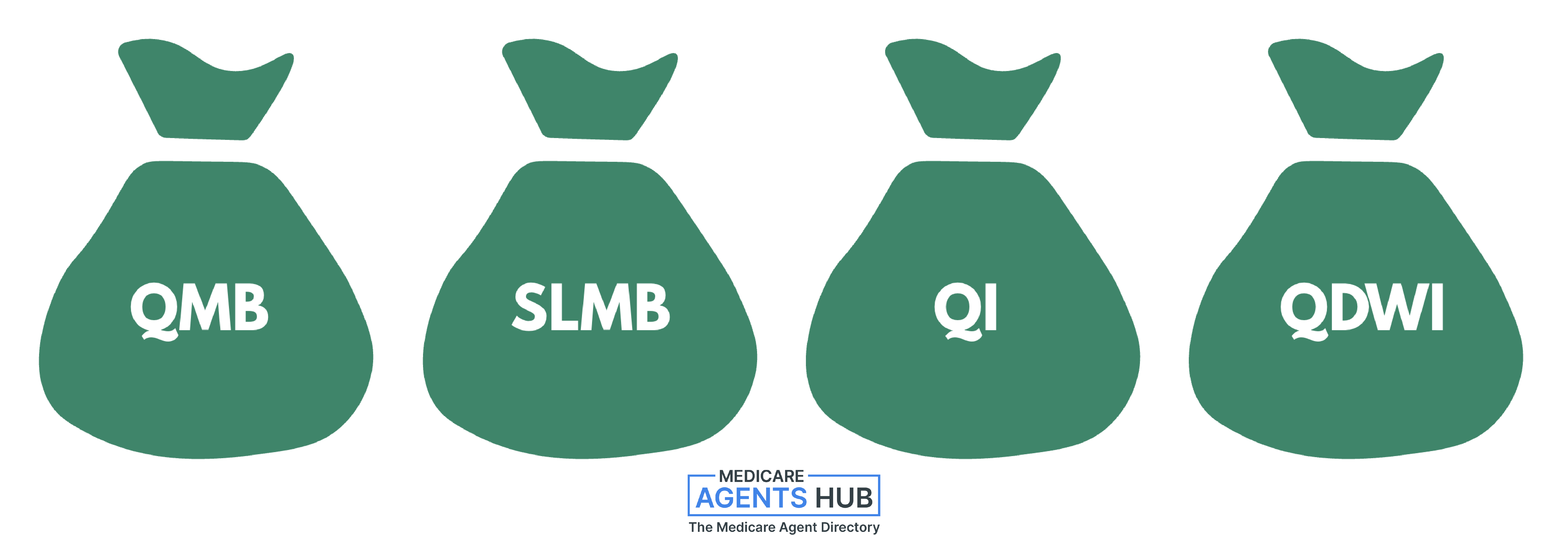
There are four main types of Medicare Savings Programs, and each one helps in a different way:
- Qualified Medicare Beneficiary (QMB): The most comprehensive program. It can pay for your Part A and B premiums, plus deductibles and coinsurance. People in QMB typically pay little to nothing for Medicare-covered care.
- Specified Low-Income Medicare Beneficiary (SLMB): Helps pay your monthly Part B premium.
- Qualifying Individual (QI): Also helps pay the monthly Part B premium, with slightly higher income limits than SLMB. QI is funded through a limited annual block grant, so in some states benefits are given on a first-come, first-served basis.
- Qualified Disabled and Working Individuals (QDWI): Assists certain disabled individuals who have returned to work and need help keeping their Part A coverage.

I'm a low-income senior who can't afford my prescription drugs even with Medicare Part D. What specific assistance programs should I apply for?
Start with Extra Help (Low-Income Subsidy) through the Social Security Administration — it lowers your Part D premiums, deductibles, and copays. If your income is very limited, apply for Medicaid, which can cover prescriptions and often qualifies you for Extra Help automatically. You should also look into Medicare Savings Programs (QMB, SLMB, QI), which help pay Medicare costs and trigger Extra Help eligibility.If available in your state, State Pharmaceutical Assistance Programs (SPAPs) can provide additional drug cost support.
Extra Help vs Medicare Savings Programs: What’s the Difference?
People often mix these two up, so here’s the short version:
- Extra Help lowers your prescription drug costs under Part D. You apply through Social Security.
- Medicare Savings Programs lower your Part A and Part B costs, most often the monthly Part B premium. You apply through your state Medicaid office.
They’re not either/or. If you qualify for a Medicare Savings Program, you’re usually enrolled in Extra Help automatically, so you end up with help on both the medical side and the drug side.
Who Qualifies and How to Apply
Eligibility for these programs is based on income and financial resources, such as savings and investments. The limits vary slightly from state to state, but they’re generally higher than many people expect. Even if you don’t think you qualify, it’s worth finding out because the income thresholds rise each year. To see the current federal figures and how they may apply where you live, check the official Medicare Savings Programs page on Medicare.gov, then confirm the exact limits with your state Medicaid office.
To apply for Extra Help, you can visit ssa.gov/extrahelp and complete a quick online application. For Medicare Savings Programs, you’ll need to contact your state Medicaid office, they handle applications and can tell you which programs are available locally.
You’ll typically need to provide documentation of income, bank accounts, and assets, but the process is simpler than many expect. Once approved, Extra Help usually continues automatically, but states typically review MSP eligibility once a year, so you may be asked to re-verify your income and resources during that renewal. As long as your financial situation hasn’t changed significantly, most people stay enrolled.
If you’d prefer free, unbiased help walking through the paperwork, every state has a State Health Insurance Assistance Program (SHIP) that offers one-on-one counseling from trained volunteers at no cost.
Other Ways to Save on Medicare
Beyond Extra Help and Medicare Savings Programs, there are additional ways to cut your costs:
- State Pharmaceutical Assistance Programs (SPAPs): Some states offer SPAPs to help residents pay for prescription drugs not fully covered under Part D, or to help with premiums and copays for certain conditions. Not every state runs one, so check with your state department of insurance or aging services to see what’s available where you live.
- Manufacturer patient assistance programs: Drug manufacturers run patient assistance programs that can help cover the cost of expensive brand-name medications for people who meet income guidelines.
- PACE (Program of All-Inclusive Care for the Elderly): If you qualify for coordinated care or long-term assistance, PACE can help reduce medical and support costs while providing comprehensive services for seniors who wish to stay at home rather than move into a facility. PACE isn’t offered in every county, so check with your state Medicaid office to see if it operates in your area.
- Preventive care benefits: Make full use of Medicare’s preventive care benefits. Annual wellness visits, screenings, and vaccinations are fully covered, which helps you stay healthy and avoid higher costs later.

I'm a low-income senior who can't afford my prescription drugs even with Medicare Part D. What specific assistance programs should I apply for?
The absolute first program you should apply for is Medicare's Extra Help program, also known as the Low-Income Subsidy (LIS). This is a federal program that significantly lowers or eliminates your Part D prescription costs, including premiums, deductibles, and co-pays. You can apply through the Social Security Administration (SSA) online or by phone.Another option can be to apply for State Pharmaceutical Assistance Programs (SPAPs), which offer further help with drug costs in many states, and Patient Assistance Programs (PAPs). Most major drug manufacturers have PAPs that provide their specific, expensive brand-name medications for free or at a deep discount to people with very limited income.
Finally, one of the easiest ways to save is to compare your plan options each year during Medicare Open Enrollment (October 15 – December 7). Many beneficiaries discover that a new plan can offer lower premiums, better drug coverage, or additional benefits for the same price.
Why These Programs Matter
Healthcare costs are one of the biggest worries for retirees, but they don’t have to be. Programs like Extra Help and the Medicare Savings Programs exist to make sure cost isn’t a barrier to care. Once enrolled, many beneficiaries see hundreds of dollars in savings each month, money that can make a big difference in everyday life.
Understanding and using these programs isn’t just about saving money; it’s about gaining peace of mind. When you know your prescriptions are covered and your premiums are manageable, it’s easier to focus on what truly matters, staying healthy and living well.
If you’re unsure where to start or need help navigating eligibility, speaking with a licensed Medicare agent can make things simple. You can find experienced professionals on Medicare Agents Hub, where agents specialize in helping beneficiaries identify the savings programs they qualify for, so you can spend less time worrying about paperwork and more time enjoying your retirement.