What Medicare Changes You Can Still Make During OEP (January Through March)

-
November 13, 2025

Reviewed by Kyle Billingsley
Medicare Agent Licensed in FL, AL, AR & 42 other states
Key Takeaways
- The OEP is only for people already enrolled in a Medicare Advantage plan.
- It runs January 1 through March 31 every year.
- You can switch to another Medicare Advantage plan or return to Original Medicare (and add a Part D plan if you do).
- Only one change during OEP will actually take effect, so pick carefully.
- People newly eligible for Medicare get their own separate window called OEP-NEW.
Many people finish the Annual Election Period in December feeling confident about their Medicare plan choice. Then January arrives, and reality sets in. Maybe a favorite doctor is no longer in-network. Maybe prescription costs are higher than expected. Or maybe the plan's benefits simply are not what the beneficiary thought they would be. Situations like these are not unusual, which is why Medicare created the Medicare Advantage Open Enrollment Period. This important window runs from January 1 through March 31 every year and gives people already enrolled in a Medicare Advantage plan a second chance to make corrections.
If you or someone you care for is unsure about their current plan choice, this guide explains exactly what the OEP allows, what it does not allow, and how to use the period wisely.
What the OEP Is and Who It Applies To
The Medicare Advantage Open Enrollment Period is designed only for people who are currently enrolled in a Medicare Advantage plan. It is not a general enrollment period and does not apply to beneficiaries who are enrolled in Original Medicare without an Advantage plan. The purpose of OEP is to give Medicare Advantage members one opportunity early in the year to make a change if they realize their plan is not a good fit.
This period happens every year from January 1 through March 31. Changes made during this time take effect on the first day of the following month. For example, if someone changes plans on February 10, their new coverage begins on March 1.
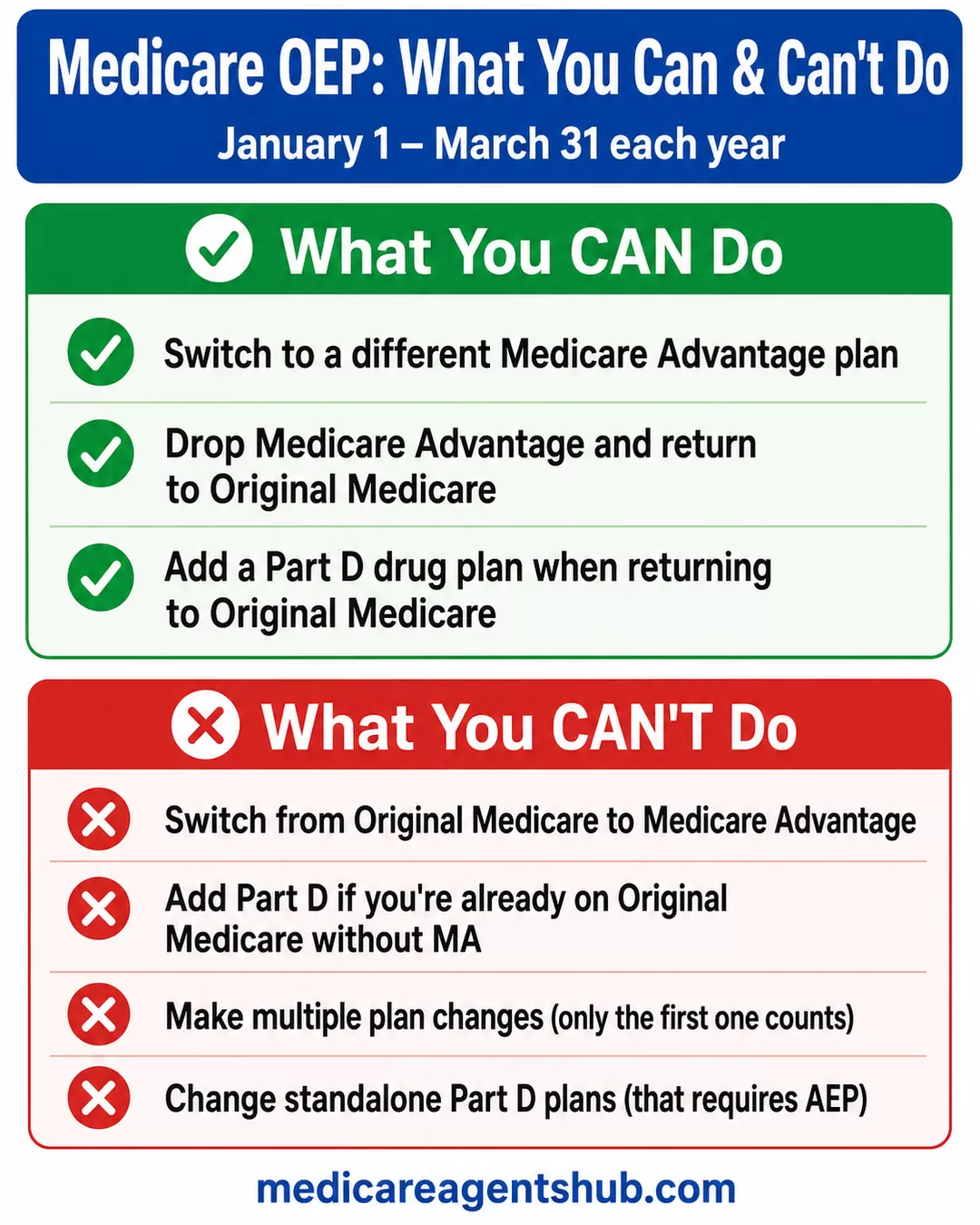

What Medicare Changes Are Allowed During OEP
Even though OEP is limited to Medicare Advantage members, it still offers meaningful options. There are three types of changes allowed during this window.
1. Switch from one Medicare Advantage plan to another
This is the most common use of OEP. Beneficiaries can move from their current Medicare Advantage plan to another Medicare Advantage plan. There are many reasons someone might make this change. A doctor they prefer may not be in the network of their current plan. The new plan year might bring higher out-of-pocket costs or different drug coverage than expected. Some people switch because they are looking for better dental or vision benefits, or because another plan is offering services that align more closely with their health needs.
During OEP, comparing plans carefully can help ensure the new choice is truly an improvement. Beneficiaries should review provider networks, drug formularies, out-of-pocket maximums, and supplemental benefits before switching. The official Medicare Plan Finder is a good starting point for side-by-side comparisons.

Can I keep seeing my current doctors if I switch to a Medicare Advantage plan, or do I have to find new ones?
It depends on the specific Medicare Advantage you choose. Unlike Original Medicare, which lets you see any doctor nationwide who accepts Medicare, Medicare Advantage plans typically use provider networks (like HMO or PPO). That means you can keep your current doctors only if they are in the plan’s network. Some PPO plans offer more flexibility and may allow out-of-network visits at a higher cost, while HMO plans usually require you to stay in-network. Before switching, it’s critical to check whether your doctors, specialists, and hospitals are included in the plan’s network to avoid unexpected disruptions in your care.2. Move from a Medicare Advantage plan back to Original Medicare
This option is especially important for people who discover that they want more flexibility than their current Medicare Advantage plan provides. Returning to Original Medicare means having access to any doctor or hospital in the United States that accepts Medicare.
This change does remove the bundled nature of a Medicare Advantage plan, so beneficiaries who return to Original Medicare will need to consider how they will manage out-of-pocket costs. Many choose to look into Medicare Supplement Insurance, also known as Medigap, although underwriting rules may apply depending on the state and situation.

Can I switch from a Medicare Advantage plan to a Supplemental/Medigap plan during the Annual Enrollment Period without answering health questions?
You generally cannot switch from a Medicare Advantage plan to a Medigap (Supplement) plan during the Annual Enrollment Period without answering health questions. Medigap plans only guarantee coverage without medical underwriting during your 6-month Medigap Open Enrollment Period, which starts when you turn 65 and enroll in Medicare Part B. Outside of this period, insurance companies can require medical underwriting, although limited exceptions (guaranteed issue rights) may apply in certain situations.3. Add a Part D prescription drug plan if switching back to Original Medicare
If someone leaves a Medicare Advantage plan to return to Original Medicare during OEP, they are allowed to add a standalone Part D drug plan. This is especially important because prescription coverage is not included in Original Medicare. Having a Part D plan ensures that medications are covered and late enrollment penalties are avoided.
What You Cannot Do During OEP
Just as important as knowing what you can do is understanding what you cannot do during this period. OEP is not as flexible as the Annual Election Period in the fall.
Here are the rules that prevent common misunderstandings.
1. You cannot switch from Original Medicare to Medicare Advantage
If a beneficiary stayed on Original Medicare during the AEP, the OEP does not provide a chance to join a Medicare Advantage plan. They would need to wait until the next Annual Election Period in October unless they qualify for a Special Enrollment Period.
2. You cannot join a Part D plan if you stayed on Original Medicare without one
The only time someone can enroll in a Part D plan during OEP is when they are leaving a Medicare Advantage plan and returning to Original Medicare. If someone is already on Original Medicare without drug coverage, the OEP does not allow them to add a Part D plan.
3. You cannot make multiple changes and have them all take effect
Even though beneficiaries can technically submit several changes during OEP, only the first change that Medicare processes will count. This is why it is important to compare options carefully before making a move.
OEP vs. OEP for Newly Eligible (OEP-NEW)
There is a second version of the OEP that trips people up, and CMS refers to it as OEP-NEW. It is a separate enrollment period for people who are new to Medicare, and it is not the same as the January-through-March window described above.
Here is the difference in plain terms:
- The regular OEP runs January 1 through March 31 every year. It is available to anyone already enrolled in a Medicare Advantage plan.
- OEP-NEW applies only to people newly eligible for Medicare who enrolled in a Medicare Advantage plan when they first signed up. It gives them a 3-month window, starting when their Medicare coverage begins, to switch to a different Medicare Advantage plan or drop back to Original Medicare (with the option to add a Part D plan).
Someone turning 65 in June who picks a Medicare Advantage plan effective July 1 would have an OEP-NEW window running July through September. That window belongs only to them because of their newly eligible status. It does not replace the regular OEP the following January.
The allowed changes are essentially the same as the regular OEP. The difference is timing and eligibility. If you are within your first few months of Medicare, you likely have OEP-NEW available even outside the January-through-March window.
When It Makes Sense to Use OEP
When can you change your Medicare plan during OEP?
Any time between January 1 and March 31. The change goes into effect the first day of the following month, so an earlier decision means the new coverage kicks in sooner. Waiting until late March means the new plan does not start until April 1, and you have already spent 3 months on a plan that was not working for you.
Many people use the OEP because they learned something new about their plan that they did not know in the fall. If you chose the wrong plan during AEP, this is your window to fix it. Some of the most common scenarios include:
- A doctor or specialist they rely on is not in-network after all.
- A specific medication is placed on a higher tier than expected.
- The plan has higher copays or a higher out-of-pocket maximum than the beneficiary feels comfortable with.
- The beneficiary would prefer wider provider access and wants to return to Original Medicare.
- The benefits they were expecting, such as dental or an allowance for over-the-counter products, did not match the plan details.
These situations can happen to anyone, and OEP provides a path to correct them. Taking a few minutes to review your plan at the start of the year can help you decide whether a change is warranted.
What Happens After March 31
Once the OEP ends, most beneficiaries will not have the ability to change their coverage again until the full Annual Election Period from October 15 through December 7. The only exception is if someone qualifies for a Special Enrollment Period. These can occur for reasons such as moving to a new service area, losing employer coverage, or experiencing specific life events that affect Medicare eligibility.
Because of the long gap between March and October, using the OEP wisely is essential.

What should I do if I miss the Medicare Open Enrollment period, and I want to change my plan?
Unfortunately, during this time of year, you will not be able to change your Medicare Advantage plan unless you have a qualifying Special Enrollment Period(SEP) such as a change in Medicaid status (gaining or losing coverage), newly receiving Extra Help/LIS or acceptance in a state pharmaceutical program if available or have a chronic condition of which a CSNP (Chronic Special Need Plan) is available in your area.Make Sure You're Covered
The Medicare Advantage Open Enrollment Period gives beneficiaries one more opportunity to ensure their coverage truly meets their needs for the year. It allows plan-to-plan switching, returning to Original Medicare, and picking up a Part D plan in certain situations. It does not allow enrollment into Medicare Advantage from Original Medicare or general Part D changes. Rules and available plans can vary by state, and CMS updates guidance each year, so it's worth confirming details on Medicare.gov before you make a change. For anyone unsure about the best option, speaking with a licensed Medicare agent can help provide clarity and avoid costly mistakes.