How does Medicare and Medicaid Work Together?


First, the Basics: Medicare vs. Medicaid
Although they’re often mentioned together, Medicare and Medicaid are very different programs.
Medicare is a federal health insurance program primarily for people age 65 and older, as well as certain younger individuals with disabilities or qualifying medical conditions. It has standardized parts:
- Part A – Hospital coverage
- Part B – Medical/outpatient coverage
- Part C – Medicare Advantage (private plan alternative to Original Medicare)
- Part D – Prescription drug coverage
Medicaid, on the other hand, is a joint federal and state program designed to help people with limited income and assets pay for healthcare. Because it’s state-administered, eligibility rules and benefits can vary by state.
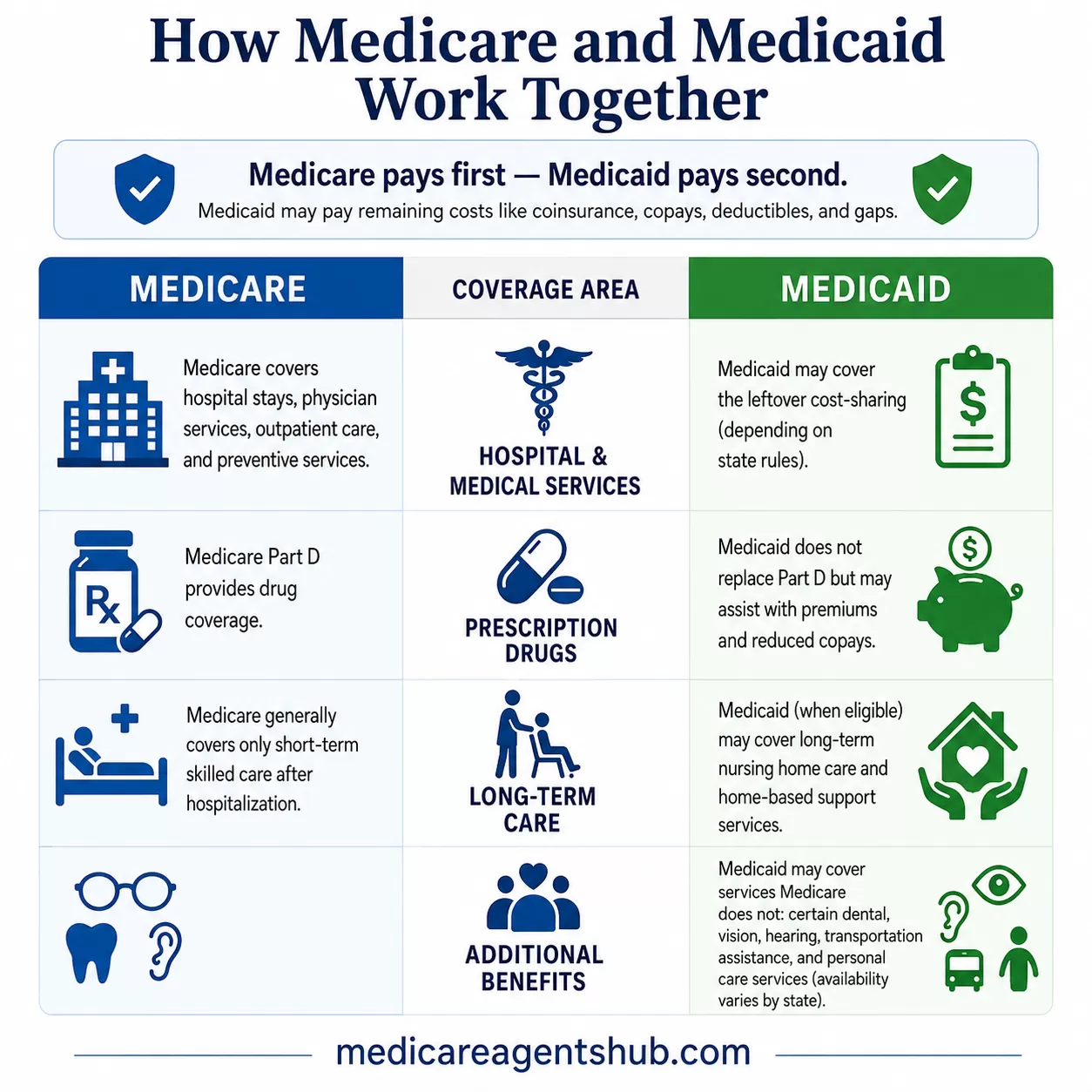
When someone qualifies for both programs, Medicare is usually considered the primary payer, while Medicaid acts as secondary coverage.
What Does “Dual Eligible” Mean?
A person who qualifies for both Medicare and Medicaid is called dual eligible.
Dual eligibility exists because someone can meet Medicare’s age/disability requirements while also meeting Medicaid’s financial criteria.
Dual-eligible beneficiaries often receive:
● Reduced or eliminated premiums
● Help with deductibles and copayments
● Expanded coverage for services Medicare alone does not fully cover
This coordination can dramatically lower out-of-pocket costs.
Who Pays First?
Understanding payment order is key.
Medicare pays first.
It processes claims under its normal rules.
Medicaid pays second.
It may cover remaining costs such as:
- Coinsurance
- Copayments
- Deductibles
- Certain services Medicare doesn’t fully cover
This layered approach helps protect beneficiaries from large medical bills.
Coverage Areas: How the Programs Complement Each Other
Medicare and Medicaid overlap in some areas and fill gaps in others.
Hospital and Medical Services
Medicare covers hospital stays, physician services, outpatient care, and preventive services.
If Medicare leaves cost-sharing behind, Medicaid may cover it — depending on state rules.
Prescription Drugs
Medicare Part D provides drug coverage.
Medicaid does not replace Part D for dual-eligible individuals, but it may assist with:
- Premium assistance
- Reduced copays
Long-Term Care
This is one of the biggest differences.
Medicare generally covers short-term skilled care after hospitalization.
Medicaid, when eligibility criteria are met, may cover long-term nursing home care or home-based support services — a major financial protection for those needing extended care.
Additional Benefits
Some Medicaid programs include services Medicare does not typically cover, such as:
- Certain dental services
- Vision care
- Hearing benefits
- Transportation assistance
- Personal care services
Availability depends on the state program.
Medicare Savings Programs (MSPs)
Even if someone doesn’t qualify for full Medicaid, they may still receive help through Medicare Savings Programs.
These programs assist with Medicare costs like premiums and deductibles.
Common MSP categories include:
- Qualified Medicare Beneficiary (QMB) – Covers Part A and B costs and limits billing
- Specified Low-Income Medicare Beneficiary (SLMB) – Helps pay Part B premiums
- Qualifying Individual (QI) – Also assists with Part B premiums
I'm worried about affording my medications even with the 2025 changes. Are there additional assistance programs I should know about?
If you qualify for low-income subsidy, that helps by reducing drug costs, or you can apply for assistance through the manufacturer. During certain times of the year, you may be able to change your plan to one that covers your specific medications at lower costs. Speak with a licensed agent to get an estimate on your drug costs on different plans.Dual Eligible Special Needs Plans (D-SNPs)
Some dual-eligible beneficiaries enroll in a type of Medicare Advantage plan designed specifically for their situation.
Dual Eligible Special Needs Plans (D-SNPs) aim to coordinate Medicare and Medicaid benefits in one managed structure.
These plans may offer:
- Care coordination
- Integrated drug coverage
- Additional wellness benefits
- Simplified billing
Enrollment is optional, but many people appreciate the streamlined approach.
Are the Medicare flex cards and grocery allowance cards I see on TV legit?
Some of them are. Most, I would say, exaggerate the benefits and who qualifies. The deal with those allowances is at this point in time, to qualify, you must be on both Medicare and Medicaid AND also have a qualifying chronic condition. With those 3 things, you may qualify for a flex card that may have a grocery allowance. The exact benefits are plan-specific.Cost Protection for Dual Eligibles
One of the biggest advantages of having both programs is financial protection.
Dual-eligible individuals often experience:
- Very low or zero premiums
- Reduced copays
- Limited out-of-pocket expenses
- Protection from balance billing (in certain MSP categories)
This can make healthcare significantly more affordable.
Enrollment Considerations
Enrollment into Medicare is typically automatic for people receiving Social Security disability or retirement benefits. Medicaid enrollment requires a separate application through the state.
Key tips:
- Apply early if you believe you meet Medicaid income limits
- Keep documentation updated
- Review benefits annually
- Explore plan options that coordinate coverage
Rules and benefits can change year to year.
What's the process for signing up for Medicare if I'm already on disability benefits?
If you are on SSDI, then after 24 months, you should be automatically enrolled with Medicare. At that point, you will want to contact a licensed Medicare broker to go over the plan options available that fit your needs.Common Misunderstandings
“Medicaid replaces Medicare.”
It does not. Medicare remains the primary insurance.
“I can skip Medicare because I have Medicaid.”
In most cases, enrolling in Medicare when eligible is necessary to maintain coordination and avoid penalties.
“All dual coverage is the same nationwide.”
Medicaid varies by state, so benefits and cost-sharing rules differ.
Why Coordination Matters
Healthcare systems can be complex. When Medicare and Medicaid coordinate properly:
- Care becomes more affordable
- Coverage gaps shrink
- Access to long-term services improves
- Administrative confusion is reduced
For beneficiaries managing chronic conditions or fixed incomes, this coordination can be life-changing.
Final Thoughts
Qualifying for both Medicare and Medicaid provides a powerful safety net — but understanding how the programs interact is essential to making informed decisions.
Because Medicaid rules vary by state and Medicare plan options differ, reviewing coverage with a knowledgeable professional or benefits counselor can help ensure you’re maximizing available protections.
Healthcare should be about access and confidence, not confusion. When Medicare and Medicaid work together correctly, they can offer both.
About the Author: Celeste McGrath from Southern Senior Solutions is dedicated to making sure YOUR needs are met when it comes to your Medicare. She is an Independent Broker and her focus is purely to help the seniors in Georgia, Florida, North and South Carolina navigate the labyrinth we call Medicare, whether that be Original Medicare, Medicare Supplement, Medicare Advantage, or Part D Drug plans.