How to Save Money on Prescriptions With Medicare
-
December 12, 2025
Prescription drugs are essential for managing health, but for many Medicare beneficiaries, costs can become overwhelming. Prices fluctuate, plans update their formularies, and the pharmacy you choose can influence how much you pay. Fortunately, Medicare offers tools and programs to help lower prescription costs. By understanding how your coverage works and taking proactive steps, you can manage out-of-pocket expenses while continuing to get the medications you need.
Review Your Coverage Every Year
Each year, Part D and Medicare Advantage plans adjust formularies, premiums, pharmacy networks, and covered drug categories. Even if your medications haven’t changed, coverage and pricing might. This makes the Annual Enrollment Period the perfect time to evaluate your options.
The official Medicare Plan Finder tool on Medicare.gov lets you enter your medication list and compare plans based on projected annual costs. Many beneficiaries save hundreds by switching to a plan that better matches their prescriptions. A yearly review is one of the simplest ways to reduce expenses and maintain predictable costs.

What are some ways patients can reduce medication costs while on Medicare?
💊 1. Compare Medicare Part D or Medicare Advantage drug plans every year• Drug prices and coverage change annually, so compare plans during the Annual Enrollment Period (Oct 15–Dec 7).
• Use the Medicare Plan Finder at Medicare.gov website— it shows which plans cover your medications and at what cost.
• Sometimes switching plans can save hundreds of dollars a year.
⸻
💸 2. Apply for “Extra Help” (Low-Income Subsidy)
• This federal program helps pay Part D premiums, deductibles, and copays for people with limited income and resources.
• Many people qualify and don’t realize it.
• Apply through Social Security (SSA.gov) or 1-800-772-1213.
⸻
🏦 3. Check state programs (Medicare Savings Programs or SPAPs)
• Some states have State Pharmaceutical Assistance Programs (SPAPs) or Medicare Savings Programs that help pay drug costs or premiums.
• Contact your State Health Insurance Assistance Program (SHIP) for free help.
⸻
🏥 4. Ask about generic or lower-cost alternatives
• Your doctor or pharmacist can often prescribe a generic or therapeutic equivalent that’s just as effective and much cheaper.
• Some drug plans offer tier exceptions if a lower-cost drug doesn’t work for you.
⸻
💳 5. Use preferred or mail-order pharmacies
• Some Part D plans have preferred pharmacies with lower copays.
• Mail-order options can offer a 90-day supply at a reduced rate.
⸻
🧾 6. Review your medications regularly
• Bring all your medications to your doctor or pharmacist once a year for a “medication review.”
• You might find duplicate or unnecessary prescriptions you can safely stop (with your provider’s guidance).
⸻
🧬 7. Check manufacturer savings programs
• Some pharmaceutical companies offer patient assistance programs (PAPs) for expensive brand-name drugs like Repatha.
• Visit Medicare.gov/Drug-Savings for details.
⸻
⚕️ 8. Consider the $2,000 Out-of-Pocket Cap (starting in 2025)
• Beginning January 1, 2025, Medicare will cap out-of-pocket costs for Part D at $2,
Talk With Your Prescriber About Lower Cost Alternatives
Your prescriber can help identify more affordable options. Many drugs have generic versions offering the same therapeutic benefits at a lower price. There may also be therapeutic alternatives that work equally well but fall into a lower formulary tier.
Even small changes, such as switching from a brand name to a generic or adjusting the dosage form, can significantly reduce monthly costs. Discussing these options with your doctor ensures you maintain effective treatment while saving money.

What are some ways patients can reduce medication costs while on Medicare?
There are many diffirent ways to reduce cost of medication while on Medicare:Ask about generics - Generic medications can cost 80-85% less than brand names.
Ask your doctor if there's a generic alternative.
Use preferred pharmacies
Consider 90-day supplies
Financial Assistance
Manufacturer patient assistance programs - Many drug companies offer free or reduced-cost medications for people who qualify based on income.
Good Luck

What are some ways patients can reduce medication costs while on Medicare?
Great question! There are actually several ways to reduce medication costs on Medicare. A few of the biggest ones are switching to lower-tier or generic versions, using your plan’s preferred pharmacies, applying for Extra Help if you qualify, and checking if your plan offers better pricing through mail-order or 90-day supplies.If you’d like, I can take a quick look at your medications and see which options would save you the most.
Use Preferred Pharmacies or Mail Order Options
Pharmacy choice can significantly impact costs. Plans often have preferred pharmacies that offer lower copays. Mail order options can also reduce costs and provide convenience.
You can save by:
-
Confirming that your pharmacy is preferred by your plan
-
Comparing costs across nearby preferred pharmacies
-
Using mail order for a 90-day supply of maintenance medications
Mail order is especially helpful for long-term prescriptions, reducing both costs and the number of trips to the pharmacy.

What are some ways patients can reduce medication costs while on Medicare?
Patients can "shop" pharmacies, as some have better pricing than others. They can also request 90 day supplies, and mail order fulfillment as well.In addition, they can compare pricing on sites, as they often are less expensive than their Medicare plan would be. Although they do not count toward the deductible, they can still save money.
Explore Discount Programs When Useful
Discount cards and pharmacy savings programs cannot be combined with Part D coverage for the same prescription, but they can still be valuable if a drug isn’t covered or is cheaper outside your plan. That said, these cards aren’t always the deal they appear to be. Before reaching for a discount card, it’s worth understanding why tools like GoodRx might actually cost you more on Medicare. Some manufacturers offer patient assistance programs or discount programs for high-cost medications, and some states provide pharmaceutical assistance for eligible residents. These programs can uncover savings that might otherwise be missed.

What are some ways patients can reduce medication costs while on Medicare?
Check the various discount programs to see if any of your medications are less expensive using them instead of your insurance. GoodRX is one of the most popular, but there are others.Many pharmacies also have in house discount programs. You can check in your area if any are available.
Some expensive medications are actually 2 generics put together. You can ask your doctor if separating them would be ok. If so, the individual generics are often less expensive than the single medication.
Most of the manufacturers have programs for limited income individuals. You can check to see if you qualify for any programs through them.
Apply for Extra Help (Low Income Subsidy)
The Extra Help program is one of the strongest tools available for reducing prescription costs. It is designed for Medicare beneficiaries with limited income and resources and provides substantial financial support.
Extra Help can:
-
Lower or eliminate your monthly Part D premium
-
Reduce your plan deductible
-
Decrease your copays throughout the year
-
Remove the coverage gap for individuals who qualify
Many beneficiaries who meet the eligibility requirements have not applied, which means they are missing out on significant savings. You can apply directly through the Social Security Administration’s Extra Help page, and approval can dramatically lower out-of-pocket costs.

What are some ways patients can reduce medication costs while on Medicare?
That is an excellent and important question. Navigating prescription costs on Medicare can be complex, but there are several major strategies and programs people can use to significantly reduce their out-of-pocket expenses.Here are the most effective ways to reduce medicine costs while on Medicare:
1. Enroll in "Extra Help" (Low-Income Subsidy - LIS)
This is the single most impactful program for people with limited income and resources.
What it is: A Medicare program (also called the Low-Income Subsidy, or LIS) that helps pay for Part D prescription drug plan costs, including premiums, deductibles, and co-pays.
Benefits: If you qualify, your costs will be capped at very low amounts for both generic and brand-name drugs, and your Part D deductible is eliminated or greatly reduced.
How to Qualify: Eligibility is based on income and assets. You automatically qualify if you have full Medicaid, are in a Medicare Savings Program, or receive Supplemental Security Income (SSI). Otherwise, you can apply through the Social Security Administration (SSA).
2. Compare and Switch Part D Plans Annually
Your current Part D plan might no longer be the most cost-effective option for your specific medications.
Annual Enrollment: Every year (October 15 – December 7), you should use the official Medicare Plan Finder tool on Medicare.gov to compare all available plans.
Check the Formulary: Always check a plan's formulary (its list of covered drugs) to ensure your specific medications are covered and which tier they fall into (lower tiers mean lower out-of-pocket costs).
Lower Premiums vs. Lower Drug Costs: A plan with a lower monthly premium might have a higher deductible or higher co-pays for your specific drugs, making it more expensive overall. Focus on the lowest total annual cost for your medications.
3. Talk to Your Doctor and Pharmacist
Simple conversations can often lead to immediate savings.
Switch to Generics: Ask your doctor if a generic version.
Use Medication Therapy Management When Eligible
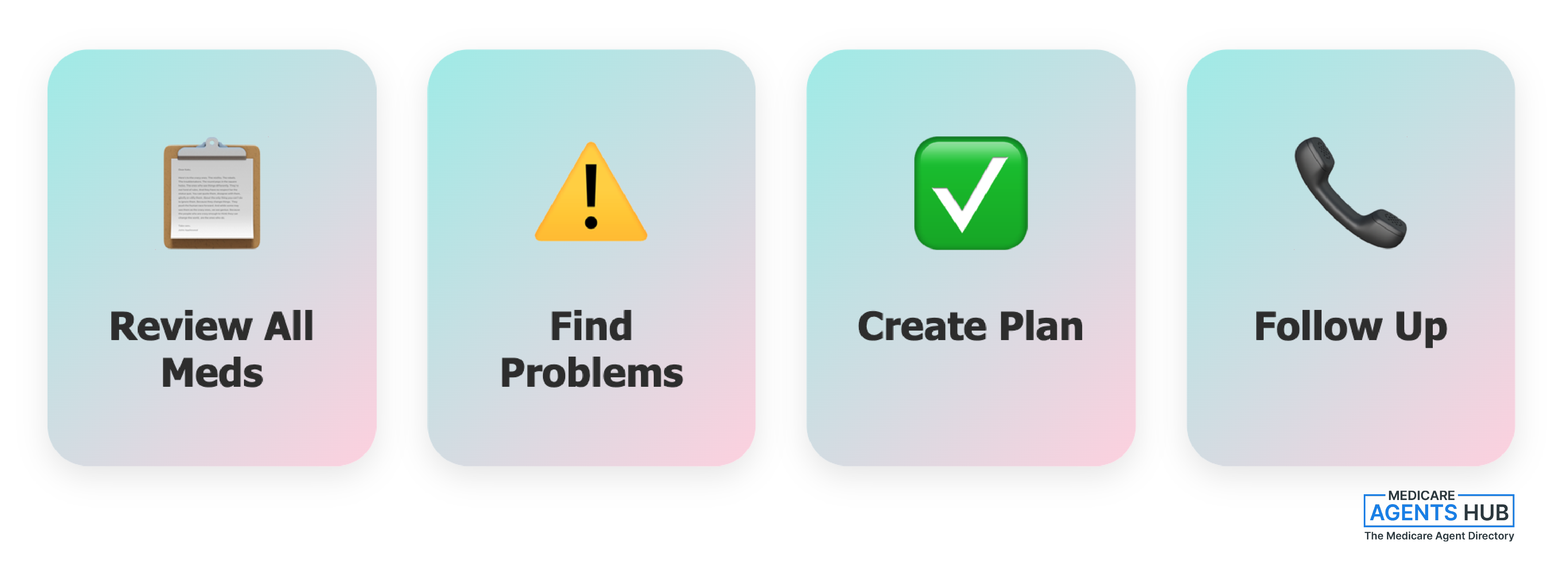
Medication Therapy Management (MTM) is available for beneficiaries who take multiple chronic medications or reach a certain annual drug cost. During an MTM review, a pharmacist evaluates your entire medication list to identify duplicate therapies, unsafe combinations, or lower-cost alternatives. MTM can reduce expenses and improve safety, and it is included at no additional cost for eligible participants.
Know Your Rights to Appeal Coverage Decisions
If your plan denies coverage, you do not automatically have to pay out of pocket. Medicare beneficiaries can:
-
Request an exception for medically necessary medications
-
Ask the plan to waive step therapy or quantity limits
-
Submit documentation from a prescriber
-
File an expedited appeal when necessary
Understanding these rights ensures you do not overpay and helps you access the medications your provider recommends.
Schedule an Annual Medication Check Up
At least once a year, bring all prescriptions to your medical visit for a complete review. This helps your provider identify outdated or duplicate medications, adjust dosages, and suggest safer or more affordable alternatives. Annual checkups help maintain both your health and your budget.
Final Remarks
Saving money on prescriptions with Medicare is achievable when you know where to focus your efforts. Reviewing your plan annually, working with your Medicare advisor, using preferred pharmacies, exploring assistance programs, and understanding appeal rights can all reduce out-of-pocket costs. With these strategies, Medicare beneficiaries can maintain their health without overspending on the medications they rely on.