When Medicare Says "Covered," Here's What That Actually Means


One question comes up more than almost any other: "My doctor says it's covered. So I'm good… right?"
Maybe. Medicare does love a detail. Actually, it loves quite a few.
A service can be covered and still come with a deductible, copay, or coinsurance. Your cost may also depend on where you receive care, who provides it, and the type of coverage you have.
That doesn't mean Medicare is failing you or that someone made a mistake. It simply means "covered" doesn't always mean "paid for in full."
Bottom line: A covered service can still leave you with out-of-pocket costs. Before any scheduled care, ask what you'll be expected to pay.
What "covered" really means
In general, Medicare covers services that meet its rules, including being medically necessary and provided in an appropriate setting.
But a covered service can still leave you with part of the bill.
You may have a doctor visit, test, or procedure that Medicare covers, but still owe your deductible or share of the cost. You might also find that a service costs differently at a doctor's office than at a hospital outpatient department.
That's why I encourage people to ask a second question: "What should I expect to pay?"
It's not being difficult. It's just smart.
Your type of coverage matters, too
With Original Medicare, Part B generally pays part of the Medicare-approved amount for covered outpatient services after you meet your deductible. You're usually responsible for the remaining share unless you have other coverage, such as Medigap, that helps with those costs.
Medicare Advantage works differently. These plans must cover all Medicare-covered Part A and Part B services, but they can have their own copays, provider networks, and rules. Some services may require a referral or prior authorization before the plan helps pay.
Are Medicare Advantage plans really "free," or is that just clever marketing?
I wouldn't call any health plan completely free. Some Medicare Advantage plans do have a $0 monthly plan premium, but that doesn't mean you'll never pay anything. You'll still pay your Part B premium and may have copays when you see a doctor or receive care. I always tell people to look at how the plan works when they actually need it, not just the monthly premium.Again, that doesn't make one path automatically better than the other. It just means the answer to "Is this covered?" can look different from one person to the next.
A few questions worth asking before care
I'm not suggesting you need to turn every doctor's appointment into an insurance investigation. If you're having an emergency, get care. That part is simple.
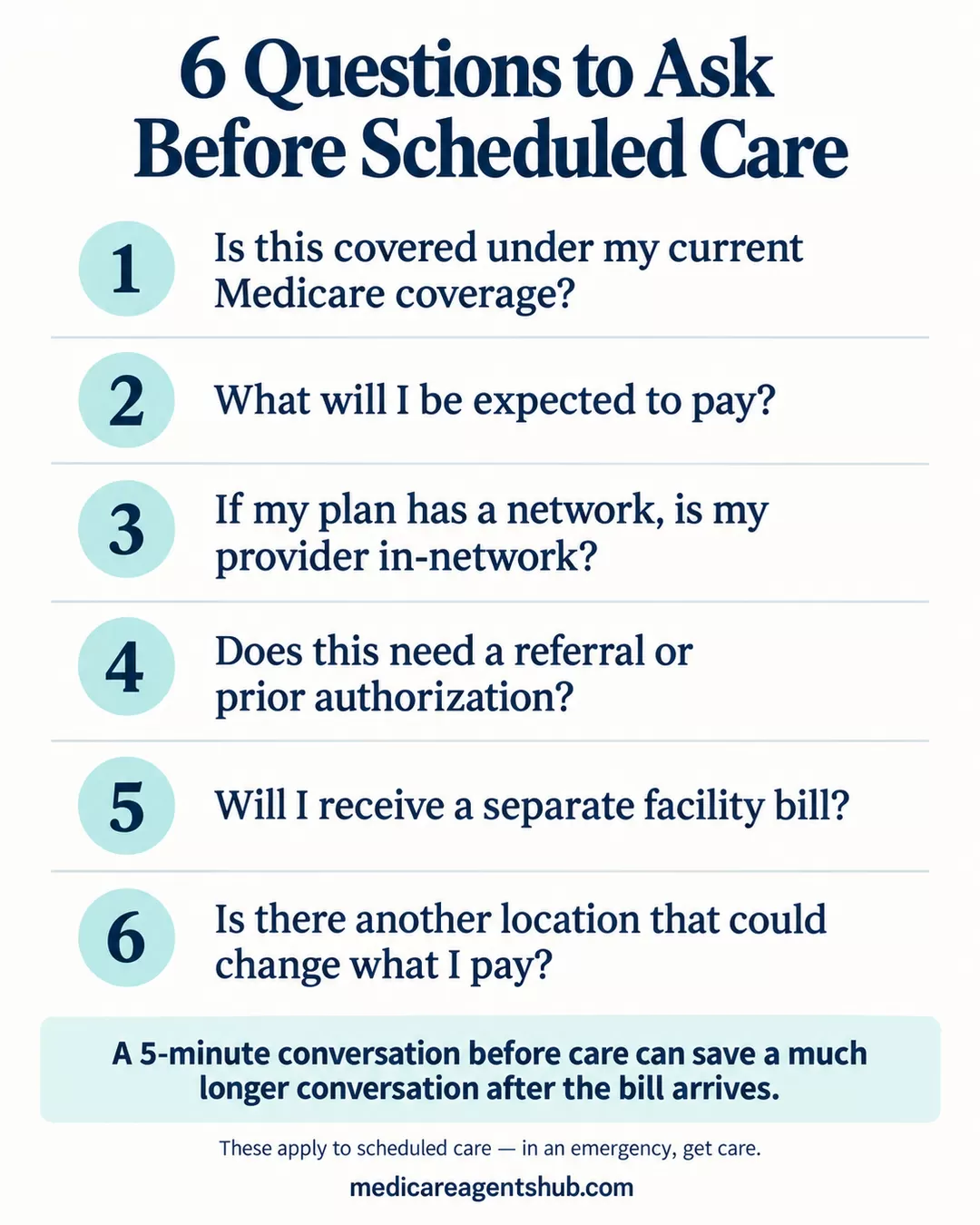
But before a scheduled test, procedure, treatment, or specialist visit, it's worth asking:
- Is this covered under my current Medicare coverage?
- What will I be expected to pay?
- If my plan has a network, is my provider in-network?
- Does this need a referral or prior authorization?
- Will I receive a separate facility bill?
- Is there another location that could change what I pay?
A 5-minute conversation before care can save a much longer conversation after the bill arrives.
What is the biggest mistake seniors make when enrolling in Medicare?
I'd say the biggest mistake is choosing too quickly and assuming it will be easy to change later. People often focus on the monthly premium or extra benefits without checking their doctors, prescriptions, and what they'll pay when they actually need care. They may also not realize that getting a Medicare supplement later isn't always guaranteed. I encourage people to look beyond what works today and think about what may work for them long term.What to do when a bill surprises you
First, don't assume the bill is wrong. But don't just toss it in the "I'll deal with this later" pile, either.
Look at the explanation from Medicare or your plan. With Original Medicare, that's usually your Medicare Summary Notice. With Medicare Advantage or Part D, it may be an Explanation of Benefits.
Then compare that document with the provider's bill. If something doesn't add up, call the billing office and ask what was billed and why you owe the amount shown.
Sometimes the answer is a deductible, coinsurance, or a separate service provided during the same visit. Sometimes it's worth asking your plan or Medicare for a clearer explanation. If a screening gets reclassified as diagnostic, the cost can change without warning.
The bottom line
Medicare can provide valuable coverage, but "covered" and "free" aren't the same thing.
Before care, prescriptions, or any coverage decision, take a moment to understand how the service works with your plan, your provider, and your expected cost.
A quick question before care can save a much longer conversation after the bill arrives. Don't assume. Verify.
About the Author: Jon Cavanaugh is a licensed Nevada Medicare broker, U.S. Army veteran, husband, and father serving the Las Vegas community. He specializes in Medicare Advantage, Medicare Supplement insurance, and Medicare prescription drug plans. His work focuses on education and helping people understand how Medicare coverage options may interact with their doctors, medications, budgets, and health care preferences.