Targeting Seniors With Chronic Conditions: Ethical Marketing Tips

-
December 2, 2025
Reaching seniors with chronic health conditions can be one of the most rewarding areas for Medicare agents and brokers. These beneficiaries often require ongoing care and management, making Medicare coverage decisions particularly important. However, marketing to this population requires care, sensitivity, and ethical practices. Approaching seniors in a way that is respectful, informative, and compliant with CMS rules not only protects your reputation as an agent but also helps you build lasting relationships with clients who truly need your guidance.
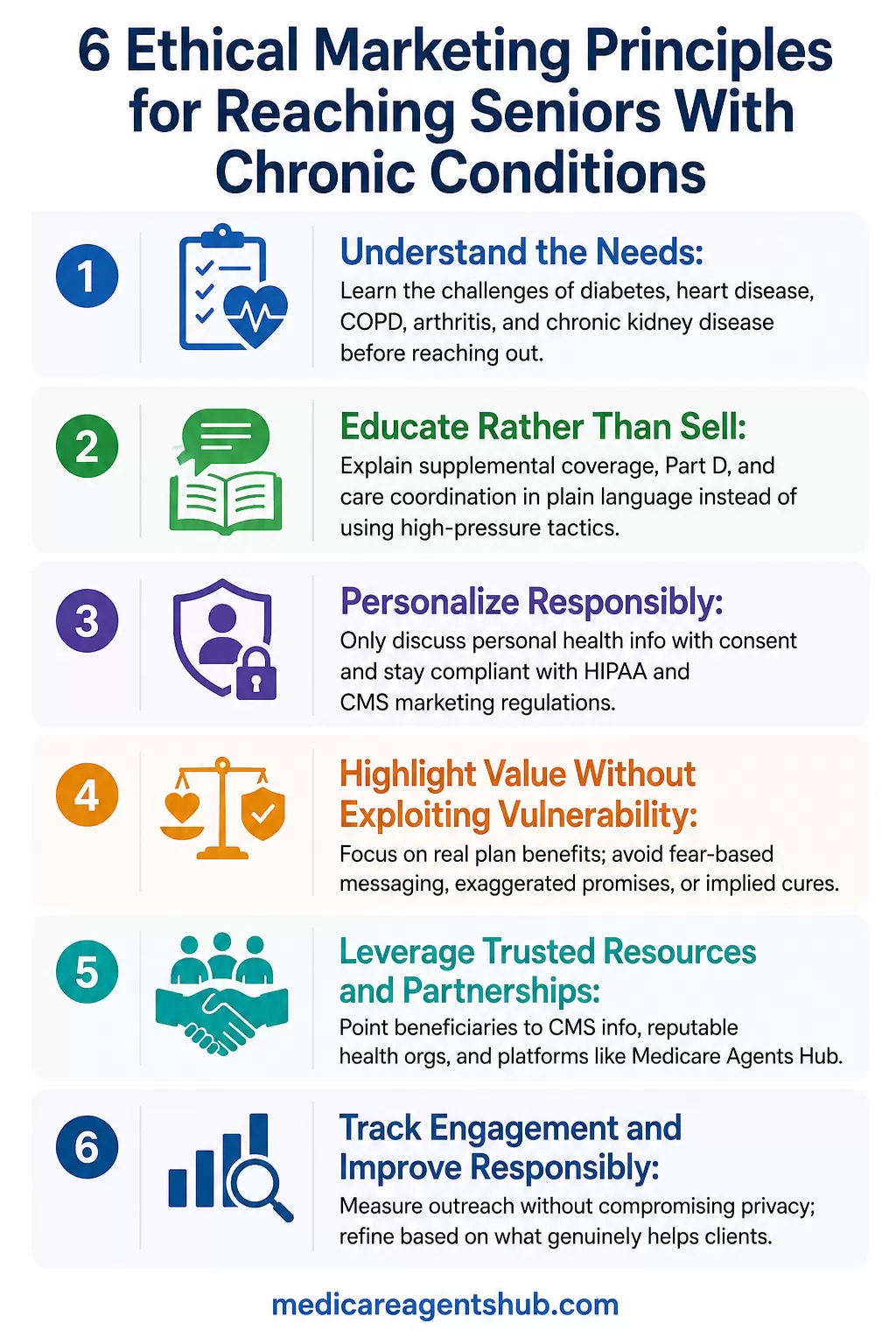
This article outlines strategies for ethically marketing to seniors with chronic conditions, from identifying their needs to delivering value through education and personalized support. We will also highlight how platforms like Medicare Agents Hub can help connect agents with local beneficiaries efficiently and responsibly.
Understand the Needs of Seniors With Chronic Conditions
Before reaching out to seniors, it is critical to understand the challenges they face. Many older adults live with conditions such as diabetes, heart disease, COPD, arthritis, or chronic kidney disease. These conditions often require multiple medications, specialist visits, ongoing therapy, and frequent monitoring.
Medicare agents can position themselves as helpful resources by learning about the coverage options that address these needs. For example, understanding which Medicare Advantage plans offer robust chronic condition management programs or additional support services can allow you to provide tailored recommendations. Educating yourself about coverage for therapies, durable medical equipment, home health services, and preventive screenings ensures your conversations with beneficiaries are accurate and valuable.
Educate Rather Than Sell
Ethical marketing prioritizes education over pressure. Seniors with chronic conditions may feel vulnerable or overwhelmed when navigating Medicare options, and high-pressure tactics can be both inappropriate and counterproductive.
Instead of pushing a specific plan, provide clear, easy-to-understand information. Break down complex topics like supplemental coverage, Part D prescription drug benefits, or care coordination programs in plain language. Helping beneficiaries understand their choices builds trust, encourages informed decision-making, and positions you as a credible advisor rather than just a salesperson.
You can also offer educational content through workshops, webinars, or printed guides. When seniors feel informed, they are more likely to engage with you and follow through on plan enrollment, reducing confusion and ensuring better long-term outcomes.
Use Personalized Communication Responsibly
Personalization can be powerful, but it must be handled ethically. Knowing a beneficiary’s chronic conditions can help you highlight relevant plan features, such as coverage for diabetes testing supplies or physical therapy sessions. However, sensitive health information must never be used improperly.
Always obtain consent before discussing personal health matters and ensure your outreach complies with HIPAA and CMS marketing regulations. Personalized emails, calls, or educational mailers should be respectful, factual, and focused on helping the individual understand their options rather than encouraging unnecessary plan changes.
Platforms like Medicare Agents Hub can help agents connect with beneficiaries in a compliant way. By providing a network of licensed agents and a system that prioritizes beneficiary needs, the platform allows agents to reach those who are actively seeking help without crossing ethical boundaries.
Highlight Value Without Exploiting Vulnerability
Seniors with chronic conditions often face significant medical expenses and stress. Marketing strategies should highlight value and benefits in a straightforward manner, avoiding fear-based messaging or exaggerated promises.
Focus on what the plan can provide, such as lower out-of-pocket costs for medications, access to specialized care, preventive services, or home health support. Avoid statements that could be interpreted as guaranteeing cures or overstating benefits. Ethical marketing builds trust, whereas exploiting vulnerability can result in complaints, fines, and lasting damage to your professional reputation.
A concrete way to frame value with a client managing a specific condition might sound like this:
“For clients managing diabetes, this plan is often a good fit because it includes $0 copays for testing supplies and access to a care management team that helps you stay on track between doctor visits.”
That kind of language gives the beneficiary specific, verifiable reasons the plan matches their situation, without overpromising outcomes.
Leverage Trusted Resources and Partnerships
Providing trustworthy resources can help seniors feel confident in their choices. This could include linking beneficiaries to CMS information, reputable health organizations, or community programs that support chronic condition management.
Connecting with a local Medicare agent network can also increase your visibility and credibility. Medicare Agents Hub is an example of a platform where agents can showcase their expertise, highlight their experience with chronic condition management, and connect with beneficiaries who are seeking guidance. By using such platforms, you expand your reach while remaining compliant and ethical.
Building trust in specialized communities is especially important when working with seniors who have chronic conditions. Agents who invest in cultural competence and niche market expertise are better positioned to serve these populations authentically.
Track Engagement and Improve Responsibly
Ethical marketing also involves measuring your outreach effectiveness without compromising privacy. Track responses to newsletters, seminar registrations, or educational materials to understand what resonates with your audience. Use this data to refine your approach, focusing on ways to provide more value rather than pushing for immediate sales.
Regular follow-ups with seniors should emphasize support and education. Checking in on how they are managing their health or whether they have questions about plan coverage demonstrates that your interest is in their well-being rather than a one-time sale. Avoid the common pitfalls that drive clients away—consistent, thoughtful outreach makes the difference between a lost client and a loyal one.
Targeting Ethically
Marketing to seniors with chronic conditions can be highly impactful when done ethically. By understanding their needs, educating rather than selling, personalizing communications responsibly, highlighting real value, and leveraging trusted platforms, agents can build long-lasting relationships and make a meaningful difference in beneficiaries’ lives.
Resources like Medicare Agents Hub make it easier to connect with both new and current beneficiaries in a way that respects their privacy and focuses on helping them find the right coverage. Ethical marketing is not only the right approach—it is also the most effective strategy for building trust, credibility, and a thriving practice as a Medicare agent.