Localized Medicare Leads vs National Leads: What Actually Converts

-
January 21, 2026
In the world of Medicare sales, where every conversation could turn into a sale, where you source your leads can make a big difference in how many of those conversations convert to enrollments. Two common sources are localized leads and national leads. Each has its place, but understanding the real differences in conversion potential and overall effectiveness can help you spend your time and marketing dollars more wisely.
Let’s walk through how these lead types perform, what makes one convert better than the other, and how to think about them in your agency’s growth strategy.
What We Mean by Localized and National Leads
Localized leads are prospects that come from a specific geographic area. These might be generated by targeting a ZIP code, city, or region through local online campaigns, community outreach, or organic search marketing that draws in people close to you. These leads are often pre-qualified and may include contact info, eligibility status, and sometimes specific interest details.
National leads are generated across the entire country without specific geographic focus. They are typically purchased through lead vendors that sell large lists or shared leads generated from broad campaigns. These leads may still have interest data, but they usually lack localized context and can be sold to multiple agents.
Conversion Reality: Local vs National
Here’s where things get interesting from an agent’s point of view.
1. Interest and Intent Matter More Than Geography
Leads that come from a targeted local campaign often show higher engagement and interest because they reached out based on a local connection or search query specific to your area. For example, prospects who see a local agent’s name in search results and contact them directly tend to be more willing to convert than someone on a nationwide list who may have submitted contact info months ago.
National leads can vary widely in intent. Some might be actively shopping for coverage, while others submitted their info without urgency or understanding of the product. That inconsistency often slows down conversions.
2. Familiarity Boosts Conversion
People tend to prefer working with someone they know or feel is close by. When a lead comes in that knows you serve their local area, you already start with an advantage. Agents who use localized search engine marketing, local SEO, or community events report that local leads are easier to engage and convert because they already trust the agent more.
National leads lack that geographic connection. Even if the lead is interested, it takes extra effort to convince the prospect why you, out of many agents across the country, are the one they should work with.
3. Competition Levels Can Shift Outcomes
National leads are often resold or shared with multiple agents. That means the same prospect could be contacted by several agents in quick succession. This drives competition, and even if you respond quickly, you could be one of many voices the prospect hears.
With localized leads, you often face less direct competition, especially if the lead generation source filters results by ZIP code. That means you are more likely to be first, and once you build that local rapport, conversion becomes easier.
A Quick Comparison
Here is a side-by-side look at how local and national lead types typically stack up:
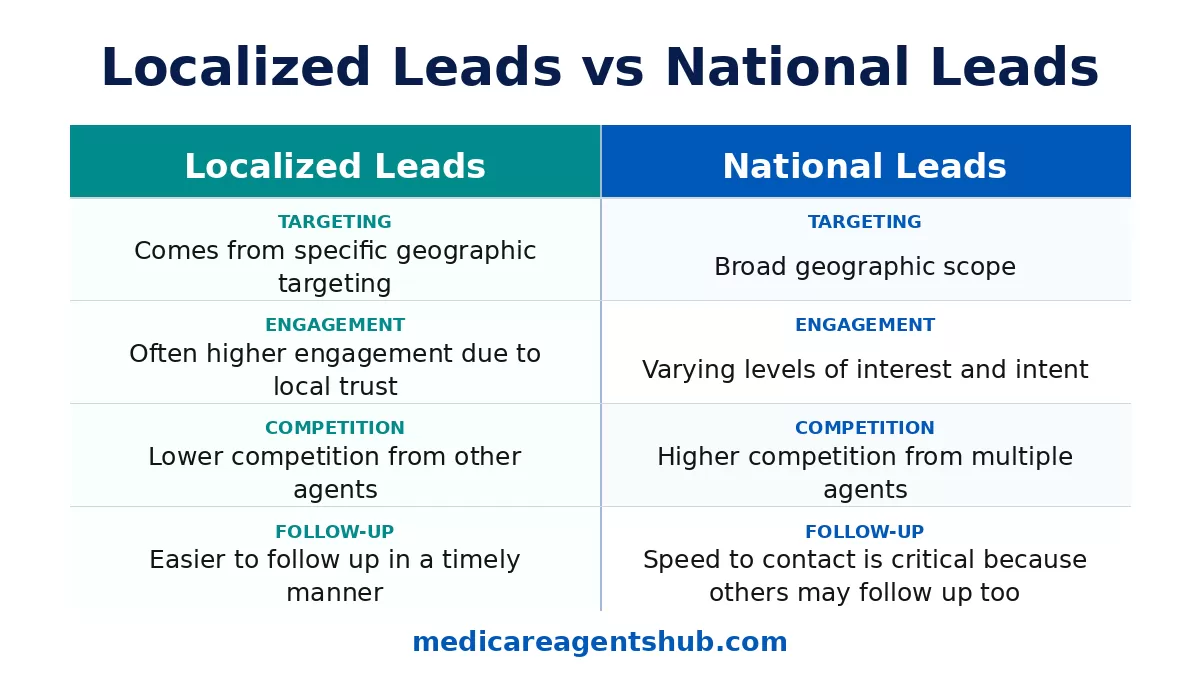
| Criteria | Localized Leads | National Leads |
|---|---|---|
| Geographic targeting | Tied to a specific ZIP code, city, or region | Broad, nationwide scope |
| Intent level | Usually higher; prospect reached out based on a local search or connection | Varies widely; some active shoppers, some cold or aged |
| Trust factor | Local presence gives you a head start on rapport | Must establish credibility from scratch |
| Competition | Often lower; sometimes exclusive | Frequently shared or resold to multiple agents |
| Speed-to-contact pressure | Important, but less severe | Critical; first agent to respond usually wins |
| Best use | Core pipeline and long-term client base | Filling volume gaps and testing new markets |
Red Flags to Watch For
Both lead types can burn through a marketing budget fast if you skip due diligence. A few things to check before you commit:
-
For national leads: Ask the vendor how many times each lead is sold, how old the leads are before they hit your inbox, and what the source of the opt-in was. If the vendor won’t answer clearly, that’s your answer.
-
For local leads: If you’re paying an agency for “local” targeting, ask them to show the targeting settings, the search terms driving traffic, and sample creative. Vague reporting is a sign the targeting isn’t as tight as advertised.
-
For both: Watch out for guarantees around conversion rates or appointments. No credible source can promise a specific close rate, since so much depends on your own follow-up process.
-
Compliance check: Whatever source you use, make sure the vendor and creative follow CMS marketing guidelines and your FMO’s rules. A cheap lead source that gets you flagged for a marketing violation isn’t cheap.
How to Get the Most Out of Both
While localized leads have strong advantages, national leads are not always a bad choice if used strategically.
Here are some tips:
-
Use local leads to build your core pipeline through strong community presence, targeted digital ads, and local search optimization.
-
Use national leads to fill volume gaps but make sure you have a fast follow-up system so you contact the prospect before other agents. Even a simple CRM or a shared spreadsheet with timestamps beats trying to track leads in your inbox.
-
Filter and qualify first before investing heavily. Whether local or national, a lead with clear interest and a recent request typically converts better than older or poorly qualified lists.
-
Track your close rates by source so you can measure which type is producing the best return on investment for your own agency. If one source keeps underperforming after 60 to 90 days, cut it.
Time to Convert
In the battle of localized versus national leads, there is no universal winner. But if conversion and meaningful conversations are your goal, local leads frequently outperform national ones because they offer stronger intent and better relevance to your community. Those advantages often mean less cold calling, stronger trust, and a smoother path from first contact to enrollment.
That said, every agency is different. Testing both types while focusing on tight follow-up and strong conversations will help you find the balance that drives growth for your business.
Finding the right lead mix is one of the biggest levers on your growth. To attract high-intent prospects already searching in your area, take a look at how top agents build a consistent pipeline and explore the rest of our agent resources for more on marketing, follow-up, and client retention.