5 Common Follow-Up Mistakes That Cost Medicare Agents Clients

-
November 10, 2025
Follow-up is where Medicare sales are won or lost. Agents pour time and money into lead generation, but what happens after first contact is what actually determines whether a prospect becomes a client. A poorly timed call, a generic message, or a disorganized pipeline can quietly bleed your book of business dry.
Whether you're a seasoned professional or just starting out, avoiding these five common follow-up mistakes can dramatically improve your close rates and client satisfaction.
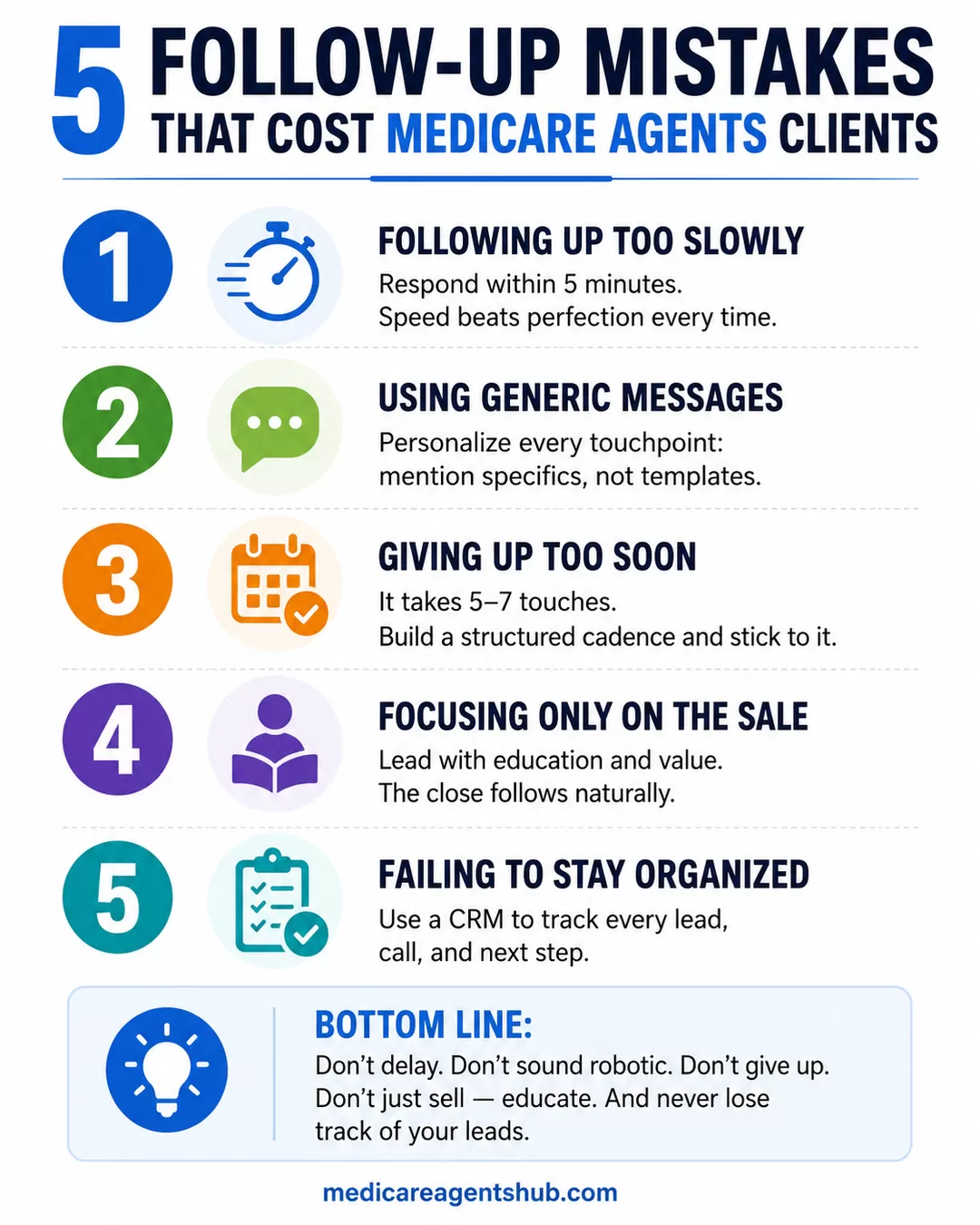
1. Following Up Too Slowly
Speed matters, especially in Medicare sales. When a lead fills out a form, clicks an ad, or requests a call, their interest peaks in that moment. Wait even a few hours, and that attention may shift elsewhere, possibly to another agent who followed up first.
According to research published in the Harvard Business Review, responding within five minutes of a lead's inquiry can make you up to 100 times more likely to connect. In Medicare, where clients often shop around and comparison sites dominate, timing is everything.
Fix it:
Set up automation or notifications that alert you the instant a new lead comes in. If you can't call right away, send a brief personalized text or email acknowledging their request and confirming when you'll call. The goal isn't to close immediately. It's to establish contact and keep the conversation alive before another agent steps in.
2. Using Generic, Scripted Messages
Many agents rely on cookie-cutter follow-up messages that feel impersonal or robotic, and unfortunately clients can tell. Seniors, in particular, are sensitive to tone and authenticity. A "Hi {First Name}, I'm reaching out about your Medicare options" template may get ignored because it doesn't feel human.
Fix it:
Personalization is key. Mention where the lead came from ("I saw you requested a quote on my website yesterday"), or reference their situation ("You mentioned you're retiring soon. Congratulations!"). Even a small detail can make your outreach feel genuine.
Remember: you're not just selling insurance, you're building trust. Your clients want to know you care about their needs, not just making a sale.
3. Giving Up Too Soon
Most Medicare agents stop following up after one or two attempts. That's a costly mistake. Research shows it can take five to seven touches before a lead is ready to engage. Some clients may be busy, hesitant, or still comparing plans. A polite, consistent follow-up keeps you top of mind.
Fix it:
Develop a structured follow-up cadence. For example:
- Day 1: Call or text within minutes of the lead's inquiry.
- Day 2: Send a personalized email.
- Day 4–7: Call again with a helpful tip or offer to review plan options.
- Week 2: Follow up once more, emphasizing your ongoing support.
After a few weeks, transition to a long-term nurture sequence with educational content or Medicare updates. If a prospect goes cold, don't write them off. reconnecting before enrollment season can revive leads you thought were lost. The goal isn't to annoy. It's to stay relevant until they're ready to act.
4. Focusing Only on the Sale (Instead of Value)
Another major follow-up mistake is treating every conversation as a transaction. When your only goal is to close, prospects feel pressured, and pressure kills trust. Medicare decisions are personal and often confusing. If a client feels rushed, they'll retreat or ghost the conversation entirely.
Fix it:
Shift your focus from selling to helping. Lead with education. For example, "I can help you understand how your prescriptions will be covered under different plans." Rather than, "Are you ready to sign up today?" Taking the time to uncover a client's hidden needs makes your recommendations feel tailored, not transactional.
When you prioritize clarity and service, the sale naturally follows. You'll not only close more leads, but also earn long-term loyalty and referrals, which are far more valuable than one quick policy sale.
5. Failing to Stay Organized
Disorganization kills follow-ups faster than anything. Losing track of where leads are in your pipeline (who's been called, who's waiting for info, who already enrolled) can lead to missed opportunities and embarrassing missteps, like calling someone who already signed with you.
Fix it:
Use a CRM (Customer Relationship Management) system to track every interaction. HubSpot offers a free tier that works well for solo agents, and Radiusbob is built specifically for insurance producers if you want something industry-specific. Log your calls, emails, and notes, and set reminders for your next follow-up. Even a simple spreadsheet is better than relying on memory. If you're looking for more options, there are plenty of free and low-cost tools that get the job done without breaking your budget.
Consistency builds professionalism. Clients notice when you're on top of things.
Why This Matters More Than Ever
With the Medicare market becoming increasingly competitive, follow-up discipline separates top producers from everyone else. Leads are expensive, compliance rules are strict, and clients have endless options. But when you follow up promptly, personally, and with genuine care, you stand out immediately.
In short:
- Don't delay.
- Don't sound robotic.
- Don't give up.
- Don't sell. Educate.
- And never lose track.
Nail those five points, and you'll not only close more sales. You'll build the kind of book that clients trust and refer for years to come.