How to Earn Trust in Niche Markets: A Medicare Agent’s Guide to Cultural Competence

-
Last Updated October 6, 2026
For Medicare brokers and agents, building trust is everything. It determines whether someone chooses you to guide one of their most important healthcare decisions, and whether they refer others to you. When working with niche populations like veterans, immigrants, or rural communities, that trust can be even harder to earn. These groups often face unique healthcare challenges and come with distinct cultural or social barriers. To serve them well, Medicare advisors must go beyond product knowledge, they must master cultural competence.
Understanding Cultural Competence in Medicare Marketing
Cultural competence means being aware of and responsive to the cultural, linguistic, and social differences that influence how people perceive healthcare. Speaking the language helps. Understanding the perspective behind it matters more.
For example, many immigrant seniors might come from countries with government-run health systems and may mistrust private insurance. Veterans, on the other hand, may rely on the VA system and be unclear on how Medicare benefits interact with VA coverage. Meanwhile, rural populations may not have access to the same range of providers or plans as their urban counterparts, and may feel alienated by one-size-fits-all marketing.
Cultural competence equips agents to communicate effectively, anticipate concerns, and avoid assumptions. It builds bridges instead of barriers — and in niche markets, that makes all the difference.
Working with Veterans: Respect, Clarity, and Dual Knowledge
Veterans tend to be loyal, values-driven, and highly community-oriented. But they also often have access to VA benefits and may be unsure whether they need Medicare at all. Some may even believe enrolling in Medicare could interfere with their VA coverage.
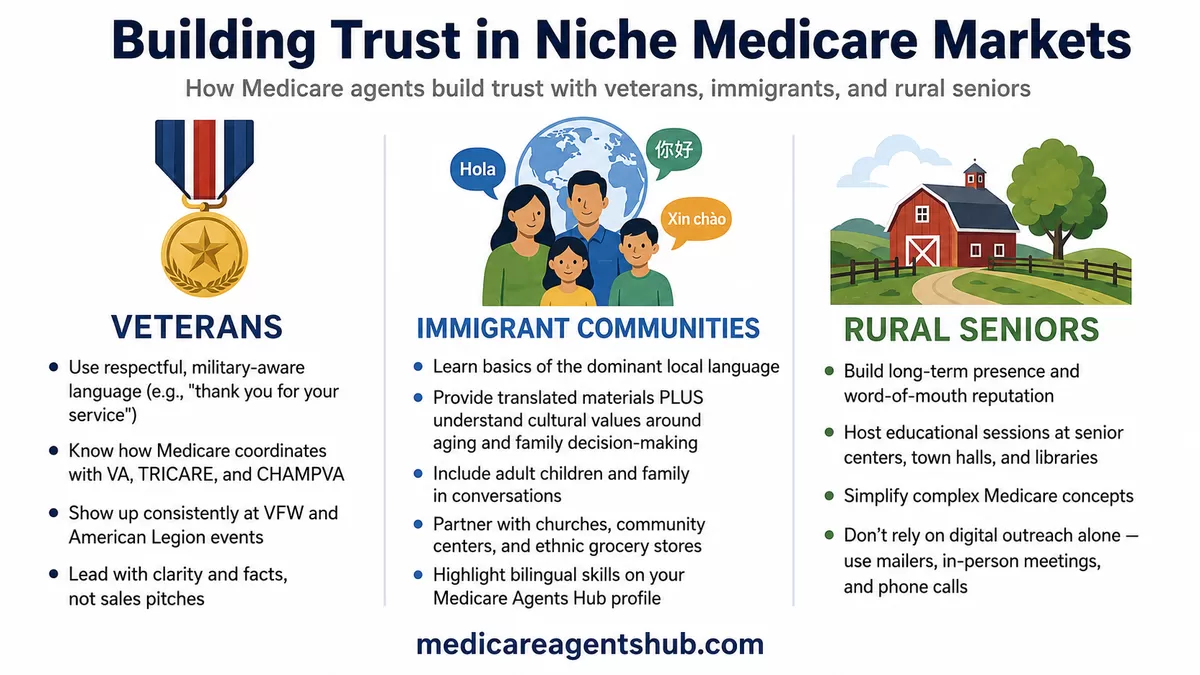
To earn their trust, Medicare agents must approach veterans with respect and an understanding of military culture. This starts with simple things, using appropriate language (e.g., “thank you for your service”), but also means being well-informed about how Medicare coordinates with VA, TRICARE, and CHAMPVA benefits. (CHAMPVA is the Civilian Health and Medical Program of the Department of Veterans Affairs, which covers certain spouses and children of veterans who are permanently disabled or deceased. Plenty of agents have never had it explained to them either.)
Learn the creditable coverage rules cold, because this is where veterans get hurt. VA health coverage is not creditable for Medicare Part B, so a veteran who skips Part B can face a permanent late-enrollment penalty the first time they need care outside the VA system. VA drug coverage is creditable for Part D, so there is no penalty risk on the drug side. Two different answers to two different questions, and conflating them is the most common mistake agents make with this group.
Veterans want clarity and facts. When you can clearly explain how enrolling in Medicare Part B or choosing a Medicare Advantage plan can expand their access to non-VA providers or improve prescription coverage, you add value. Better yet, attend local VFW or American Legion events, to build relationships. Showing up consistently demonstrates that you're committed to serving their community, not just closing a sale.

Do I need Medicare Part B if I have VA benefits?
Yes. Even if you have VA benefits, you will still need Medicare Part B. VA Benefits do not count as creditable medical coverage. Not enrolling in Part B when you no longer have creditable coverage could cause you to be penalized in the future.VA drug benefits, however, do count as creditable coverage. This means you do not have to get Medicare Part D. You may use the VA for your medications.
Quick checklist: engaging veterans
- Learn how Medicare coordinates with VA, TRICARE, and CHAMPVA before the first appointment.
- Lead with respect and military-appropriate language.
- Show up at VFW and American Legion events consistently, not just during the Annual Enrollment Period (AEP).
- Keep the Part B answer separate from the Part D answer. VA medical coverage is not creditable; VA drug coverage is.
- Explain what Part B or an Advantage plan adds to VA coverage, and skip the pitch.
Immigrant Communities: Language, Trust, and Community Integration
Serving immigrant seniors brings unique rewards and challenges. Language barriers, immigration concerns, and deep-rooted cultural norms often impact how these populations engage with the healthcare system.
Trust is often low due to fear of scams, government scrutiny, or previous negative experiences. Many immigrants also rely on family members or community leaders for advice, meaning that agents must think beyond individual outreach.
Start by learning the basics of the dominant language spoken in the community, even if it’s just enough to greet someone or introduce yourself. Translated materials are a start. You also need to understand cultural values around aging, illness, and financial decision-making.
There is a compliance side to this as well. Section 1557 of the Affordable Care Act requires federally funded health programs, including the plans you represent, to provide meaningful language access for people with limited English proficiency. CMS marketing rules apply the same way whether your prospect speaks English or not. Use a qualified interpreter line rather than leaning on whichever family member happens to be in the room, and never a minor child.
If you speak another language, make sure to highlight it on your Medicare Agents Hub profile. Many beneficiaries search specifically for agents who speak their native language, and showing that you’re bilingual (or even just conversational) can be the deciding factor in earning their trust. It’s a simple but powerful way to stand out and demonstrate cultural awareness before the first conversation even begins.
For example, in some cultures, elders rely heavily on their adult children to make healthcare decisions. Being respectful and inclusive of family members can ease the process. Working with churches, community centers, or ethnic grocery stores is also a strong way to connect and show that you are genuinely invested in their wellbeing.
The more culturally relevant your marketing and education are, the more likely you are to be seen as a trusted advocate instead of a stranger selling insurance.

Is help available in Spanish when choosing or using my Medicare plan?
Yes — absolutely, and you have a legal right to it. As your broker, I make sure all my clients know about this, whether they need it for themselves or for a family member.Official Medicare - Free, in Spanish
Medicare.gov/es - The entire Medicare website is in Spanish
1-800-MEDICARE - Say "Español" or press 2 for Spanish. They have Spanish-speaking reps 24/7.
Your Medicare & You handbook - Available in Spanish every year
You are allowed to have a family member or interpreter on the call with Medicare, HICAP, or with me. Medicare will just do a quick permission check. I also have access to a free interpreter line, so I can do a three-way call in Spanish if you need me to explain your options to a family member.
Quick checklist: engaging immigrant communities
- Learn enough of the dominant local language to greet and introduce yourself.
- List every language you speak on your Medicare Agents Hub profile.
- Include adult children and family decision-makers in the conversation.
- Use a qualified interpreter line instead of asking a family member to translate, and never a child.
- Build relationships through churches, community centers, and local ethnic businesses.
Rural Communities: Accessibility, Simplicity, and Consistency
Rural seniors often face geographic and economic barriers that complicate their Medicare choices. Plan availability may be limited, and provider networks can be sparse. Many rely on local doctors or clinics that may not accept all Medicare Advantage plans.
Trust in rural areas is built on long-term presence and word-of-mouth. These communities tend to be tight-knit, and reputation spreads quickly, good or bad. Unlike urban areas where agents may focus on digital lead generation, rural outreach thrives through community events, local partnerships, and consistent visibility.
To build credibility, offer to host educational sessions at senior centers, town halls, or libraries. Avoid overly technical language and focus on simplifying complex Medicare concepts in a relatable way. When you take the time to explain how to enroll, compare plans, and evaluate coverage limitations without pressure, people listen.
One common mistake agents make in rural areas is assuming digital outreach is enough. Many rural seniors have limited internet access or don’t feel comfortable navigating online platforms. A physical presence, whether by mailers, in-person meetings, or even phone calls, still matters deeply.

Do Medicare Advantage plans work in rural areas?
They can, but it totally depends on the area. If the rural area has a decent-sized hospital and network of doctors/specialists, then yes, it could. But if there isn't a large medical footprint in the area and/or the hospital doesn't take any Medicare Advantage plans, then it could be an issue. There generally aren't networks on ER or urgent care services, but if you live in a rural area, you'll want to talk with a broker who can review your area's options to make sure you have more access than just an ER on your Medicare Advantage plan.Quick checklist: engaging rural communities
- Check networks on Medicare Plan Compare, then call the clinic's billing office to confirm, before recommending any Advantage plan.
- Host sessions at senior centers, town halls, or libraries.
- Strip the jargon out of your plan explanations.
- Keep mailers and phone calls in the mix. Digital alone will not reach these seniors.
The Bottom Line: Competence Builds Confidence
Reaching niche Medicare markets is good business, and it serves people who are often overlooked. Trust comes from cultural understanding, clear communication, and consistent presence. When seniors feel respected and heard, they’re more likely to choose you, and refer others.
Joining Medicare Agents Hub can help you sharpen your skills, access niche-specific resources, and stay ahead of industry trends. From veteran outreach tools to multilingual materials, the Medicare Agents Hub gives you what you need to grow with purpose and confidence.
Cultural competence sets you apart. Medicare Agents Hub helps you stay there.