How to Support Clients During Life Changes (Retirement, Relocation, Diagnosis)

-
October 27, 2025
As a Medicare agent, your role goes far beyond simply helping clients select a plan during open enrollment. Many beneficiaries face significant life changes such as retirement, relocation, or new health diagnoses that can drastically affect their healthcare needs. Understanding these transitions and offering proactive guidance not only strengthens your client relationships but also positions you as a trusted advisor in an often complex healthcare landscape.
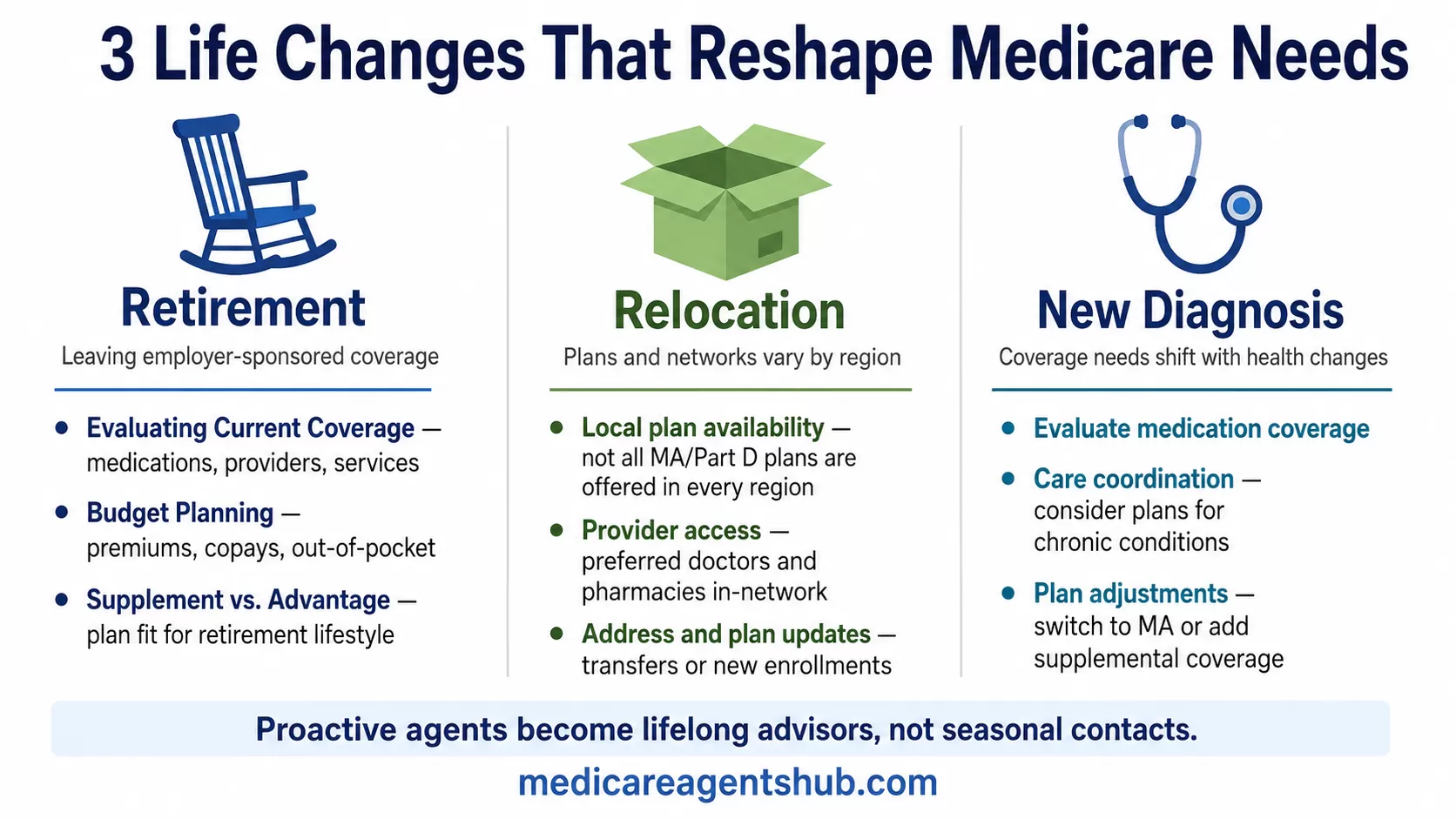
Understanding Life Changes and Their Impact on Medicare Needs
Life changes often trigger adjustments in a client’s healthcare priorities. Retirement may bring a fixed income, necessitating cost-conscious plan choices. Relocation (whether across state lines or even within a region) can change the availability of providers or plan options. Similarly, a new diagnosis, such as diabetes or heart disease, can create a need for specific coverage or specialized care coordination.
As an agent, your responsibility is to anticipate these shifts and guide clients toward solutions that ensure continuity of care, affordability, and access to necessary services. Medicare Agents Hub, for example, provides directory listings, agent-facing resources, and Q&A tools that help brokers stay informed about plan variations and local options, making it easier to support clients through transitions.
Retirement: Preparing for a New Chapter
Retirement is one of the most common life changes affecting Medicare beneficiaries. Clients may be leaving employer-sponsored coverage and stepping fully into Medicare. Key considerations include:
-
Evaluating Current Coverage: Review whether their current plan covers medications, providers, and services they will continue to need.
-
Budget Planning: Help clients compare premiums, copayments, and out-of-pocket costs.
-
Supplement or Advantage Plans: Determine if a Medigap policy or Medicare Advantage plan aligns better with their retirement lifestyle.
-
Avoiding Late Enrollment Penalties: Missing the 8-month Part B SEP or the 63-day Part D window after losing employer coverage can trigger lifetime premium penalties. See Medicare.gov’s guidance on avoiding Medicare penalties and walk clients through timing before their group coverage ends.
Your guidance during this period can reduce anxiety and prevent coverage gaps. Agents who proactively reach out to clients approaching retirement often become lifelong advisors rather than just seasonal contacts.
Relocation: Navigating New Healthcare Landscapes
When a client relocates, whether to a new city or state, it can introduce a range of challenges. Not all Medicare Advantage or Part D plans are available in every region, and provider networks often vary, making it essential to review plan options carefully. As an agent, you should help clients assess local plan availability, ensuring they can continue seeing their preferred doctors and accessing necessary pharmacies. A move can also mean losing an in-network specialist mid-treatment or restarting prior authorizations under a new plan, so flag those risks early. Comparing costs and benefits across available plans in the new location is important, as some may offer more favorable coverage. Assisting clients with address updates, plan transfers, or new enrollments helps provide a smooth transition and ensures continuity of care. Understanding local healthcare landscapes can make this process easier by offering up-to-date information on regional networks and enrollment procedures.
New Diagnoses: Personalized Guidance for Health Changes
A new medical diagnosis can be overwhelming, not just for clients but also for their families. As a Medicare agent, you play a crucial role in helping clients understand how their diagnosis affects coverage needs:
-
Evaluate Medication Coverage: Check the plan’s formulary for new prescriptions, watch for prior authorization or step therapy requirements, and confirm tier placement before the first fill.
-
Consider Specialized Programs: Some plans offer enhanced care coordination for chronic conditions.
-
Plan Adjustments: Determine whether switching to a Medicare Advantage plan or adding supplemental coverage is beneficial.
By providing timely and empathetic support, you demonstrate value beyond enrollment, fostering trust and long-term client loyalty.
Best Practices for Supporting Clients Through Change
Supporting clients through life transitions requires a proactive and empathetic approach. Reaching out before major changes occur allows you to guide clients in evaluating how their healthcare needs might shift, giving them confidence and clarity. Clear and transparent education about coverage, costs, and access helps clients make informed decisions, while ongoing follow-ups ensure that their plan continues to meet their evolving needs. Leveraging trusted tools and resources, such as Medicare Agents Hub, keeps you informed about plan options and regulatory updates, enabling you to provide timely guidance and reassurance throughout each client’s journey.
Frequently Asked Questions
What Special Enrollment Period applies when a client moves?
Moving to a new address that isn’t in your current plan’s service area typically triggers a Special Enrollment Period. Clients generally have two full months after the move to switch to a new Medicare Advantage or Part D plan. If they notify their plan before moving, the SEP can start the month before the move.
How should agents handle a client’s new chronic condition diagnosis?
Review the client’s current formulary to confirm new prescriptions are covered, check specialist networks for their condition, and evaluate whether a Chronic Condition Special Needs Plan (C-SNP) fits their situation better than their current coverage.
Does retiring mid-year create a Medicare enrollment opportunity?
Yes. Losing employer group health coverage triggers an 8-month SEP to enroll in Part B without penalty, and a 63-day SEP to enroll in a Part D plan. Guide clients to act early so their coverage starts the month employer coverage ends.
Conclusion
Life changes are inevitable, but they don’t have to be stressful for your Medicare clients. By anticipating transitions related to retirement, relocation, or new diagnoses, and using the right tools and resources, you can provide invaluable guidance. Agents who embrace this proactive approach not only protect their clients’ health and financial well-being but also strengthen their reputation as trusted advisors. Medicare Agents Hub can be an essential partner in this process, offering the insights and support necessary to help agents navigate these life transitions effectively.