Avoiding Gaps: How to Collect All Necessary Details From Medicare Clients

-
December 4, 2025
As a Medicare agent or broker, ensuring that you gather complete and accurate information from beneficiaries is essential. Failing to capture key details can lead to recommending plans that do not meet a client's needs or result in benefit gaps, claim denials, or coverage problems. By using a structured and thorough approach when speaking with potential clients, you can help them get the right plan and build trust in your services.
Why Comprehensive Data Collection Matters
The agency managing Centers for Medicare & Medicaid Services (CMS) requires agents and brokers to collect enough information to assess a beneficiary's health care needs, including current providers, specialists, medications, and preferred hospitals, before recommending a plan.
In addition, because data shared between agents, brokers, or Third-Party Marketing Organizations (TPMOs) are now tightly regulated, you must ensure that any personal information is obtained with the beneficiary's clear permission and recorded properly.
Gathering thorough information up front prevents surprises later, helps avoid plan mismatches, and ensures compliance.
Key Information You Should Always Collect
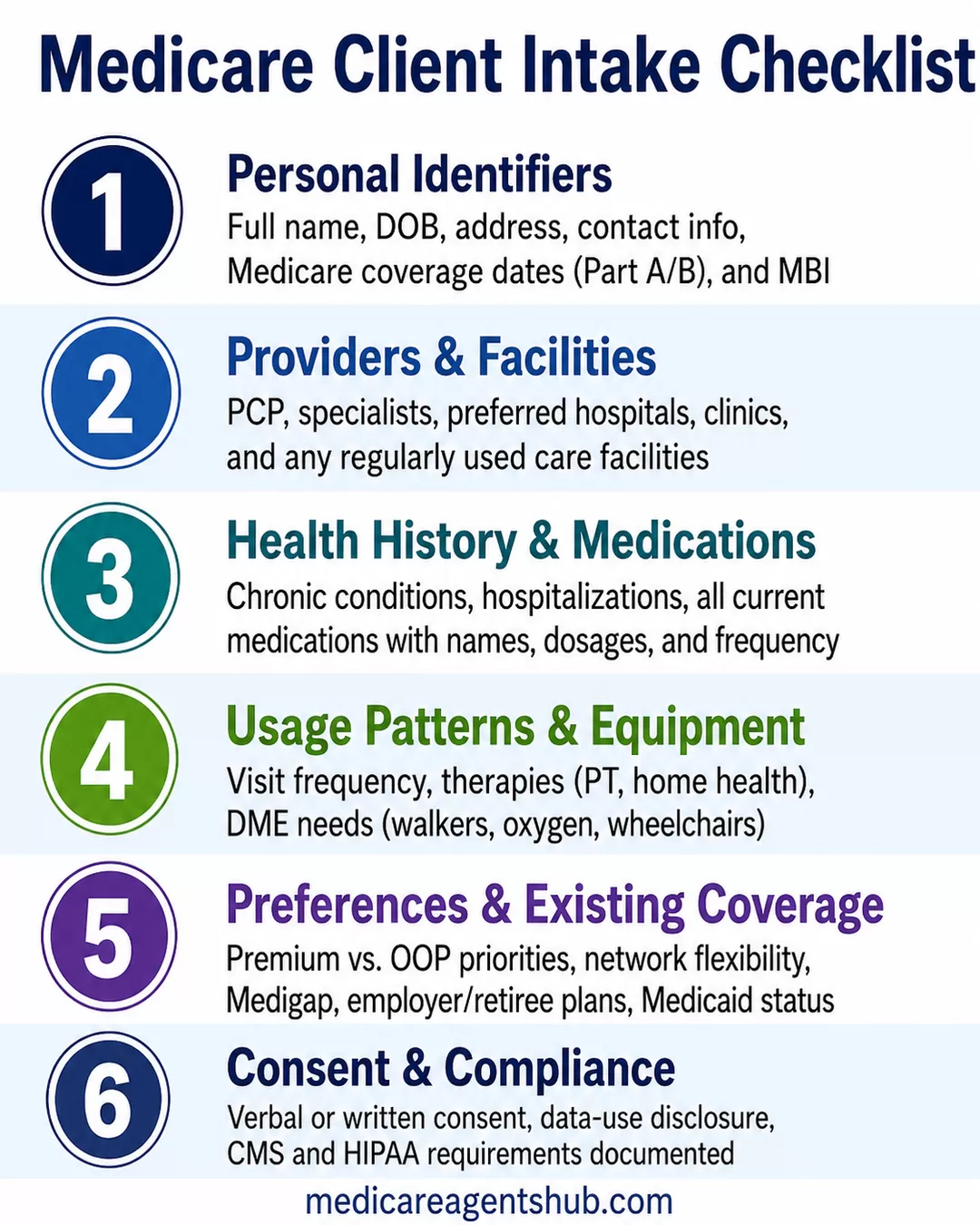
When you first talk to a beneficiary, try to gather at minimum the following:
- Personal identifiers: full name, date of birth, address, contact information, effective dates of existing Medicare coverage (Part A, Part B), and Medicare Beneficiary Identifier (MBI) if they are ready to enroll.
- Current health care providers: primary care physician, specialists, preferred hospitals or clinics, and any facilities frequently used.
- Medical conditions and health history: major diagnoses, chronic conditions, and hospitalizations.
- Prescription medications and drug needs: regular medications, including names and dosages, expected future drug needs, and whether they rely on brand-name or generic drugs.
- Healthcare usage patterns: frequency of doctor visits, specialist visits, therapies such as physical therapy or home health care, and acute or ongoing care needs.
- Durable medical equipment and special needs: walkers, wheelchairs, oxygen, or anything they may need regularly.
- Benefit preferences and priorities: low premiums versus low out-of-pocket costs, flexibility in provider network, prescription drug coverage, and supplemental coverage needs.
- Other insurance or supplemental coverage: existing Medigap, employer or retiree coverage, Medicaid eligibility, or other secondary plans.
- Consent and compliance information: written or verbal consent to collect and use their personal data, with disclosure about how their information will be used and shared.
Techniques to Ensure You Do Not Miss Key Details
- Use a structured questionnaire or checklist: Before or at the start of the call, use a standardized form or script that prompts you and the beneficiary to cover all critical categories. This reduces the risk of forgetting important topics.
- Ask open-ended questions first, then narrow down: Start with broad questions such as "Tell me about your current doctors and medications," and then follow up with specifics, including names, dosages, and hospital names. This helps uncover details beneficiaries might not think to mention if asked narrowly.
- Confirm and repeat back information: After the beneficiary gives key details, repeat them back to ensure accuracy. This helps catch misunderstandings and shows the beneficiary you are listening carefully.
- Record data in a secure CRM or tracking system: Document all the information in a secure client record to ensure consistency and easy reference. Avoid using unsecured methods, as sharing and storing beneficiary data is subject to strict rules under CMS and privacy laws.
- Obtain clear beneficiary consent before collecting sensitive information: Ensure the beneficiary knows how the data will be used and confirm their consent. This is especially important under recent CMS rules on data sharing.
- Prioritize provider network and prescription needs early: CMS expects agents and brokers to evaluate plan suitability based on providers and medications. Asking about these early helps avoid recommending a plan that fails to match the beneficiary's access or drug requirements.
Common Pitfalls and How to Avoid Them
Why it matters: Supplemental plans or existing coverage can change plan suitability.
How to avoid: Include a dedicated section in your questionnaire for other insurance or coverage.
Why it matters: Prescription drug coverage is critical and must match actual needs.
How to avoid: Ask for full medication details, including name, dosage, and frequency.
Why it matters: Sharing or using beneficiary data without consent can violate CMS and HIPAA rules.
How to avoid: Verbally disclose how data will be used and get recorded consent.
Why it matters: Clients may forget to mention certain specialists or frequent hospitals.
How to avoid: Prompt with follow-up questions, such as "Do you see a cardiologist, endocrinologist, or therapist?"
Why it matters: Without good records, plan recommendations can be inconsistent or non-compliant.
How to avoid: Use a secure CRM or documentation method and log all call details.
How Using Tools Like Medicare Agents Hub Can Help
If you are building your client base or managing multiple beneficiary profiles, services like Medicare Agents Hub can be very helpful. They connect you with beneficiaries looking for Medicare guidance, making it easier to reach clients who are ready to share information.
Having a centralized system or network helps you standardize your data collection process, reducing the risk of missing key details. It can make scaling your business easier while keeping compliance intact.
Leaving Nothing Out
Thorough and compliant information collection is more than a formality. It is a foundation for delivering real value to beneficiaries. Gathering complete data on health history, prescription needs, providers, and coverage preferences allows you to recommend plans that truly meet their needs. When clients go through major life changes like retirement or relocation, having detailed records on file makes it far easier to adjust their coverage quickly and accurately.
This builds trust, reduces future problems, and strengthens your reputation as a reliable Medicare advisor.
Using standardized checklists, open-ended questions, secure documentation, and clear consent processes helps you avoid gaps. Leveraging resources like Medicare Agents Hub can support consistent outreach and help you connect with beneficiaries who value a careful, consultative approach.