Medicare Agent Recruiting: How to Hire, Train, and Onboard Junior Agents

-
November 2, 2025
Many successful Medicare brokers reach a point where solo work limits growth. Between servicing existing clients and generating new business, there simply aren’t enough hours in the day. Recruiting, hiring, and training junior agents can multiply your capacity and long-term profitability. But growth only works when it’s intentional, structured, and built around mentorship.
Know When It’s Time to Recruit
The first step in building a team is recognizing the need. If you’re turning away leads, missing follow-ups, or falling behind on renewals, it’s time to bring on help. Adding junior agents allows you to delegate initial outreach and client prep, freeing you to focus on consultations and complex cases.
Financial readiness also matters. Have clear commission splits and training expectations outlined before you start recruiting. Splits often vary based on who provides the leads and how much support the senior agent contributes to closing, so decide the structure upfront rather than negotiating it case by case.
What to Look for When Recruiting Medicare Agents
Success in Medicare sales isn’t just about product knowledge — it’s about attitude, empathy, and accountability. Sales experience is helpful but not essential; the right mindset matters more. Look for people who are:
- Organized and reliable with follow-through
- Eager to learn and open to coaching
- Comfortable having patient, unhurried conversations with seniors
Many established brokers find talent through local insurance licensing schools, LinkedIn networking, or industry associations like the National Association of Benefits and Insurance Professionals (NABIP) and community platforms like Medicare Agents Hub, which connects advisors with beneficiaries. Once new hires are on board, having them build out their own agent listing early helps them establish credibility from day one.
Onboarding and Training New Medicare Agents
Training new agents requires more than handing over a product binder. Create a systemized onboarding process that covers compliance, systems, and client interaction from day one. Walk them through your CRM setup, document storage protocols, and call scripts. Pair instruction with observation — let them shadow your appointments and listen to recorded sales calls.
Compliance training is where new agents get in trouble fastest, so be specific. Cover the CMS Medicare Communications and Marketing Guidelines, and walk them through how to properly use and store a Scope of Appointment (SOA) form before any MA or PDP discussion — SOA forms must typically be retained for 10 years. If phone consultations are part of your sales process, agents need to follow both CMS and state-level rules on call recording and retention. Walking through real (redacted) examples of what a compliant call sounds like is more effective than reading rules aloud.
Over time, move them into role-playing and supervised client conversations. The goal is confidence through repetition. Regular check-ins help you identify gaps early and reinforce best practices. Make sure they understand how to collect all necessary details from clients so nothing falls through the cracks during enrollment.
Set Clear Goals and Accountability Metrics
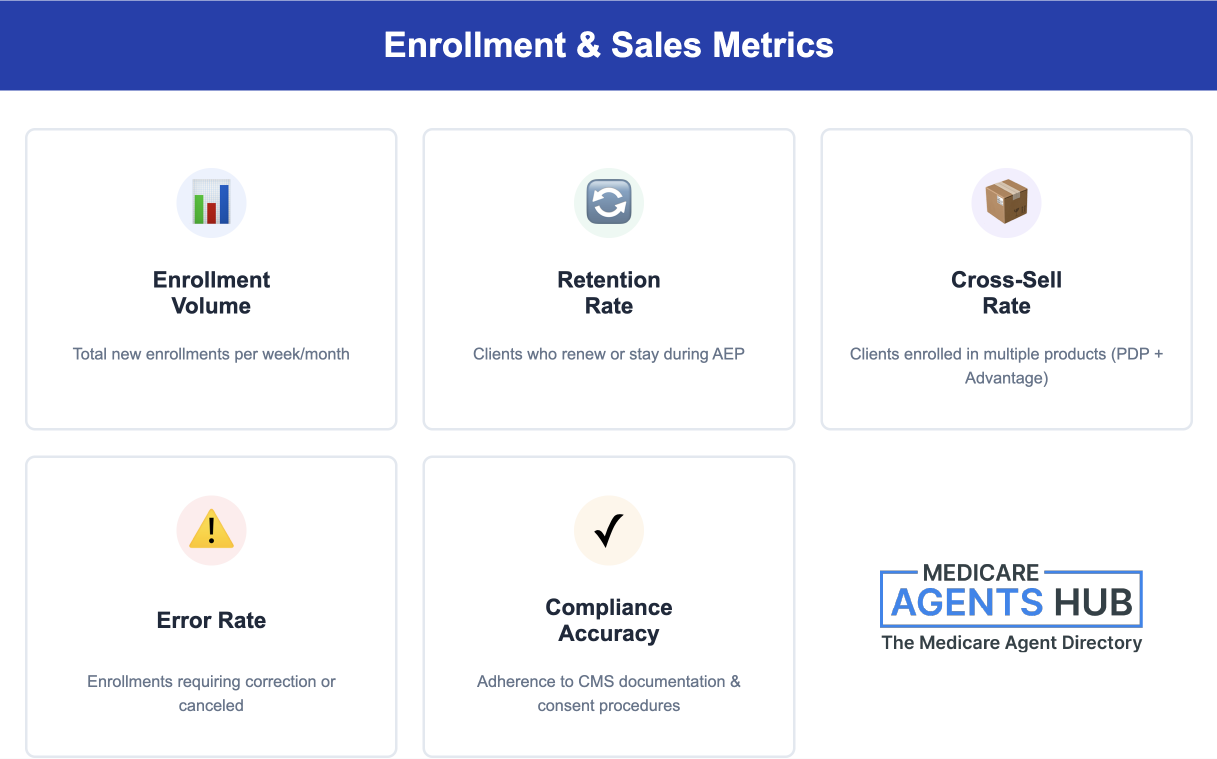
Every team member should understand what success looks like. Track a small set of performance metrics such as:
- Weekly outreach numbers (calls, texts, appointments booked)
- Appointment-to-enrollment conversion rate
- Enrollment accuracy and clean submission rate
Review progress regularly and provide constructive feedback. Consistency builds professionalism — and clients will notice.
At the same time, emphasize collaboration over competition. Encourage open communication so junior agents feel supported, not micromanaged. Teach them early about common follow-up mistakes so they develop strong habits from the start.
Mentorship and a Path for Growth
Retention depends on opportunity. Outline advancement paths within your agency — such as moving from junior to senior agent or transitioning into account management. Recognize achievements and celebrate milestones. A motivated agent is far more likely to stay long-term when they see a future in your organization.
Mentorship is what turns a new hire into a producer. Set aside standing time for one-on-ones, ride-alongs on complex appointments, and honest debriefs after tough calls. Encourage them to invest in their own personal brand as they grow. Agents who build their own identity within your team become stronger contributors — not weaker ones.
Lead by Example
Strong leaders model the behavior they expect. Demonstrate ethical sales practices, client-centered service, and organized processes. Transparency about your decision-making helps new agents understand not just what to do, but why it matters.
Leadership in this industry isn’t about managing — it’s about mentoring. When junior agents see that your success is built on integrity and consistency, they’ll follow suit. For a deeper look at what separates the best from the rest, see how top Medicare agents build a book of business that lasts.
In summary: Recruiting a Medicare sales team takes planning, patience, and leadership. Hire for character, train for skill, and mentor for the long haul. By investing in people early, you’ll gain the bandwidth to expand your reach and serve more clients effectively. Platforms like Medicare Agents Hub can offer valuable insights into recruitment trends and training tools, helping you turn your individual success into a thriving, scalable business.