Using the ANOC to Guide Client Conversations During AEP

-
Last Updated October 20, 2026
Every fall, Medicare agents gear up for one of the busiest times of the year: the Annual Enrollment Period (AEP). For agents, this period is an enormous opportunity to strengthen client relationships, expand business, and provide meaningful guidance.
One of the most powerful tools in preparing for AEP conversations is the Annual Notice of Change (ANOC). The ANOC, mailed to beneficiaries each September, outlines plan changes for the coming year. While many clients glance at it briefly, or ignore it altogether, it provides a perfect springboard for proactive conversations. By helping clients understand their ANOC, agents can position themselves as trusted advisors while making sure beneficiaries are equipped to make the best possible decisions.
Why the ANOC Matters to Client Discussions
Most beneficiaries don’t have the time, patience, or expertise to interpret the ANOC in detail. Yet it is packed with information that can directly affect their care and finances. It includes changes in premiums, copayments, deductibles, covered medications, provider networks, and plan benefits. If left unchecked, these adjustments can result in unexpected out-of-pocket costs or disruptions in care.
For agents, the ANOC is a natural conversation starter. Reaching out to clients once the notices are sent shows attentiveness and foresight. More importantly, it shifts the interaction from being reactive (waiting for clients to notice problems) to proactive, where agents anticipate needs before they arise.
Framing Conversations Around the ANOC
When reviewing the ANOC with clients, the key is to make the conversation clear and personalized. Instead of overwhelming them with every line item, agents should focus on the areas that impact daily life: prescription drug coverage, premiums, provider access, and benefits they rely on.
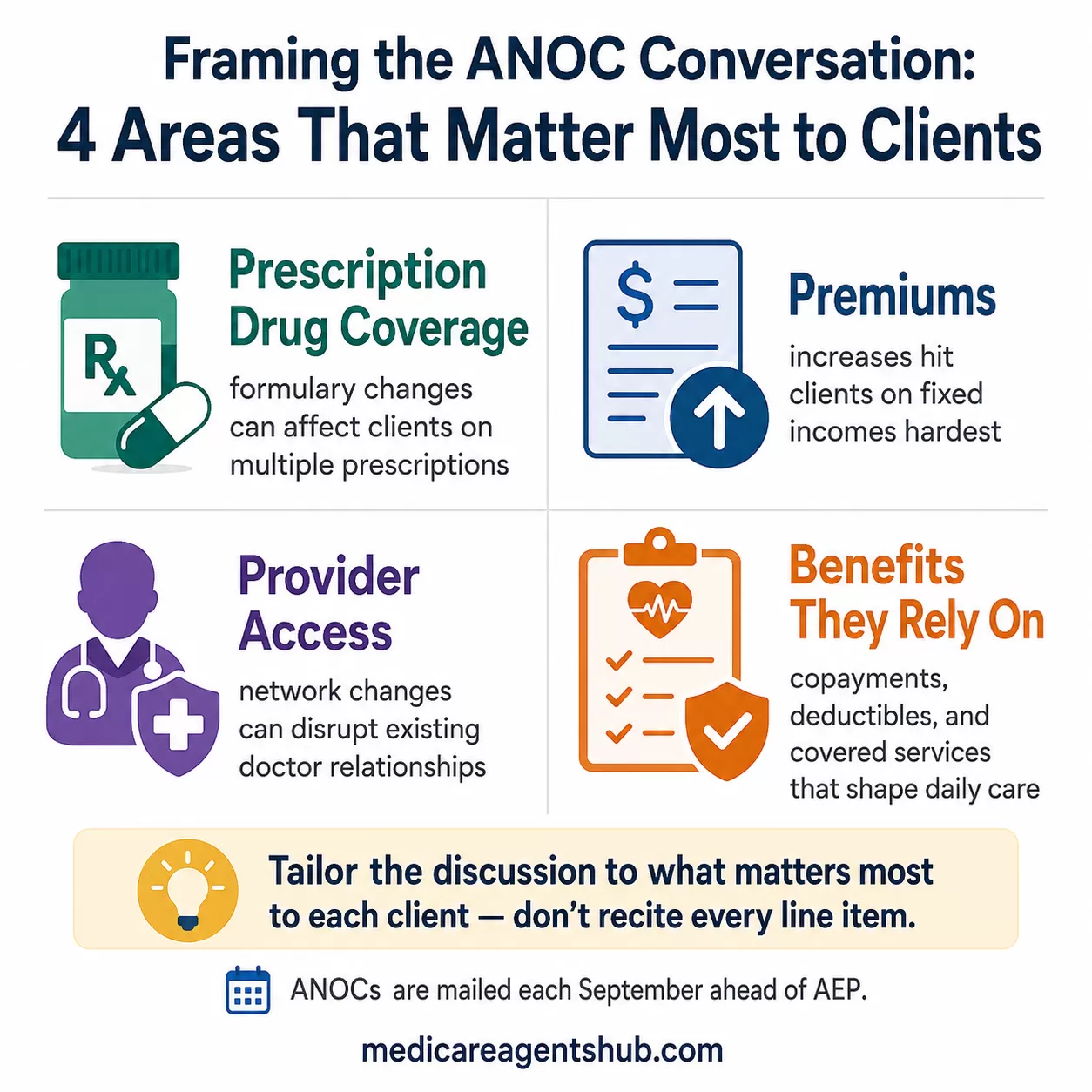
For example, a client who takes multiple prescriptions may be most concerned about formulary changes, while another on a fixed income might be focused on premium increases or higher copayments. And when a client’s plan is being discontinued entirely, the ANOC conversation becomes urgent: they need a clear picture of their replacement options before the December deadline. By tailoring the discussion to what matters most, agents demonstrate not only knowledge of the material but also empathy for their clients’ circumstances. Keeping follow-up consistent is equally important — be sure to avoid common follow-up mistakes that cost agents clients during these critical conversations.
The ANOC as a Retention and Growth Tool
Beyond helping current clients, the ANOC can be leveraged as a growth strategy. Agents who educate beneficiaries on how to read and respond to their ANOC often stand out from competitors. Word-of-mouth referrals frequently come from clients who feel cared for during complex transitions like AEP.
The ANOC also creates a structured reason for agents to contact their book of business each year. This regular outreach ensures that relationships remain strong, reducing the likelihood of clients switching to another agent or company. For agents looking to make the most of this window, learning how to reconnect with past clients before Open Enrollment can make all the difference.
Turning ANOC Insights Into Recommendations
The real value agents bring lies not just in explaining the ANOC but in transforming it into actionable guidance. Once plan changes are clear, the next step is to compare alternatives. Agents can review whether staying put is in the client’s best interest or if switching to another plan offers better value.
This is where knowledge of local plan availability and benefits becomes critical. Agents who can confidently present side-by-side comparisons, explain trade-offs, and recommend the most suitable option help clients make decisions with confidence.
Compliance still frames every conversation. A valid Scope of Appointment must be in place before discussing Medicare Advantage or Part D options (the CMS rule lives in 42 CFR 422.2264), and agents should only present plans they’re contracted and certified to sell. Always work from the ANOC and other documents the carrier sent the client, since those are the source of truth for any change you’re walking through.
Timing matters too, because ANOCs reach members before marketing season opens. If a current client calls in September with questions about next year’s benefits in their ANOC, you can answer them. Explaining their own plan’s upcoming changes isn’t the problem. What has to wait is marketing next year’s plans: under 42 CFR 422.2263(a), plans can’t start marketing the coming plan year until October 1. Save side-by-side comparisons of other plans for October 1 or later, and remember that enrollment changes can’t be submitted until AEP opens on October 15.
Best Practices for ANOC-Driven Conversations
To make the most of ANOC discussions, agents can:
-
Schedule early outreach. Contact clients as soon as ANOCs are released to allow enough time for review before AEP begins.
-
Use simple language. Translate technical terms into plain explanations that clients can easily understand.
-
Document client concerns. Keep detailed notes on which benefits or costs matter most to each client, building a stronger foundation for future conversations.
-
Follow up with clients who don’t respond. If they do nothing, they roll into next year’s version of their plan with every change in the ANOC, so a second call or text before December 7 is worth the effort.
It helps to have a few ready-made openers for the changes that come up most often. When a client’s premium is going up, something as simple as “I noticed your monthly premium is increasing next year — let’s look at whether staying put or switching makes more sense for your budget” keeps the tone calm and gives the client an obvious next step. Keep a small library of these lines for premium hikes, formulary drops, and network changes so you’re not composing on the fly during the busiest weeks of the year.
These practices not only ensure smooth enrollment experiences but also reinforce the value of the agent-client relationship.
Supporting Agents in the Process
While the ANOC is a vital tool, managing hundreds of client conversations during AEP can be overwhelming. This is where resources like Medicare Agents Hub can be incredibly helpful. By offering insights, online assets, and support specifically designed for agents, platforms like this help streamline processes and ensure agents are equipped to succeed. Having access to centralized resources allows agents to spend more time where it matters most: guiding clients through important decisions.
Putting the Guidance into Action
The Annual Notice of Change is far more than a piece of paper, it’s a gateway to meaningful client engagement. By using the ANOC to guide conversations, Medicare agents can provide clarity, prevent client surprises, and reinforce their role as trusted advisors. The agents who embrace the ANOC as a proactive tool not only deliver better service but also position themselves for stronger retention and growth during the busiest season of the year.
As AEP approaches, now is the time for agents to prepare their outreach strategy, sharpen their knowledge, and leverage every resource available. Done well, ANOC-driven conversations can turn this enrollment season into the most successful one yet.
ANOC conversation checklist
- Reach out as soon as ANOCs land in September. Answer questions about the client’s own ANOC right away, but hold plan comparisons until October 1. AEP opens October 15.
- Call clients with discontinued plans first. Get a replacement in place by December 7 so coverage starts January 1 without a gap. (A non-renewal Special Enrollment Period runs through the end of February, but don’t plan around it.)
- Keep the review personal: drugs, premiums, doctors, and the benefits they actually use.
- Get a valid Scope of Appointment before you discuss Medicare Advantage or Part D options.
- Have openers ready for premium hikes, formulary drops, and network changes.
- Circle back to anyone who hasn’t responded. Silence means they stay put, changes and all.
- Write down what each client cares about so next year’s call starts ahead.