AEP Organization Tips: Streamline Your Workflow and Maximize Sales

-
Last Updated October 25, 2026
The Annual Enrollment Period (AEP) is the most critical (and chaotic) time of year for Medicare agents. Between client renewals, plan updates, and compliance documentation, even experienced brokers can feel overwhelmed. Staying organized is a competitive advantage. The agents who plan and systemize their workflows before AEP begins are the ones who sell more, stress less, and maintain stronger client relationships.
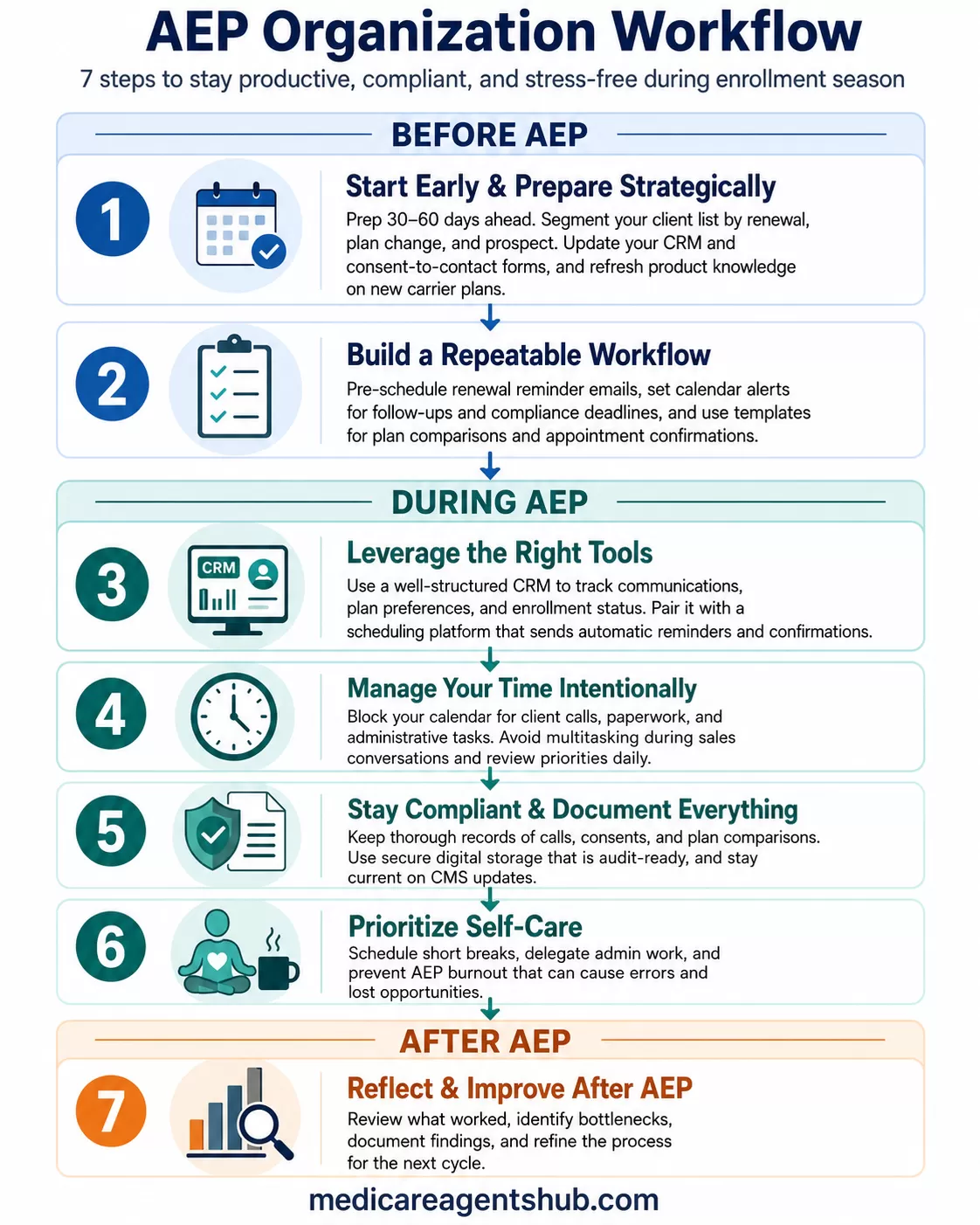
1. Start early and prepare strategically
Organization during AEP starts long before October 15. The most successful advisors begin prepping 30-60 days ahead. Review your client list and segment it by renewal, plan change, or prospect status. This allows you to prioritize outreach and avoid scrambling mid-season. Update your CRM, clean up contact details, and make sure you have recent consent-to-contact forms on file. If you’ve been quiet with your book for a while, now’s the time to reconnect with past clients before open enrollment so you’re not cold-calling in October.
Next, refresh your product knowledge. Carriers roll out new plan details each year, and even subtle changes can impact client recommendations. Having that information ready before clients start calling saves time and builds credibility.
2. Build a repeatable workflow
During AEP, repetition is your ally. Create a standardized process you can use for every client interaction, from initial review to enrollment follow-up. Automate what you can:
-
Pre-schedule renewal reminder emails.
-
Set up calendar alerts for follow-ups and compliance deadlines.
-
Use templates for common communications like plan comparisons or appointment confirmations.
A repeatable workflow reduces decision fatigue and helps ensure nothing slips through the cracks.
3. Set up your CRM and tools before AEP
Digital tools can transform how efficiently you work. A well-structured CRM helps you track client communications, plan preferences, and enrollment status in real time. Popular options in the Medicare space include AgencyBloc, RadiusBob, and NowCerts; pick whichever integrates cleanly with your existing quoting and enrollment stack. Pair it with a scheduling platform that integrates reminders and confirmations automatically.
Medicare Agents Hub is an excellent resource for exploring tech solutions and attracting online lead opportunities. From in-bound leads to gaining localized Medicare connections, it’s a go-to platform for agents looking to tighten up their lead process and grow their book.
4. Manage your time intentionally
Time management during AEP requires discipline. Block your calendar into focused segments: client calls, paperwork, and administrative tasks. Avoid multitasking during sales conversations; clients can tell when your attention is divided.
Start your day by reviewing the top priorities and end it by confirming the next day’s appointments. Setting realistic daily targets helps maintain momentum without burnout.
5. Stay compliant and document everything
Organization also keeps you compliant. Every enrollment season brings new CMS updates (the current Medicare Communications and Marketing Guidelines are worth a fresh read every year), so keep thorough records of calls, consents, and plan comparisons. This AEP is the first under the CY2027 marketing rules, which come from the CMS Contract Year 2027 final rule published in April 2026 and apply to marketing from October 1: the 48-hour wait after a Scope of Appointment is gone (you still need the SOA on record before the appointment), the TPMO disclaimer has to come before you discuss any benefits, and call recordings now have to be kept 6 years instead of 10. Update your call scripts and retention settings before the busy weeks hit. Use digital storage that’s secure and easy to access in case of audit. Having consistent documentation habits protects your reputation and your license.
6. Prioritize self-care
AEP burnout is real. Exhaustion can lead to errors and lost opportunities. Schedule short breaks throughout the day and delegate administrative work if possible. Staying sharp benefits your clients just as much as it benefits you.
7. Reflect and improve after AEP
Once the rush ends, take time to review what worked and what didn’t. Which tools saved you time? Where did bottlenecks occur? Document your findings and refine your process for the next cycle. Small adjustments add up to major gains over time. The post-season is also when you should be building your post-AEP retention plan so those hard-won clients stay on your book through the next cycle.
Carry the workflow into OEP (January 1 to March 31)
AEP doesn’t really end on December 7. The Medicare Advantage Open Enrollment Period runs January 1 through March 31, and anyone already in an MA plan gets one change: a different MA plan, or back to Original Medicare with a Part D plan.
The workflow flips here. AEP is production. OEP is protection. Use the same CRM segments you built in September to tag every client you enrolled or moved this fall, then call them in January to confirm their ID cards arrived, their drugs are covered at the price they expected, and their doctors are in network.
Watch the marketing line, though. CMS rules (42 CFR 422.2263) bar unsolicited outreach that pitches OEP as a chance to switch, targeting people because they made an AEP change, and contacting former clients who picked a new plan during AEP. Servicing your own clients and helping people who call you is fine.
If you run an agency, set this up before January. Assign OEP check-ins to the producer who wrote each case, track them in the CRM like any other task, and have whoever owns compliance confirm no OEP-themed mailers or call lists go out.
AEP mistakes to avoid
Most AEP problems trace back to a few skipped steps:
- Booking appointments without an SOA on record. The 48-hour wait is gone, but the SOA itself isn’t.
- Talking benefits before the TPMO disclaimer. It has to come first now, not just somewhere in the first minute.
- Re-enrolling clients without checking the ANOC. Formulary and network changes are where January complaints come from.
- No follow-up after the application. That’s how you lose a client during OEP to someone who did call.
- Running your calendar off memory. If it isn’t in the CRM, it doesn’t exist by week 3.
Do the prep work in September, run every client through the same process, and guard your calendar. December 7 goes a lot better when October 15 wasn’t a scramble. And the clients you handled cleanly this year are the ones who call you first next year.
Ready to turn AEP chaos into a manageable system? A premium listing on Medicare Agents Hub connects you with local seniors actively searching for help and gives you the lead flow to make your organized workflow pay off. Claim your listing and get set up before the next enrollment rush.