5 Ways Medicare Brokers Can Differentiate Themselves in a Crowded Market

-
Last Updated October 21, 2026
The Medicare market is booming, but with growth comes competition. Every year, more brokers enter the field, offering similar plans and services. For many seniors and their families, the result is confusion and overwhelm. In such an environment, simply knowing the products isn’t enough, Medicare brokers must find ways to stand out and become trusted advisors.
Differentiation is not just about flashy marketing or aggressive sales tactics; it’s about being personable, demonstrating expertise, and connecting with clients in ways that matter. Here are five strategies Medicare brokers can use to distinguish themselves in a crowded market.
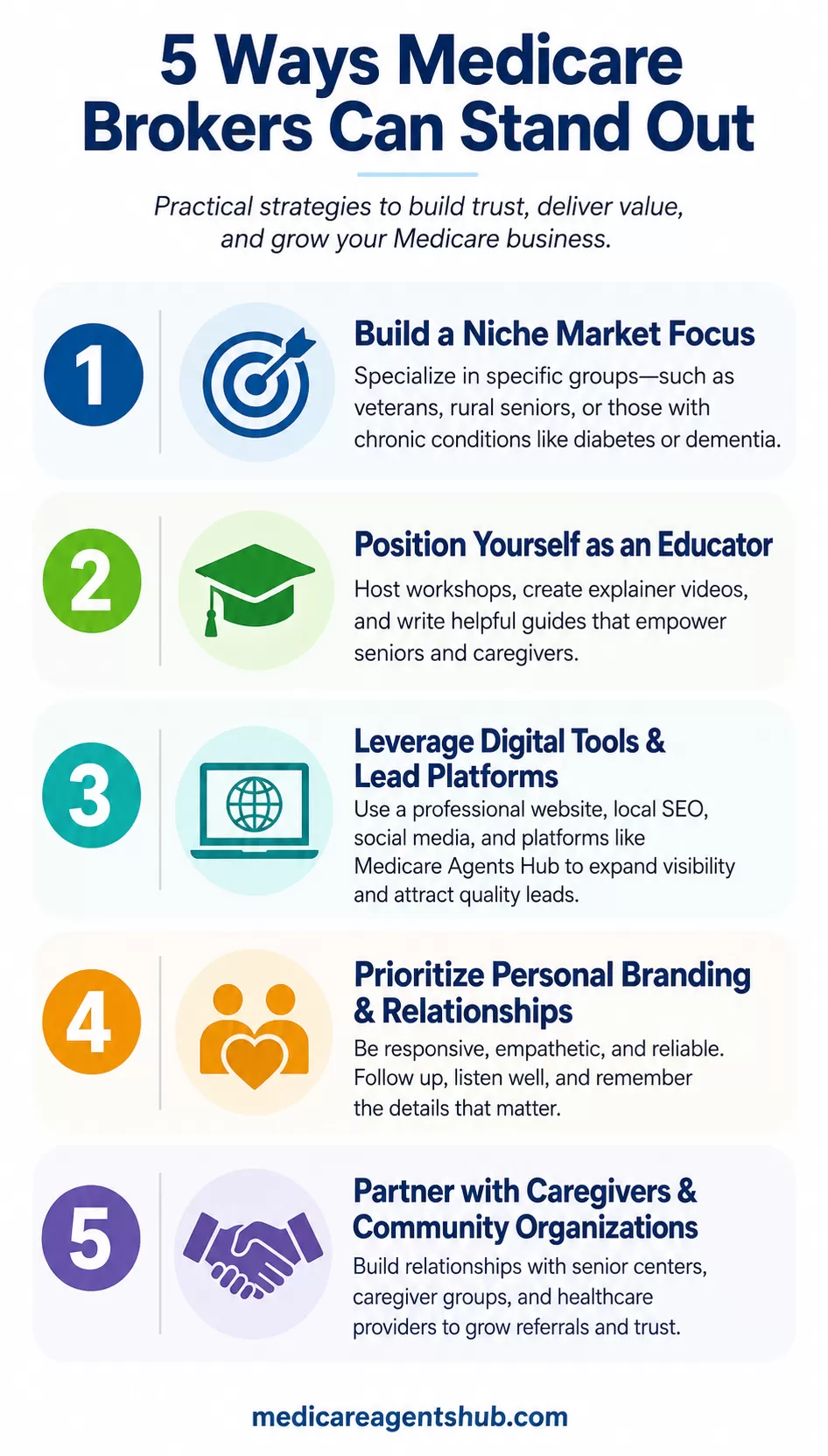
1. Build a Niche Market Focus
One of the most effective ways to stand out is to specialize. Instead of trying to serve every client, focus on a specific group with unique needs. This could include veterans, rural seniors, or individuals managing chronic conditions such as diabetes or dementia. By becoming the go-to resource for a particular niche audience or market, brokers demonstrate expertise and build credibility.
Specialization also makes marketing efforts more effective. Targeted messaging resonates with the audience and creates a sense of trust, making it easier for potential clients to choose you over a generalist broker.
A few niches worth considering:
- Turning 65 (T65) clients: people aging in who need help with first-time Medicare decisions and enrollment deadlines.
- People working past 65: employees and spouses who need to know whether their group plan is creditable before delaying Part B (a topic where many agents slip up).
- Veterans: clients figuring out how VA benefits and Medicare work together.
- Dual-eligible clients: people on both Medicare and Medicaid who may qualify for a D-SNP.
- Clients with chronic conditions: seniors managing diabetes, COPD, heart failure, or dementia, where C-SNPs and drug formularies matter (see ethical marketing tips for this group).
- Rural seniors: clients in areas with thin provider networks and fewer plan options (more on reaching underserved rural populations).
- Non-English speakers: Spanish-speaking or other language communities that are often underserved by generalist agents.
You don’t need all of these. Pick one or two that match your background and market, and build from there.
One caution: a niche doesn’t loosen the CMS marketing rules. You still need a Scope of Appointment before discussing specific plans, and you should confirm someone actually qualifies (Medicaid status for a D-SNP, a qualifying diagnosis for a C-SNP) before presenting a Special Needs Plan.
2. Position Yourself as an Educator
Today’s Medicare clients want clarity. Plans, coverage options, and regulations can be confusing, and families often turn to brokers not just for enrollment, but for guidance. By positioning yourself as an educator, you provide real value.
This can take many forms: hosting community workshops, creating simple explainer videos, writing blog posts, or producing guides for caregivers. When seniors and their adult children see you as a source of helpful information rather than just a salesperson, you earn trust, increase engagement, and encourage referrals.
Start small. For example, a one-page guide titled “3 Questions to Ask Before Choosing a Medigap Plan” or a short “Turning 65 Checklist” can be handed out at events, shared by email, or offered on your website. Simple resources like these double as lead magnets that turn seniors into appointments.
3. Leverage Digital Tools and Lead Platforms
An effective online presence is essential for standing out. Most seniors and their caregivers research plans online before contacting a broker. Maintaining a professional website, optimizing local SEO (including a complete Google Business Profile), collecting client reviews, and having a presence on social media are key steps.
In addition to general digital strategies, platforms like Medicare Agents Hub can help brokers expand their reach. Through leads, tools for client interactions, and resources to understand client needs, a good platform lets brokers focus on what matters most: connecting with clients and helping them find the right coverage. Utilizing such platforms allows brokers to efficiently grow their business while maintaining a high level of service.
4. Prioritize Personal Branding and Relationships
Relationships are at the heart of differentiation. Clients are more likely to stay with and refer to brokers who are responsive, empathetic, and trustworthy. Small gestures, such as remembering a client’s personal details, sending follow-up reminders, or checking in after enrollment, can create lasting impressions. That follow-through is also what keeps clients on your book after AEP.
Personal branding isn’t just about logos or marketing materials; it’s about reputation. When you are known for providing clarity, patience, and guidance, you naturally stand out from competitors who focus solely on closing sales.
5. Partner with Caregivers and Community Organizations
Many Medicare decisions are influenced by adult children and other caregivers. Building relationships with these key decision-makers can significantly impact client acquisition and retention. Brokers can connect with local caregiver support groups, senior centers, healthcare providers, and community organizations to share resources, offer educational sessions, or provide enrollment assistance. Professional referral partnerships with CPAs, financial advisors, and elder law attorneys work the same way.
Positioning yourself as part of the care team (rather than just a sales contact) demonstrates genuine concern for clients’ well-being. It builds trust and opens opportunities for long-term relationships, as families are more likely to recommend a broker who understands both their coverage and their caregiving challenges.
How Medicare Brokers Stand Out from the Competition
In a crowded Medicare market, success comes not from simply knowing the products, but from how brokers connect with clients and provide meaningful guidance. By specializing in a niche, educating clients, leveraging digital tools like Medicare Agents Hub, focusing on personal relationships, and partnering with caregivers, brokers can differentiate themselves and build a thriving business.
In the end, standing out isn’t about being louder than competitors, it’s about being the most trusted, knowledgeable, and approachable resource in the eyes of the families you serve.
You don’t have to do all five at once. Pick the one strategy you can put in place before the next AEP, get it working, then add the next.