What Medicare penalties are most common?
Answered by 30 licensed agents
1. Late Enrollment Penalty for Part B (Medical Insurance)
When it happens: If you don’t sign up for Part B when you’re first eligible and don’t have other “creditable” coverage (like group insurance through a job).
The penalty: Your Part B monthly premium goes up 10% for each full 12-month period you were eligible but didn’t enroll.
Duration: You pay this higher premium for as long as you have Part B.
2. Late Enrollment Penalty for Part D (Prescription Drug Coverage)
When it happens: If you go 63 days or more without Part D coverage (or other creditable drug coverage).
The penalty: Your Part D premium increases by 1% of the “national base beneficiary premium” for each month you didn’t have coverage. (This amount can change each year.)
Duration: You pay the penalty for as long as you have Part D.
3. Medicare Advantage (Part C) Late Enrollment Issues
No direct “penalty,” but if you miss your enrollment periods, you may have to wait until the Annual Enrollment Period (Oct 15–Dec 7) to join a plan.
During that wait, you may be left without the coverage you want.
✅ In short:
Part B Penalty = 10% higher premium for every year late.
Part D Penalty = 1% higher premium for every month late.
Part C (Advantage) = Not a penalty, but missed timing can leave gaps in coverage.
Answered by Gary Smith on September 18, 2025
Agent Licensed in MS

Part D..... You’ll pay an extra 1% for each month (that’s 12% a year) if you:
Don’t join a Medicare drug plan when you first get Medicare or
Go 63 days or more without creditable drug coverage. Learn from a Medicare Professional, how to avoid a LEP-Late Enrollment Penalty.
PartB..... You’ll pay an extra 10% for each year you could have signed up for Part B, but didn’t. Example:
If you waited 2 full years (24 months) to sign up for Part B and didn’t qualify for a Special Enrollment Period, you’ll have to pay a 20% late enrollment penalty (10% for each full 12-month period that you could have signed up), plus the standard Part B monthly premium ($202.90 in 2026).
2026 Calculation:
$202.90 (2026 Part B standard premium)
+ $40.58 (20% [of $202.90] late enrollment penalty)
$243.48
$243.50 will be your Part B monthly premium for 2026. This amount ($243.48) is rounded to the nearest $.10 and includes the late enrollment penalty.
Answered by Thomas Magnus, RHU on August 10, 2026
Broker Licensed in CA, AZ, NV, OR & WA

Answered by Michael Wallner on June 15, 2026
Agent Licensed in DE, MD & NY

So if you go 2 years without it and then enroll when Part B would be around 200/mo you would be paying about 240/mo instead, for life.
The most common may be the Part D penalty, which is 1% for each month you go uncovered after being eligible for 63 days. Even after 2 years, this penalty would not be too much of an increase so not as significant in my view, but I would avoid if possible as it is also a lifetime penalty.
The part A penalty would be the least common and least significant, as most people get A for free and if you are penalized it eventually goes away.
Answered by Steven DiPaolo on September 21, 2025
Broker Licensed in FL, AK, AL & 24 other states

If one goes without enrolling in Part B, the penalty is a 10% increase above the current Medicare Part B premium. One would then be restricted to enroll in Part B during the General Enrollment Period (Jan - Mar). In the past, Part B would then start that July 1st, but I believe that's been updated, so it may start on the 1st after enrollment.
Social Security also "expects" a Medicare Beneficiary to be enrolled in a qualified Prescription Drug Plan (PDP). If not enrolled in a PDP, no penalty. The penalty occurs once the beneficiary enrolls in either a standalone PDP or a Medicare Advantage Plan with PDP included.
The PDP (LEP). There's a calculation of 1% x the national rate of an average PDP. If the national average is $30 and one goes 5 years without coverage, the penalty w/b $1.50. Unfortunately, this penalty is for life or until one is no longer enrolled with prescription drug coverage.
So, enrolling in Part B and prescription drug coverage during IEP is the soundest advice. There are circumstances that are special circumstances which help to avert an LEP, such as retiring and/or losing group coverage. Those who qualify for Low Income Subsidy ("Extra Help") from Social Security would also be eligible for a PDP LEP.
Steven A. James
Contact me.
Answered by Steven A James, MBA on October 22, 2025
Agent Licensed in WA, AK, AZ & 18 other states

Answered by Abigail Turner on February 2, 2026
Broker Licensed in KS, AR, AZ & 14 other states

1. Part D, which includes 1% of the average premium for every month without credible coverage
2. Part B has a 10 percent minimum increase for each 12-month period of delayed enrollment without minimal coverage.
3. Part A has a penalty of 10 percent of the premium for twice the number of years you delayed enrollment.
Answered by Juan Osborn on September 19, 2025
Agent Licensed in CA, CO, GA & 9 other states

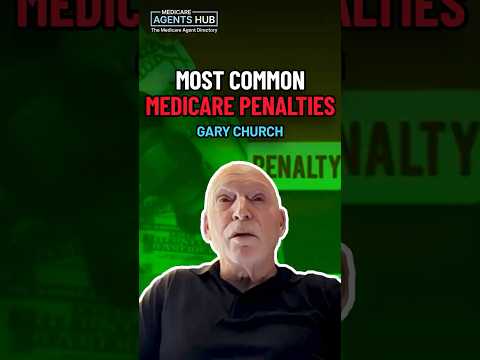
Questions came in: What Medicare penalties are most common? Probably the most common is somebody who has been working and either retires or gets laid off from their job, and their employer is going to offer them health insurance for the first year. If that employee decides to stay with their Cobra plan and their coverage, they realize that they have to enroll in Medicare. When you're notified by your employer and you know that your employment is ending, it's important that as soon as you know when your end date is, that's when you're going to apply for your Medicare. Now, your arm has already been in place, but it's activating your Part B. This is very important.
Other people will say, "I don't take medications, I don't need a drug plan." Well, you're required to have a drug plan, and a care only covers Part B hospital and your medical services. So if you don't have a drug plan, you are going to get a penalty.
And the other thing is changing your plans. It's important that you understand what you need to do either when you're aging into Medicare at 65 or when you actually have to do your roaming, and also when you're leaving your employer. It's very, very important that when you're leaving your employer, you sit down with a licensed Medicare agent. Don't try to do it on your own unless you know what you're doing. It's important to know when you have a qualifying event. So hopefully that answers your question.
Answered by Gary Church on February 2, 2026
Broker Licensed in CA, AZ, NV & TX

Answered by Marnie Applegate on October 26, 2025
Agent Licensed in TN, AL, GA & TX

Answered by Tory Blain on July 6, 2026
Broker Licensed in UT, CO, ID, NV & WA

Answered by Tosha Morell on December 4, 2025
Agent Licensed in GA & FL

Answered by Dixie Obbink on March 30, 2026
Broker Licensed in SD, AZ, IA, MN & NE

Answered by Lyndsee Woods on November 29, 2025
Agent Licensed in AR, MO, OK & TX


So the question is, what Medicare penalties are most common? As far as I can tell, the most common penalty is if you don't sign up for Part D when you get your A and B. So say you go into the Social Security office, you sign up for Part A and Part B. It's not their job necessarily to tell you you have to have Part D. So a lot of people don't know that, and they don't apply.
So Part D is your drug plan. Part A is your hospital coverage. Part B, as in Bravo or Boy, is your doctor coverage. There is a fee for Part B, but there is no fee for Part A. If you start with original Medicare and go right to a Medicare Advantage plan, your Part D is included in almost all of the Medicare Advantage plans. You just have to make sure you get into one that has no plan included. Otherwise, you have to make sure you get Part D.
So if you stay on original Medicare, you will have to call an agent for Humana, United, or whoever you like, or whoever has your prescriptions that you're on. You call them directly and you get on a Part D plan there. Anywhere from, and this is 2025, Part D plans are anywhere from $13 to $113, just based on what prescriptions you take. But yeah, the Part D penalty is probably one of the more popular penalties.
Answered by Kim Mitchell-Hargis on September 18, 2025
Broker Licensed in TN, FL & KY

Answered by Kristina Guerry on June 29, 2026
Broker Licensed in SC, AL, AR & 45 other states


Hello, Bill Lawler here. The question is, what penalty is most common on Medicare plans? Well, I would say the most common penalty is not enrolling in Part B when you first become eligible.
For instance, if you are covered by group health coverage through an employer and that coverage ends, you have 60 days to enroll in Part B without penalty. Once you enroll in Part B, you could look for additional health care plans such as a Medigap or Medicare Advantage.
The penalty is for every month that goes by that you are eligible to enroll in Part B but you did not. There is a 1% penalty, and once imposed, that penalty continues forever. Here to help!
Answered by William Lawler on October 14, 2025
Broker Licensed in MO, FL, IA & 12 other states

Answered by Lori Marion on October 27, 2025
Agent Licensed in MS, AL, AR & 17 other states

Answered by John Burke on May 18, 2026
Broker Licensed in FL, AL, GA & 20 other states

Answered by Mark Boone on November 5, 2025
Agent Licensed in MN, FL, MI & NC, OH, SC & VA

Source: www.medicare.gov.
Plans are insured or covered by a Medicare Advantage (HMO, PPO and PFFS) organization with a Medicare contract and/or a Medicare-approved Part D sponsor. Enrollment in the plan depends on the plan’s contract renewal with Medicare. We do not offer every plan available in your area. Any information we provide is limited to those plans we do offer in your area. Please contact Medicare.gov or 1-800-MEDICARE to get information on all of your options.
Answered by Andrew Zurbuch, MBA on April 22, 2026
Broker Licensed in IN, FL, KY, MO, OH & TN

Answered by Mike Alexander on November 6, 2025
Broker Licensed in TX, AL, AR & 16 other states

Answered by Robert Lukasik on September 18, 2025
Broker Licensed in NY, FL & PA

Answered by Flora Acosta on July 7, 2026
Broker Licensed in RI, CT, FL, MA, MD & NJ

Answered by Eizel Mere on September 29, 2025
Broker Licensed in FL

Answered by Darlene Cerezo Swaffar on October 5, 2025
Broker Licensed in FL

Answered by Michelle Turner on June 1, 2026
Agent Licensed in AZ, ME & MI

Answered by Leslie Santos on September 19, 2025
Broker Licensed in FL & TX

Answered by Mark Maliwauki on May 11, 2026
Broker Licensed in ID, AZ, CA & 13 other states

Answered by Dorthea Hughes on September 20, 2025
Agent Licensed in MS

Answered by Daniel Brechin on September 18, 2025
Agent Licensed in AL, FL, KY, MS & TN

Tags: Enrollment Periods The Medicare System
Agents: Share Your Expertise
Have insights or experiences related to this topic? Help others by sharing your knowledge and answering this question.
Seniors: Ask a Question of Your Own
Questions are generally answered within 1 to 3 business days. Receive valuable perspectives from multiple licensed agents and brokers.
Ask a Question