The 7 Medicare Mistakes I See People Make When They First Turn 65


Turning 65 is a major milestone. For many people, it's also the first time they have to make decisions about Medicare.
After 23 years in the Medicare insurance business, I've seen how easy it is for people to get overwhelmed. There are unfamiliar terms, several enrollment periods, multiple types of coverage and plenty of mail arriving at exactly the time you are trying to figure out what you actually need.
The good news is that most Medicare decisions become much easier when you slow down and work through the process in the right order.
Here are seven mistakes I see people make when they first become eligible for Medicare.
1. Waiting until the last minute to learn how Medicare works
Your Medicare timeline starts before your 65th birthday.
For most people, the Initial Enrollment Period lasts seven months. It begins three months before the month you turn 65, includes your birthday month and ends three months after your birthday month. The exact timing of coverage can depend on when you enroll.
That gives you time to learn your options.
Start by figuring out when you become eligible, whether you will need to enroll in Part A and Part B yourself, and what health coverage you will have when you turn 65.
A little preparation can prevent a rushed decision later.
2. Assuming everyone should enroll in Medicare at exactly the same time
Medicare enrollment depends on your circumstances.
Someone who is already receiving Social Security benefits may be automatically enrolled in Part A and Part B. Someone who is still working and covered by an employer health plan may have different enrollment considerations.
If you or your spouse is still working, find out how your employer coverage coordinates with Medicare before making a decision about Part B.
The size of the employer can matter as well. Medicare explains that people covered by an employer with fewer than 20 employees generally need to enroll in Medicare when first eligible because the employer plan may not pay for services in the same way once Medicare becomes available.
This is an area where a quick conversation with your employer's benefits administrator can be really useful.
3. Treating Medicare as one insurance plan
Medicare has several parts, and each one has a different role.
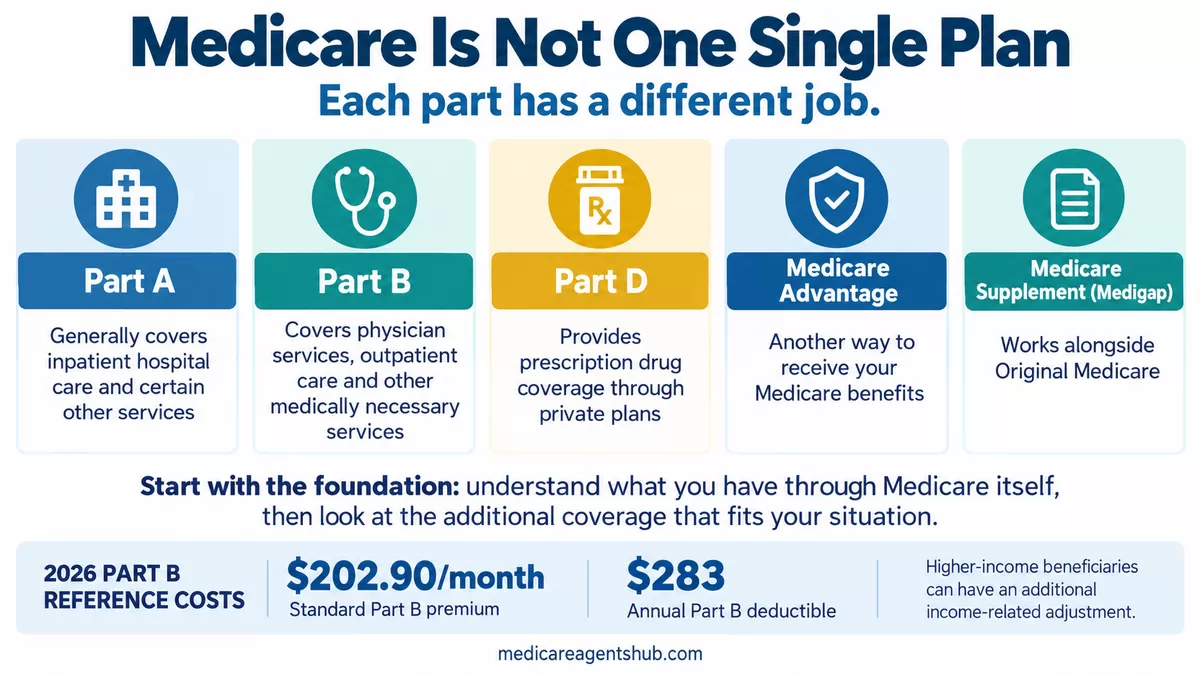
Part A generally covers inpatient hospital care and certain other services. Part B covers physician services, outpatient care and other medically necessary services. Part D provides prescription drug coverage through private plans.
Then there are Medicare Advantage plans, which are another way to receive your Medicare benefits, and Medicare Supplement insurance, also called Medigap, which works alongside Original Medicare.
The choices can feel complicated when you look at everything at once.
Start with the foundation: understand what you have through Medicare itself. Then look at the additional coverage that fits your situation.
That sequence makes the decisions easier to organize.
4. Choosing a plan based on the premium alone
The monthly premium is easy to see. Your total healthcare costs need a broader look.
When I help someone compare coverage, I encourage them to think about the way they actually use healthcare.
Consider your doctors. Consider your prescriptions. Consider the hospitals and other providers you may use. Think about how often you see specialists and whether you expect any significant medical care during the coming year.
Look at deductibles, copayments, coinsurance, provider networks and prescription coverage. Look at the maximum amount you could be responsible for under a plan.
Medicare coverage involves several different costs, and those costs can vary considerably depending on the type of coverage you choose.
For example, for 2026, the standard Medicare Part B premium is $202.90 per month and the annual Part B deductible is $283. Higher-income beneficiaries can have an additional income-related adjustment.
The premium is only one piece of the overall picture.
5. Forgetting to check prescriptions carefully
Prescription coverage deserves its own attention.
If you take medications regularly, have your current prescription list available when you review Medicare drug coverage. Check the specific medications, brands, dosages and quantities.
Drug plans can have different formularies, pharmacies and cost-sharing arrangements. A plan that looks attractive at first glance may have a different cost structure for the medications you take.
Your medication list can also change over time. That makes an annual review worthwhile even after you have been enrolled in Medicare for several years.
6. Assuming the coverage you have at 64 will just continue
People often reach 65 while they have employer coverage, an individual health plan or another form of insurance.
Medicare can change what you need to do.
Marketplace coverage deserves special attention. Once someone becomes eligible for premium-free Part A, they generally cannot continue receiving Marketplace financial assistance, and keeping the assistance after becoming eligible can create tax consequences.
Employer coverage requires its own review. If you're continuing to work, talk with your employer about how its plan coordinates with Medicare. If you're retiring, pay close attention to when your employer coverage ends and when your Medicare coverage needs to begin. Medicare advises people whose employer coverage is ending to plan ahead to help avoid a gap.
Your existing coverage is an important part of your Medicare decision.
Is COBRA considered creditable coverage for Medicare, or do I still need to sign up for Part B?
No, it’s not. COBRA is typically used when a member retires from a group and isn’t eligible for Medicare yet. You would want to sign up for Part B as soon as possible.7. Thinking you can fix every enrollment mistake later
Some Medicare decisions have deadlines.
If you miss your Initial Enrollment Period and do not qualify for another enrollment opportunity, you may have to wait for another enrollment period. You may also face a late enrollment penalty for Part B that can continue for as long as you have Part B.
There are Special Enrollment Periods for certain situations. For example, people who delay Part B because they have qualifying group health coverage based on current employment may generally enroll while that coverage is in place or during an eight-month period after the employment or coverage ends, whichever comes first.
The important thing is to know which enrollment rules apply to you before your deadline arrives.
A simple way to approach Medicare at 65
When someone tells me they're completely confused by Medicare, I usually recommend starting with a few basic questions:
- When am I eligible?
- What coverage do I have right now?
- Will I still have that coverage when I turn 65?
- Do I need to enroll in Part A and Part B myself?
- What doctors, prescriptions and healthcare services matter most to me?
- Which Medicare coverage options fit those needs?
Those questions create a much clearer starting point.
Medicare is a major part of your healthcare planning after 65. It deserves some attention before you are standing at the deadline trying to make several decisions at once.
Take the time to understand your timeline. Gather your current insurance information. Make a list of your doctors and prescriptions. Learn how the different pieces of Medicare fit together.
Then evaluate your coverage based on your own healthcare needs and financial situation.
That is how you turn a confusing process into a series of manageable decisions.
What are the reasons why I should work with a Medicare agent?
The top reasons someone should work with a local Mediacre agent are: 1) they are trained professionals in their field, and go through updated training every year; 2) it costs $0 to get support; and 3) their support continues throughout the entire year.About the Author: Drew Bismack is a licensed Medicare insurance agent in Michigan with 23 years of experience helping individuals understand their Medicare options. He focuses on making the Medicare process easier to understand so people can make informed decisions about their healthcare coverage and choose what best suits their specific needs.