What is the Role of a Medicare Sales Agent?

-
Last Updated September 25, 2026
Choosing a Medicare plan is one of the most important healthcare decisions you will make. With multiple parts, plan types, and enrollment rules to consider, it can feel overwhelming. That is where a Medicare sales agent comes in. These licensed professionals specialize in helping seniors understand their options and find the coverage that fits their healthcare needs and budget.
Whether you are turning 65 for the first time, under 65 and newly eligible because of a disability, ESRD, or ALS, or simply reviewing the plan you already have, working with an agent can make the process significantly easier.
Quick answer: A Medicare sales agent is a state-licensed insurance professional who explains your Medicare options, compares plans against the doctors you see and the drugs you take, handles the enrollment paperwork, and reviews your coverage each year. Insurance carriers pay them, so their help costs you nothing.
What Does a Medicare Sales Agent Do?
A Medicare sales agent is a licensed insurance professional who helps individuals enroll in Medicare plans. They work as a bridge between you and the insurance companies that offer Medicare coverage.
Their day-to-day responsibilities include:
- Explaining the differences between Medicare Part A, Part B, Part C (Medicare Advantage), Part D, and Medigap plans
- Comparing plan options from multiple carriers based on your prescriptions, doctors, and budget, including everything you would find in the official Medicare Plan Finder
- Guiding you through enrollment during the appropriate enrollment periods
- Helping with plan changes when your health needs or circumstances shift
- Staying current on annual Medicare updates and regulatory changes from CMS
Agents do not charge you for their services. They are compensated by insurance carriers, which means you get expert guidance at no additional cost.

What's the difference between a Medicare broker and a Medicare agent?
Full disclaimer: People who either enroll into a Medicare Advantage Plan or buy a Medicare Supplement [member] will never pay a commission to a broker, captive agent, or in-house agent. The insurance company pays the commission - even if you self-enroll through a link in Medicare.gov or an insurance company's website.Differences:
Medicare Broker: A self-employed licensed agent. Although I am affiliated with an agency to use their resources, I do not work for them. I am an independent broker who contracts with the insurance carriers [company] I want to, and sell both Medicare Advantage Plans and Medicare Supplements. A Broker has their own book of business, builds a lasting report with their clients and provides excellent customer service.
Medicare Agent: An employee of an agency (otherwise known as a Captive Agent), who only sells the Medicare Advantage Plans of insurance carriers the agency contracts with. Also, the agency gets the lion's share of the commission and typically pays the agent an hourly wage plus a small percentage of the commission. They can work remote or in an office building in a call center environment, taking inbound calls to enroll members. And, they have sales quotas to meet.
In-house Agent: An employee of an insurance company who typically works in a call center taking inbound calls to enroll members.
When you experience the broker difference, you will know it.
Why Working with a Medicare Insurance Agent Matters
Medicare is not a one-size-fits-all program. Between Medicare Advantage and Medigap plans, prescription drug coverage, and the various rules around enrollment timing, there is a lot to sort through. Making the wrong choice can lead to gaps in coverage, unexpected costs, or penalties that follow you for years.
A good Medicare insurance agent helps you avoid those pitfalls by:
- Translating complex insurance jargon into plain, understandable language
- Identifying plans that cover your specific medications and doctors
- Alerting you to potential late enrollment penalties, which can follow you for as long as you have coverage
- Reviewing your coverage annually to make sure it still fits your needs
Their specialized knowledge means you are not guessing or relying on confusing government pamphlets alone. You have someone in your corner who understands the system inside and out.

What is the biggest mistake seniors make when enrolling in Medicare?
Treating Medicare as another annual enrollment decision that they can do on their own, rather than looking at it as a long term strategic decision.The decisions that you make when you enroll in Medicare, will follow you all throughout your retirement. Too many people make decisions based on TV commercials or well meaning advice from friends and relatives, but Medicare is not one size fits all.
Some plans limit the doctors and health care providers you'll be allowed to see. Others don't travel well, and some require approval from the insurance company before you can get care.
Certain plans may look inexpensive up front, but hidden out of pocket costs can end up costing you thousands if you have a serious health issue. Others may cost a little more up front, but offer much greater freedom and flexibility while limiting your out of pocket expenses.
There's no right or wrong approach, and a trusted Medicare advisor will take the time to get to know you and guide you through the process so that your plan choice fits your life not just for today, but for the long term.
How Do Medicare Sales Agents Get Paid?
This is the question most people want to ask and rarely do: if the agent is not billing you, who is paying them? The answer is the insurance carrier. When you enroll in a plan through an agent, the carrier that issues that plan pays the agent a commission. You pay the same premium you would have paid enrolling on your own.
A few details are worth knowing, because they explain why a good agent has little reason to steer you:
- Medicare Advantage and Part D commissions are capped by CMS. The federal government sets the maximum a carrier may pay an agent for enrolling someone in a Medicare Advantage or Part D plan, and the caps are the same across competing carriers in a given region. An agent generally does not earn meaningfully more by putting you in Carrier A instead of Carrier B.
- Medigap works differently. Medicare Supplement commissions are set by the insurance company rather than capped by CMS, so they can vary more between carriers. It is a fair thing to ask about if you are comparing Medigap plans.
- Renewal commissions reward keeping you happy. Agents are typically paid again each year you stay enrolled, which is why the good ones answer the phone in March, not just during the fall enrollment window.
None of this means you should skip the conversation. Ask directly: "How do you get paid, and does it affect the plan you recommend?" A confident, licensed agent will answer it without flinching.
Medicare Broker vs. Medicare Agent: Is There a Difference?
You may hear the terms agent and broker used interchangeably, and in practice they often overlap. Both are licensed to sell Medicare insurance. The main distinction is that a broker typically represents multiple insurance carriers, giving them the ability to compare plans across companies. An agent may represent one carrier or several, depending on their contracts.
Terminology can vary by state, so the label matters less than the substance. Before you commit, ask the agent which carriers they represent and whether they are independent or captive to a single insurer. That one question tells you how much of the market they can actually show you.
If you want the longer version, we break down what a Medicare broker is, how they help, and how they are paid separately. For most seniors, what matters more than the title is whether the person you are working with is licensed, knowledgeable, and focused on your best interests, which is the hallmark of all great Medicare agents.
What to Look for in a Licensed Medicare Agent
Not all agents are the same. When choosing someone to help with your Medicare decisions, look for these qualities:
- Proper licensing — they should be licensed in your state to sell Medicare insurance
- Local knowledge — a local agent will understand the plans, networks, and providers available in your area
- Patience and transparency — they should explain your options without pressuring you into a specific plan
- Ongoing support — the best agents do not disappear after enrollment; they help with claims questions, plan reviews, and annual changes
A trustworthy agent treats the relationship as long-term, not transactional.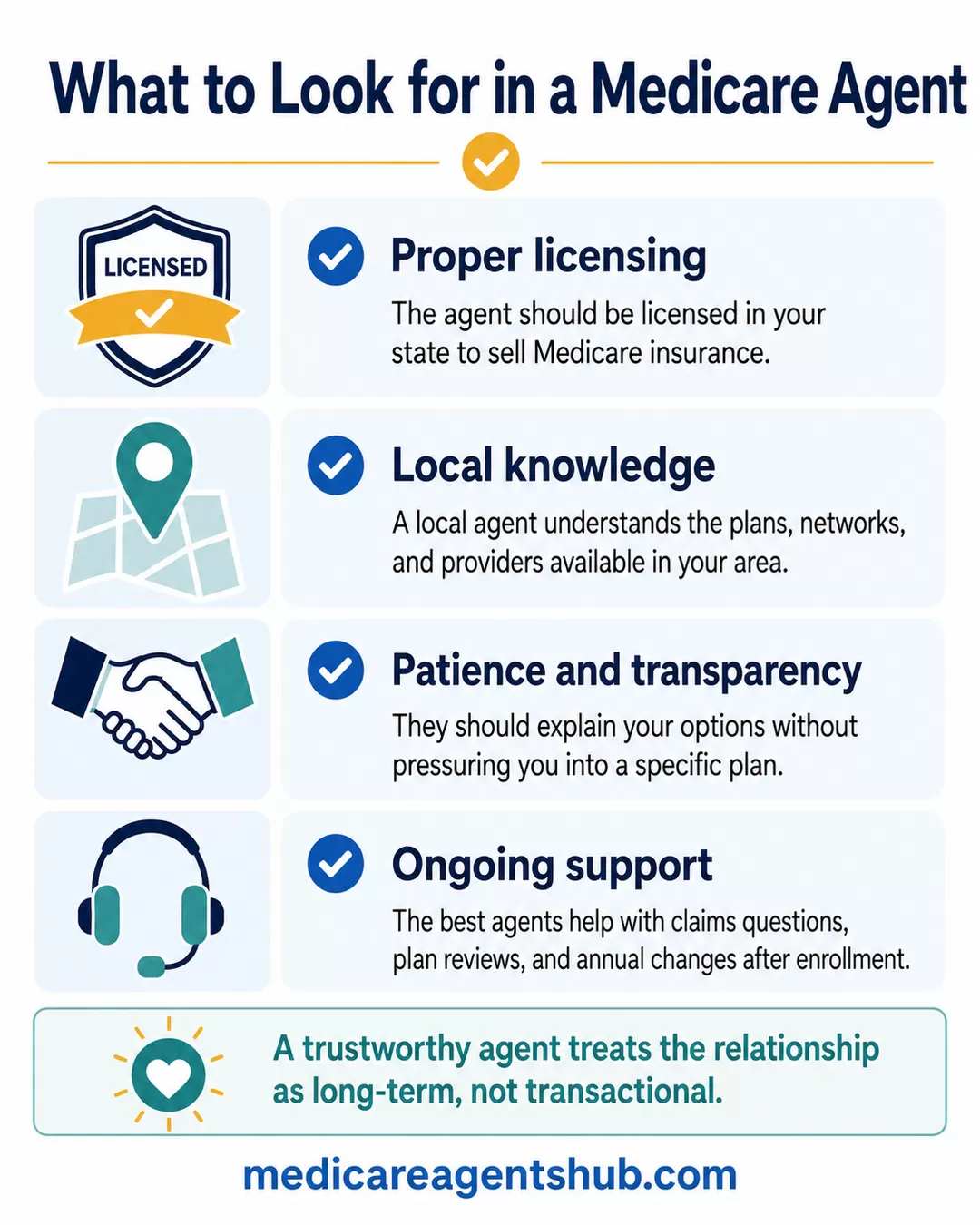

Can you describe a time when you helped a client navigate a complex Medicare issue?
A couple who had just moved to Colorado called me confused because their Medicare Advantage plans no longer covered their doctors or prescriptions. I explained their Special Enrollment options, compared local plans, and helped them switch to one that included their providers and saved them over one hundred dollars a month. They later told me it was the first time Medicare actually made sense to them.How to Find a Medicare Agent Near You
Finding the right agent does not have to be difficult. Medicare Agents Hub connects you with licensed, local Medicare professionals across the country. You can search by ZIP code or city, view agent profiles, read reviews, and reach out directly.
Every agent listed on the platform is a licensed professional who has chosen to make themselves available to help people just like you. If you are approached by someone outside the platform, it is worth knowing the red flags that separate a good broker from a bad one before you share any personal information. Whether you are enrolling for the first time, comparing plans, or dealing with a life change that triggers a Special Enrollment Period, a local agent can walk you through it step by step.
Prefer a government resource? You can also get free, unbiased Medicare counseling through your State Health Insurance Assistance Program (SHIP), which offers one-on-one help at no cost.

Do I have to pay extra to use a local Medicare Licensed Insurance agent?
No you do not have to pay extra to use a Local Medicare Licensed Insurance agent. The Medicare Insurance carrier pays the broker or agent their commission. However, there are services that the broker or Agent can offer besides Medicare planning. Check out each Broker or Agent's website to learn moreChoosing a Medicare plan is a significant decision, but it does not have to be a stressful one. A licensed agent translates the jargon, lines plans up against the doctors you already see and the drugs you already take, and flags the enrollment penalties that catch people off guard. All of it at no cost to you.
With the right agent by your side, you can navigate Medicare with confidence and peace of mind. When you are ready, find a licensed agent in your area and start the conversation.