Medicare Supplement vs. Medicare Advantage: What's the Difference?


When it comes to enhancing your healthcare coverage under Medicare, two popular options are available: Medicare Supplement (Medigap) plans and Medicare Advantage (Part C) plans. While both aim to reduce out-of-pocket costs and provide more comprehensive coverage, they work in very different ways. Understanding the distinction between the two can help you make an informed decision about which option is best for your healthcare needs.
Quick answer: A Medigap plan sits on top of Original Medicare and pays the deductibles and coinsurance Medicare leaves behind, with no networks and no drug coverage. A Medicare Advantage plan takes over as the way you receive your Part A and Part B benefits, usually bundles in drug, dental, and vision coverage, and comes with a provider network and an annual out-of-pocket cap.
What is Medicare Supplement (Medigap)?
Medicare Supplement, often referred to as Medigap, plans are sold by private insurance companies and are designed to work alongside Original Medicare (Parts A and B). These plans help cover the "gaps" in coverage that Original Medicare doesn’t pay for, such as copayments, coinsurance, and deductibles. Medigap plans are standardized, with 10 different plan options labeled A through N, each offering varying levels of coverage.
Key Features of Medigap Plans:
- Supplemental Coverage: Medigap plans cover the out-of-pocket expenses that Original Medicare does not, helping reduce financial burdens.
- Coverage Options: These plans typically cover Part A and Part B coinsurance, blood, skilled nursing facility coinsurance, and sometimes the Part A deductible and Part B excess charges (the extra amount a doctor who hasn’t agreed to Medicare’s approved rate can bill you).
- No Network Restrictions: Medigap plans don’t restrict which doctors, hospitals, or specialists you can visit, as long as they accept Medicare. There are no regional network limitations.
- Flexibility: You can use your Medigap plan across the U.S., offering peace of mind for frequent travelers or those living in multiple locations.
- Standardized Plans: Medigap plans are standardized by the federal government, meaning that a Plan G in one state is identical to a Plan G in another. The only variation is the price, which may differ depending on the insurance provider. Medigap premiums can also increase over time.
Who Should Consider Medigap?
Medigap plans are a good option for those who prefer having fewer limitations on care and want to minimize out-of-pocket costs. If you are healthy and want flexibility in healthcare providers, a Medigap plan could be a strong choice. It is also ideal for individuals who travel frequently and prefer to have nationwide coverage.
What is Medicare Advantage (Part C)?
Medicare Advantage, also known as Part C, is an alternative to Original Medicare that is offered by private insurance companies. Medicare Advantage plans combine the coverage of Parts A and B into one plan and often include additional benefits such as prescription drug coverage (Part D), dental, vision, and hearing services. Unlike Medigap, which supplements Original Medicare, a Medicare Advantage plan replaces it as the way you receive your benefits. You stay enrolled in Parts A and B, but the plan pays your claims instead of Original Medicare.
Key Features of Medicare Advantage Plans:
- All-in-One Coverage: Medicare Advantage plans often include coverage for hospital stays (Part A), doctor visits (Part B), and sometimes additional benefits like prescription drugs (Part D), dental, vision, and wellness programs.
- Fixed Costs: Many Medicare Advantage plans have lower monthly premiums than Medigap plans, but they often come with deductibles, copayments, and coinsurance. Every Medicare Advantage plan has an annual out-of-pocket maximum that limits the total amount you’ll pay for covered Part A and Part B services in a given year. Original Medicare has no such cap, which is one of the stronger arguments for Part C.
- Network Restrictions: Most Medicare Advantage plans operate with network restrictions. Depending on the plan, you may need to use a specific network of doctors and hospitals, and you may need a referral to see a specialist. This can limit your freedom of choice in healthcare providers.
- Additional Benefits: Many Medicare Advantage plans offer benefits not covered by Original Medicare, such as prescription drug coverage, dental and vision care, hearing aids, gym memberships, and wellness programs.
- Annual Plan Changes: Unlike Medigap plans, Medicare Advantage plans can change each year. Premiums, benefits, and network providers can all vary annually, so you must review your plan regularly to ensure it meets your needs.
Who Should Consider Medicare Advantage?
Medicare Advantage plans are ideal for individuals who want an all-in-one solution and are comfortable with network restrictions. If you’re looking for a plan that bundles coverage with additional benefits like dental and vision, and you are okay with working within a specific network of providers, Medicare Advantage might be the right choice. These plans can be especially beneficial for those who need prescription drug coverage and want to avoid the need to buy a separate Part D plan.
Key Differences Between Medicare Supplement and Medicare Advantage Plans
Here’s a more detailed comparison of the two options:
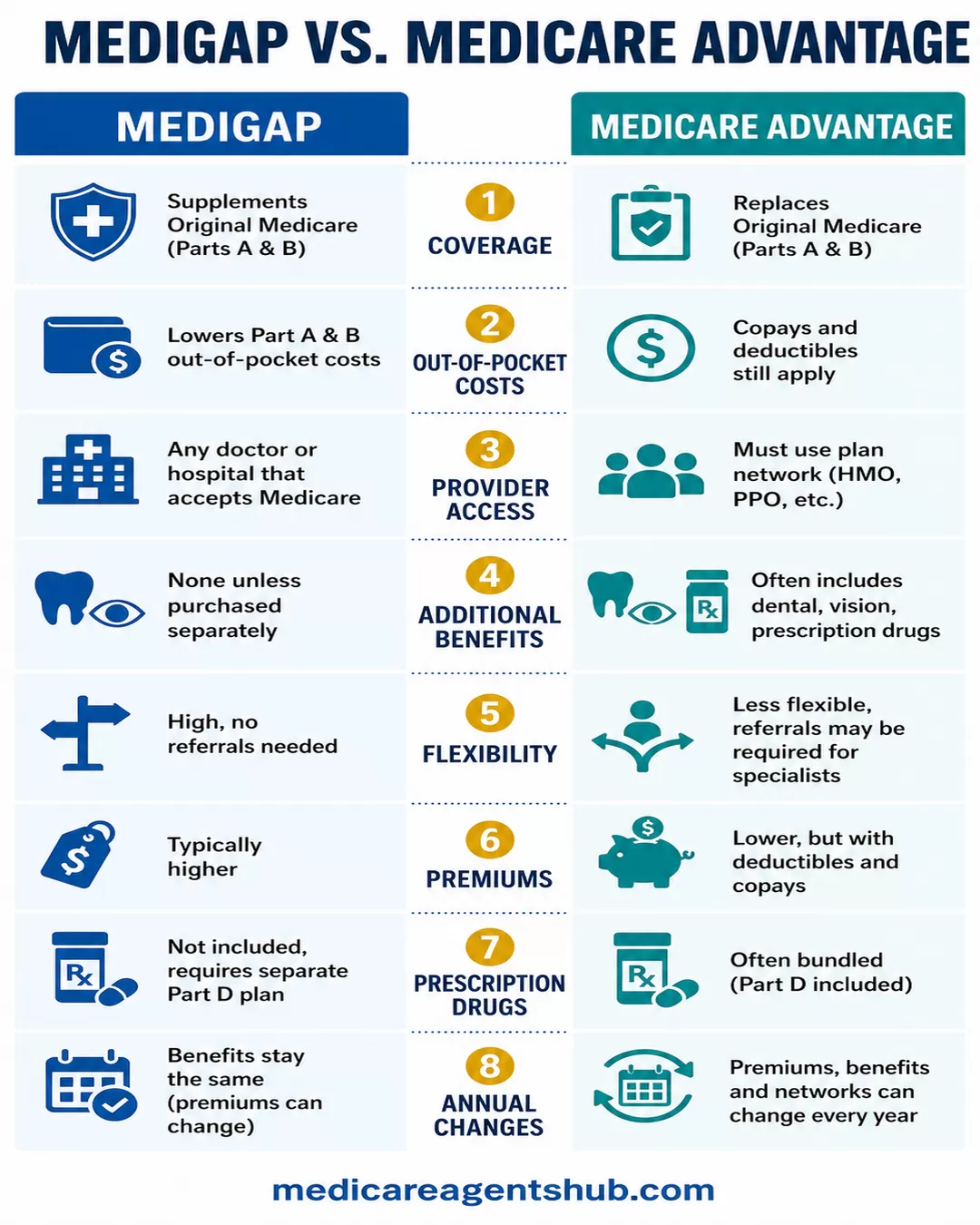
| Feature | Medicare Supplement (Medigap) | Medicare Advantage (Part C) |
|---|---|---|
| Coverage | Supplements Original Medicare (Parts A and B). | Replaces Original Medicare as your coverage; you stay enrolled in Parts A and B. |
| Out-of-pocket costs | Lowers out-of-pocket costs for Part A and Part B. | Can have out-of-pocket costs such as copays and deductibles. |
| Annual out-of-pocket limit | None built in; Medigap lowers the costs themselves instead. | Required on every plan, and it caps your yearly spending on covered Part A and Part B services. |
| Provider access | Any doctor or hospital that accepts Medicare. | Network restrictions; must use the plan’s network (HMO, PPO, etc.). |
| Additional benefits | No additional benefits unless you purchase them separately. | Often includes extras like dental, vision, and prescription drug coverage. |
| Flexibility | High flexibility, no referral needed. | Less flexibility, may need referrals for specialists. |
| Premiums | Typically higher premiums. | Lower premiums, but may have deductibles and copays. |
| Prescription drugs | Not included; must be added through a separate Part D plan. | Often includes prescription drug coverage (Part D). |
| Annual changes | Premiums can change, but benefits remain the same. | Plan benefits, premiums, and network may change annually. |
Medicare Supplement vs. Medicare Advantage: Which Plan Is Right for You?
Choosing between Medicare Supplement and Medicare Advantage depends on your healthcare needs, preferences, and budget.
- Medicare Supplement (Medigap) might be a better fit if you prefer the flexibility to see any doctor or specialist who accepts Medicare and want predictable out-of-pocket costs with minimal surprise charges.
- Medicare Advantage (Part C) is a great option if you’re looking for a lower-cost plan with the convenience of bundled benefits, including prescription drugs and additional services like dental and vision, and are willing to use a network of providers.
Ultimately, the right choice for you will depend on your medical needs, whether you need prescription drug coverage, how much you're willing to pay in premiums, and whether you're comfortable with network restrictions.
Conclusion
Both Medicare Supplement and Medicare Advantage plans are designed to enhance your Medicare coverage, but they cater to different needs and preferences. Understanding the differences—such as coverage, cost, flexibility, and additional benefits—can help you make an informed decision that ensures you get the right healthcare coverage for your needs.
Need help comparing the two? You can find a licensed Medicare agent near you for a no-cost review of your options, or compare the plans available in your ZIP code on Medicare.gov.
About the author: Jennifer Robbins is a seasoned Medicare Broker with extensive expertise in helping individuals navigate the complexities of Medicare. With a deep understanding of Medicare Supplement and Medicare Advantage plans, Jennifer is dedicated to empowering clients to make informed healthcare decisions that fit their unique needs. Her passion for simplifying the Medicare process ensures personalized guidance and peace of mind for every client.